|
Return
to RF Cafe Quiz #3
 All RF
Cafe Quizzes make great fodder for employment interviews for technicians or engineers
- particularly those who are fresh out of school or are relatively new to the work
world. Come to think of it, they would make equally excellent study material for
the same persons who are going to be interviewed for a job. Good luck! All RF
Cafe Quizzes make great fodder for employment interviews for technicians or engineers
- particularly those who are fresh out of school or are relatively new to the work
world. Come to think of it, they would make equally excellent study material for
the same persons who are going to be interviewed for a job. Good luck!
A complete list of RF Cafe Quizzes.
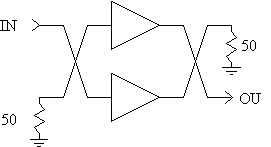 1. What is a primary advantage to using 90
° (quadrature) hybrid couplers in amplifier designs? 1. What is a primary advantage to using 90
° (quadrature) hybrid couplers in amplifier designs?
c) Input/output impedance not dependent on devices as long as device impedances
are equal.
Due to the physical construction of the quadrature coupler, as long as the two
devices between the couplers exhibit identical impedances the input and output impedances
will exhibit the intrinsic coupler impedance. For example, if matched transistors
with input impedances of 12 - j5 Ω are connected between to quadrature couplers
that have an intrinsic impedance of 50 + j0 Ω, then a 50 + j0 Ω impedance would
be exhibited at the circuit input (similar for the output).
Why not always use quadrature couplers? The answer is that insertion loss, physical
size and/or cost are often intolerable.
2. Why is there a frequency term in the equation for free-space path loss?
c) Antenna geometry requires it.
Antennas are an indispensable part of all wireless systems. There is no frequency
dependency in the free-space power density equation as emitted from an isotropic
radiator. Free-space power flux density decreases with distance due to energy being
spread over the surface of a sphere, hence:
P[density] = P[transmitter] / (4 π *
d2) [W / m2], where d is the distance in meters from
the origin.
However, the gain of the receiving antenna, including its effective area (Ae)
is:
G = G[receiver] * l2 / (4
π)
Total path loss = 20 * log (4 π * d /
l) [dB].
3. If an amplifier has a noise temperature of 60K, what is its noise figure for
an ambient temperature of 290K?
c) 0.82 dB.
Conversion from noise temperature to noise figure is a straightforward process.
NF = 10 * log [(NT / Ta) + 1] dB, where Ta is the ambient
temperature.
4. What is a primary advantage of offset-quadrature-phase-shift-keying (OQPSK)
over standard QPSK?
c) More constant envelope power.
OQPSK shifts the in-phase (I) and quadrature (Q)
components of the digital data by half a bit so that the I and Q data never change
at the same moment in time. This maintains a more constant output power.
5. A mixer has the following input frequencies: RF = 800 MHz, LO = 870
MHz. The desired output frequency is 70 MHz. What is the image frequency?
a) 940 MHz.
By definition, the image frequency for any combination of input and LO frequencies
is:
fimage = 2 * fLO - finput.
For any mixer, there are two input frequencies that, when mixed with the LO frequency,
will generate the desired output frequency. In this example, the 70 MHz output can
be generated either by taking 870 MHz - 800 MHz (desired), or by taking 940 MHz
- 870 MHz (undesired).
6. What is the spurious-free dynamic range of a system with IP3 = +30 dBm and
a minimum discernible signal (MDS) level of -90 dBm?
a) 80 dB.
Spurious-free dynamic range (SFDR) is the maximum signal power above the minimum
discernible signal (MDS) power level where two tones generate 2nd-order intermodulation
products equal in power to the MDS. Input signals above that level will generate
2nd-order products that are greater in power than the MDS power level. MDS is generally
defined as the noise power plus the minimum signal-to-noise ratio (SNR)
One form of the equation is: SFDR = 2 / 3 * (IP3 - MDS) dB.
7. A spectrum analyzer displays a component at 10 MHz @ 0 dBm, 30 MHz @ -10 dBm,
50 MHz @ -14 dBm, 70 MHz @ -17 dBm, and all of the other odd harmonics until they
disappear into the noise. What was the most likely input signal that caused the
spectrum?
a) A 10 MHz square wave (0 Vdc bias).
The Fourier series for a square wave with a 0 Vdc bias is the fundamental frequency
and all of its odd harmonics. Amplitudes are scaled as the reciprocal of the harmonic
number; in terms of power, the amplitudes are scaled according to 20 * log (1 /
N) dB. A 10 MHz triangle wave also contains the odd harmonics, but amplitudes fall
off according to the reciprocal of the square of the harmonic number, 40 *log (1
/ N) dB.
8. On which side of a rectangular waveguide is an E-bend made?
b) The short dimension.
In a rectangular waveguide, the E-plane is in the direction of the short dimension
while the H-plane is in the direction of the long dimension. The type of bend is
determined by which side is curved for the bend. A useful mnemonic is the short
dimension is the [E]asy side to bend, while the long dimension is the [H]ard side
to bend.
9. During a network analyzer calibration, why are both a short circuit and an
open circuit used?
b) To determine the characteristic impedance of the measurement system.
In order for the network analyzer (N/A) to make an accurate measurement, it must
know what the impedance of the measurement system is. Characteristic impedance is
mathematically the square root of the product of the short circuit impedance and
the open circuit impedance. The S/A exploits this relationship.
10. What is the first harmonic of 1 GHz?
a) 1 GHz.
Harmonic number is often mistaken for overtone number. The second harmonic of
1 GHz is 2 GHz, while the first overtone frequency of 1 GHz is 2 GHz. In other words,
Nharmonic = Novertone + 1. The first harmonic of any frequency
is its fundamental frequency.
Quizzes from vintage electronics magazines (and many custom RF Cafe-generated
quizzes) such as Popular Electronics, Electronics-World,
QST, Radio-Electronics, and Radio News were published
over the years - some really simple and others not so simple. Robert P. Balin
created most of the quizzes for Popular Electronics. This is a listing
of all I have posted thus far.
- Oscillator
Quiz, November 1962 Popular Electronics
- Vacuum Tube Quiz,
February 1961 Popular Electronics
- Kool-Keeping Kwiz, June
1970 Popular Electronics
- Find the Brightest
Bulb Quiz, April 1960 Popular Electronics
-
Where Do the Scientists Belong? - Feb 19, 1949 Saturday Evening Post
- Quiz
on AC Circuit Theory, December 1970 Popular Electronics
- Magnetic
Phenomena Quiz, February 1962 Popular Electronics
- Electronics
Geography Quiz, April 1970 Popular Electronics
- Electronic
Menu Quiz, August 1963 Popular Electronics
- Electronic
Noise Quiz, August 1962 Popular Electronics
- Electronic
Current Quiz, October 1963 Popular Electronics
- Electronic
Inventors Quiz, November 1963 Popular Electronics
- Resistor Function
Quiz, January 1962 Popular Electronics
- Electronic
Measurement Quiz, January 1963 Popular Electronics
- Electronic
Coupling Quiz, August 1973 Popular Electronics
- Electronics
Analogy Quiz, August 1960 Popular Electronics
- Audio Quiz, April
1955 Popular Electronics
- Electronic Unit
Quiz, May 1962 Popular Electronics
- Capacitor
Circuit Quiz, June 1968 Popular Electronics
- Meter-Reading
Quiz, June 1966 Popular Electronics
- Electronic
Geometry Quiz, Jan 1965 Popular Electronics
- Electronic
Factor Quiz, November 1966 Popular Electronics
- Electronics
Math Quiz, November 1965 Popular Electronics
- Series Circuit
Quiz, May 1966 Popular Electronics
- Electrochemistry
Quiz, Mar 1966 Popular Electronics
- Biz
Quiz: Test Your Sales Ability - April 1947 Radio News
- Electronic
Analogy Quiz, Nov 1961 Popular Electronics
- Diode Quiz, July
1961 Popular Electronics
- Electronic
Curves Quiz, Feb 1963 Popular Electronics
- Electronic
Numbers Quiz, Dec 1962 Popular Electronics
- Energy Conversion
Quiz, April 1963 Popular Electronics
- Coil Function
Quiz, June 1962 Popular Electronics
-
Co-Inventors Quiz - January 1965 Electronics World
-
"-Tron" Teasers Quiz - Oct 1963 Electronics World
- Polarity Quiz
- March 1968 Popular Electronics
-
Television
I.Q. Quiz - Oct 1948 Radio & Television News
- Amplifier Quiz
Part I - Feb 1964 Popular Electronics
- Semiconductor
Quiz - Feb 1967 Popular Electronics
- Unknown
Frequency Quiz - September 1965 Popular Electronics
- Electronics
Metals Quiz - Oct 1964 Popular Electronics
- Electronics
Measurement Quiz - August 1967 Popular Electronics
- Vector-Circuit
Matching Quiz, June 1970 Popular Electronics
- Inductance
Quiz, September 1961 Popular Electronics
- RC Circuit Quiz,
June 1963 Popular Electronics
|
-
LCR Circuits Quiz - November 1969 Electronics World
- Amplifier Quiz Part
2 - March 1964 Popular Electronics
- Amplifier Quiz
Part 1 - February 1964 Popular Electronics
- Three Letter
Quiz - January 1964 Popular Electronics
- Electromagnetic
Function - June 1964 Popular Electronics
- Electronic
Sticklers - February 1959 Popular Electronics
- Bio-Electronic
Quiz - July 1964 Popular Electronics
- Transformer Quiz
- April 1962 Popular Electronics
- Oscilloscope
Quiz - October 1961 Popular Electronics
- Roundword Puzzle
- January 1961 Popular Electronics
- Electronic
Sticklers - April 1959 Popular Electronics
-
What's Your EQ? - August 1966 Radio-Electronics
-
What's Your EQ? - February 1966 Radio-Electronics
-
What's Your EQ? - September 1962 Radio-Electronics
- Electronic Sticklers
- May 1959 Popular Electronics
-
What's Your EQ? - February 1963 Radio-Electronics
-
What's Your EQ? - April 1964 Radio-Electronics
-
What's Your EQ? - October 1966 Radio-Electronics
-
What's Your EQ? - June 1963 Radio-Electronics
-
What's Your EQ? - July 1966 Radio-Electronics
-
What's Your EQ? - December 1966 Radio-Electronics
-
What's Your EQ? - October 1964 Radio-Electronics
-
What's Your EQ? - July 1963 Radio-Electronics
-
What's Your EQ? - March 1966 Radio-Electronics
-
What's Your EQ? - November 1966 Radio-Electronics
-
What's Your EQ? - October 1966 Radio-Electronics
-
What's Your EQ? - May 1966 Radio-Electronics
-
What's Your EQ? - January 1966 Radio-Electronics
-
What's Your EQ - July 1966 Radio-Electronics
-
What's Your EQ? - December 1966 Radio-Electronics
-
What's Your EQ? - October 1964 Radio-Electronics
-
What's Your EQ? - June 1963 Radio-Electronics
-
R-E Puzzler - June 1967 Radio-Electronics
-
What's Your EQ? - January 1963 Radio-Electronics
-
Do You Know the Law? - Nov 1963 Radio-Electronics
-
What's Your EQ? - November 1962 Radio-Electronics
-
What's Your EQ? - September 1966 Radio-Electronics
- Radio
WittiQuiz - October 1938 Radio-Craft
-
What's Your EQ? - November 1964 Radio-Electronics
-
What's Your EQ? - February 1964 Radio-Electronics
-
What's Your EQ? - July 1967 Radio-Electronics
-
What's Your EQ? - December 1962 Radio-Electronics
-
What's Your EQ? - April 1966 Radio-Electronics
-
What's Your EQ? - October 1963 Radio-Electronics
-
What's Your EQ? - July 1964 Radio-Electronics
- Radio
WittiQuiz - November 1937 Radio-Craft
-
What's Your EQ? - May 1967 Radio-Electronics
-
What's Your EQ? - July 1962 Radio-Electronics
-
What's Your EQ? - January 1962 Radio-Electronics
-
What's Your EQ? - February 1962 Radio-Electronics
-
What's Your EQ? - March 1962 Radio-Electronics
-
What's Your EQ? - July 1961 Radio-Electronics
-
What's Your EQ? - August 1961 Radio-Electronics
-
Can You Name These Strange Electronic Effects? - August 1962 Radio-Electronics
-
What's Your EQ? - September 1961 Radio-Electronics
-
What's Your EQ? - September 1962 Radio-Electronics
-
What's Your EQ? - October 1961 Radio-Electronics
- Radio
WittiQuiz - December 1937 Radio-Craft
-
What's Your EQ? - November 1961 Radio-Electronics
-
What's Your EQ? - March 1964 Radio-Electronics
-
What's Your EQ? - April 1962 Radio-Electronics
-
What's Your EQ? - May 1962 Radio-Electronics
-
What's Your EQ? - June 1962 Radio-Electronics
-
What's Your EQ? - April 1967 Radio-Electronics
-
What's Your EQ? - March 1967 Radio-Electronics
-
What's Your EQ? - December 1964 Radio-Electronics
-
What's Your EQ? - January 1967 Radio-Electronics
-
Wanted: 50,000 Engineers - Jan 1953 Popular Mechanics
-
What's Your EQ? - August 1964 Radio-Electronics
- Voltage Quiz
- December 1961 Popular Electronics
-
What is It? - June 1941 Popular Science
- What Do You Know
About Resistors? - April 1974 Popular Electronics
-
What's Your EQ? - September 1963 Radio-Electronics
- Potentiometer Quiz - Sep
1962 Popular Electronics
-
Mathematical Bafflers - March 1965 Mechanix Illustrated
- Op Amp Quiz -
October 1968 Popular Electronics
- Electronic "A"
Quiz - April 1968 Popular Electronics
-
What's Your EQ? - May 1961 Radio-Electronics
-
Popular Science Question Bee - Feb 1939 Popular Science
-
What is It? - A Question Bee in Photographs - June 1941 Popular Science
-
What's Your EQ? - June 1961 Radio-Electronics
-
What's Your EQ? - June 1964 Radio-Electronics
-
What's Your EQ? - May 1964 Radio-Electronics
-
What's Your EQ? - August 1963 Radio-Electronics
-
What's Your EQ? - May 1963 Radio-Electronics
- Bridge
Function Quiz - Sep 1969 Radio-Electronics
-
What's Your EQ? - March 1963 Radio-Electronics
-
What's Your EQ? - February 1967 Radio-Electronics
-
Circuit Quiz - June 1966 Radio-Electronics
-
What's Your EQ? - June 1966 Radio-Electronics
- Electronics
Mathematics Quiz - June 1969 Popular Electronics
- Brightest
Light Quiz - April 1964 Popular Electronics
-
What's Your EQ? - April 1963 Radio-Electronics
- Electronics "B" Quiz
- July 1969 Popular Electronics
- Ohm's Law Quiz
- March 1969 Popular Electronics
-
Antenna Quiz - November 1962 Electronics World
- Color Code Quiz
- November 1967 Popular Electronics
- CapaciQuiz
- August 1961 Popular Electronics
- Transformer
Winding Quiz - Dec 1964 Popular Electronics
-
Audiophile Quiz - November 1957 Radio-electronics
- Capacitor
Function Quiz - Mar 1962 Popular Electronics
- Greek Alphabet
Quiz - December 1963 Popular Electronics
- Circuit
Designer's Name Quiz - July 1968 Popular Electronics
-
Sawtooth Sticklers Quiz - Nov 1960 Radio-Electronics
-
Elementary
Radio Quiz - December 1947 Radio-Craft
- Hi-Fi
Quiz - October 1955 Radio & Television News
- Electronics Physics
Quiz - March 1974 Popular Electronics
- A Baffling Quiz
- January 1968 Popular Electronics
- Electronics IQ
Quiz - May 1967 Popular Electronics
- Plug and Jack
Quiz - Dec 1967 Popular Electronics
- Electronic
Switching Quiz - Oct 1967 Popular Electronics
- Electronic
Angle Quiz - Sep 1967 Popular Electronics
- International
Electronics Quiz - July 1967 Popular Electronics
- FM Radio
Quiz - April 1950 Radio & Television News
- Bridge Circuit
Quiz -Dec 1966 Popular Electronics
- Diode Function
Quiz - August 1965 Popular Electronics
- Diagram Quiz,
August 1966 Popular Electronics
- Quist Quiz - November
1953 QST
- TV Trouble Quiz,
July 1966 Popular Electronics
- Electronics History Quiz,
Dec 1965 Popular Electronics
- Scope-Trace Quiz,
March 1965 Popular Electronics
-
Electronic
Circuit Analogy Quiz, April 1973
-
Test Your Knowledge of Semiconductors, August 1972 Popular Electronics
- Ganged Switching
Quiz, April 1972 Popular Electronics
- Lamp Brightness
Quiz, Jan 1969 Popular Electronics
- Lissajous
Pattern Quiz, Sep 1963 Popular Electronics
- Electronic
Quizoo, October 1962 Popular Electronics
- Electronic
Photo Album Quiz, March 1963 Popular Electronics
- Electronic
Alphabet Quiz, May 1963 Popular Electronics
- Quiz: Resistive?
Inductive? or Capacitive?, October 1960 Popular Electronics
|
|





