|
|||||||||||||
 |
|||||||||||||
Bohr-Rutherford Atomic Model |
|||||||||||||
|
Electronics & Technology
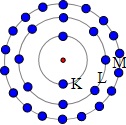
The Rutherford-Bohr atomic model, also known as the Bohr model, was proposed by Ernest Rutherford and Niels Bohr in 1913. The model describes the structure of atoms and explains the observed behavior of electrons in atoms. Prior to the Rutherford-Bohr model, the prevailing view of the atomic structure was based on the plum pudding model proposed by J.J. Thomson. According to this model, the atom was thought to be a positively charged sphere with negatively charged electrons embedded in it. However, in 1911, Ernest Rutherford and his colleagues performed an experiment in which they bombarded a thin gold foil with alpha particles. The results of this experiment led to the conclusion that the atom had a dense, positively charged nucleus at its center, which was surrounded by negatively charged electrons. Building on Rutherford's discovery, Niels Bohr proposed a model of the atom that explained how electrons could orbit the nucleus without losing energy. Bohr suggested that electrons could only occupy specific energy levels, or shells, around the nucleus. When an electron moved from one energy level to another, it would either absorb or emit a photon of light. The Bohr model also explained the observed spectrum of hydrogen. Bohr suggested that the energy of the emitted photons corresponded to the energy difference between the electron's initial and final energy levels. This theory also helped to explain why certain colors were observed in the spectrum of hydrogen. Despite its success in explaining certain phenomena, the Bohr model had limitations. It could only describe the behavior of hydrogen atoms, and it was unable to explain the fine structure of the atomic spectrum, which became apparent with more precise measurements. The Rutherford-Bohr atomic model was an important milestone in the development of atomic theory. It helped to establish the idea of quantization of energy levels and provided a basis for the understanding of chemical reactions and the behavior of atoms in electric and magnetic fields. While the model has been refined and expanded upon in the century since its proposal, it remains an important foundation for our understanding of the structure of atoms.
AI Technical Trustability Update While working on an update to my RF Cafe Espresso Engineering Workbook project to add a couple calculators about FM sidebands (available soon). The good news is that AI provided excellent VBA code to generate a set of Bessel function plots. The bad news is when I asked for a table showing at which modulation indices sidebands 0 (carrier) through 5 vanish, none of the agents got it right. Some were really bad. The AI agents typically explain their reason and method correctly, then go on to produces bad results. Even after pointing out errors, subsequent results are still wrong. I do a lot of AI work and see this often, even with subscribing to professional versions. I ultimately generated the table myself. There is going to be a lot of inaccurate information out there based on unverified AI queries, so beware. Electronics & High Tech Companies | Electronics & Tech Publications | Electronics & Tech Pioneers | Electronics & Tech Principles | Tech Standards Groups & Industry Associations | Societal Influences on Technology |
|||||||||||||
 |
|||||||||||||
|
|||||||||||||


|
||||||||||||||||||||||||||||||||||||