|
||||||||||||||||||||||||||||||||||||||||||||||||||||||||||||||||
 |
||||||||||||||||||||||||||||||||||||||||||||||||||||||||||||||||
Quadrature (I/Q) Modulator Sideband Suppression |
||||||||||||||||||||||||||||||||||||||||||||||||||||||||||||||||
|
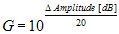
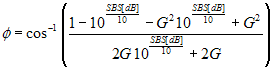
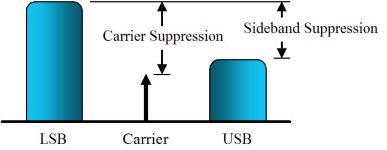
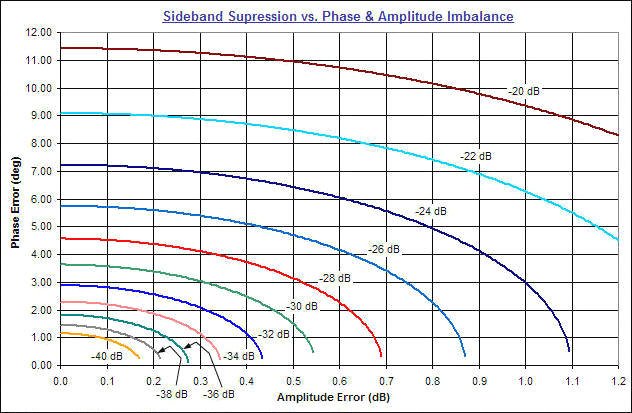
Quadrature modulators are used to conserve bandwidth for a given data rate. This is accomplished by modulating two orthogonal data streams onto a common carrier. If the phases and amplitudes of both data stream (in-phase "I" and quadrature "Q"), then one of the sidebands is completely cancelled out. If there is no DC bias feed-through, then the carrier itself is completely cancelled out. In practice, complete cancellation is never accomplished, but without too much work, achieving 40 dB of sideband cancellation is not hard to do. Even 60 dB is relatively easy; however, preventing drift due to thermal and mechanical effects is not so easy, and the result is that a "textbook" quadrature alignment during alignment can look pretty bad over time.
Related Pages on RF Cafe - Quadrature (I/Q) Modulator Sideband Suppression - Modulation Principles, AM Modulation, NEETS - Modulation Principles, FM Modulation, NEETS |
||||||||||||||||||||||||||||||||||||||||||||||||||||||||||||||||
 |
||||||||||||||||||||||||||||||||||||||||||||||||||||||||||||||||
|
||||||||||||||||||||||||||||||||||||||||||||||||||||||||||||||||









|
||||||||||||||||||||||||||||||||||||