|
||||||||||||||||
 |
||||||||||||||||
Potential Neutral Conductor Hazards |
||||||||||||||||
|
The main point of this presentation is that the neutral wire (typically white in color) is unfortunately named in a way that implies it is harmless. Most people know that if you touch the black (or red or blue) wire, chances are you are going to receive an electrical shock. They also believe that it is safe to touch the white (neutral wire). Under most conditions, this is true. However, that is only so if the path your body makes to ground is a significantly higher resistance to current flow than what the neutral wire path provides. This requires the neutral wire to have a complete path back to the service panel. If the neutral wire somehow gets disconnected from the neutral bar in the panel, your body becomes the only return path to ground for the electrical current. So, the cardinal law of working around live circuits is to assume that the neutral conductor is at the same potential as the hot wire. I have worked on many live circuits in my life and have been bitten a couple times by open neutrals - it is not a good feeling. Just for the record, the highest AC voltage I have been hit by was a 3-phase 480 V supply to a commercial welder. The highest DC was from a 2 kV radar CRT display. I have been lucky - no permanent damage... other than mental :-) Potential Hazards with Neutral Conductors Neutrals Are Current Carrying Conductors
Energized Neutral Examples
Configuration That Requires Additional Precautions:
The Multi-Wire Branch Circuit is an acceptable configuration according to the National Electrical Code (NEC) Section 210.4. The Multi-Wire Branch Circuit This circuit has also been referred to as:
Use the following guidance when the neutral conductor must be interrupted:
Note: Some of the original PowerPoint slides contained animations, which have been omitted here. No important information is lost in the process. |
||||||||||||||||
 |
||||||||||||||||
|
||||||||||||||||
 This presentation was generated by
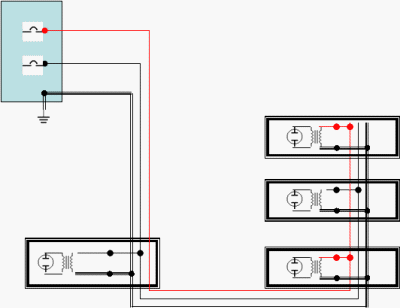





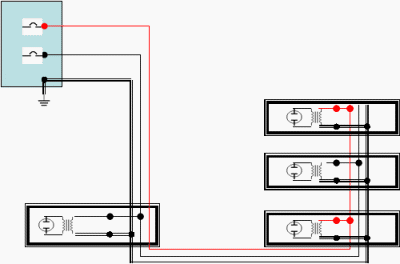
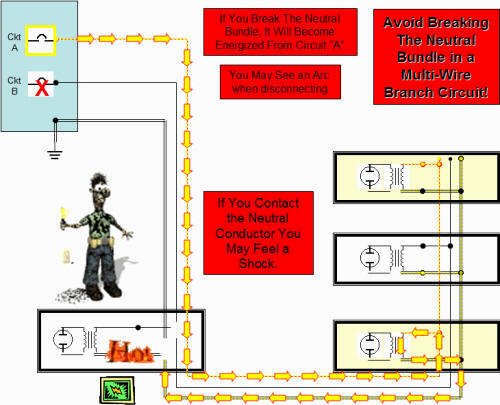
 NOTE: Current will exist only if one or more
circuits sharing the neutral have a load energized at the time of measurement.
NOTE: Current will exist only if one or more
circuits sharing the neutral have a load energized at the time of measurement. 
 Other general precautions
include:
Other general precautions
include:
|
||||||||||||||||||||||||||||||||||||