|
|||||||||||||
 |
|||||||||||||
Measuring Semiconductor Device Input Parameters with Vector Analysis |
|||||||||||||
|
Sunshine Design Engineering Services Joe Cahak, of Sunshine Design Engineering Services, has published yet another paper in his series on making RF test measurements. Joe is available for short term and long term contract work. See list of all of Joe's articles at bottom of page. Measuring Semiconductor Device Input Parameters with Vector Analysis By Joe Cahak, Sunshine Design Engineering Services
Figure 1 - Test System and Fixture
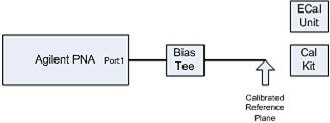
Figure 2 - Test System 1 Port Calibration
Figure 3 - Short at Cal Reference Plane
Figure 4 - Offset Short Response
Figure 5 - Offset Short after Port Extension
Figure 6 - Offset Short S11 Magnitude Response
Figure 7 - Test Fixture Port Electrical Length Extension to Short
Figure 8 - Device Parameter Response after Port Extension Offset
Figure 9 - Test Fixture Top View This article will cover a recent test experience that utilized some thinking about the test fixture, the bias requirements and the device mounting and special calibration offsets needed to de-embed the test fixture response from the device response within the test fixture. The device also had to have bias on several ports simultaneously. We had to establish a "reference plane" within the fixture, from which we can use the Vector Network Analyzer's Port Extension or Phase Offset to dial out the distance from our 1 port calibration reference plane to the point of short reference within the fixture. With this phase offset compensation we can then measure the device capacitance of the part within the fixture and the line length of the test fixture mostly worked out by the port extension. So how did we do this? We had to start with a Vector Network Analyzer. We also need a Bias Tee and some good RF cables. In our case, the client had a test fixture/jig to work with that had SMA to coplanar PCB. Then a device interface and a intermediate chip to interface to the DUT. The DUT was a CMOS RF device and we were measuring the input capacitance of a data and clock port, while the Vio bias line was also high. We were able to work out a means to modify the interface chip to accommodate the in-fixture short for the reference for the 1 port measurement of the DUT parameter. We next worked out how to hold the parts and calibration parts in the fixture. We inserted a coaxial bias tee and an RF coaxial cable on Port 1 of the Vector Network Analyzer. We set the VNA with a maximum range frequency sweep with a fair number of points greater than or equal to 401 and set a 0 dBm power level for good dynamic range for the measurement. Part of the reasoning for the calibration setup would be if the calibration is used for analysis, does it give high enough frequency to give small distance resolution if we had the Time Domain option on the VNA. For the fixture de-embedding method, we chose the first order correction of electrical extension or port extension method. This is a simple fixture de-embed in that it offsets the reference plane in phase only and not the amplitude loss. The measured short response at a distance from the reference plane, or in the fixture, can be dialed out in phase space. With this reference plane displacement we get the phase offset of the DUT to be measured. From this phase offset remaining, we can determine the device parameter at the frequency of the marker. I next determined if the cal kit would be an Ecal unit or a standard coaxial calibration kit. It does not matter which is used, either one will work. After calibration, we have a decent measurement reference plane to start with that is at to the fixture input. We could use raw data, but it does tend to be noisier and bumpier due to the system non-linear frequency response of the parts in the VNA, bias tee and RF coaxial cable. So a good 1 port calibration for a starting point it is. If you have a barrel SMA adapter to connect a short offset from the cal point, you can see the effect of the offset short using the port extension. The short response will circle the outside of the smith chart and may do more than one loop to just a short arc around the smith chart outer boundary. The difference is the electrical distance to the short and the arc swept out due to the frequency response of that offset length. So dialing the electrical length or port extension out to the short offset will
unwrap the short response on the smith chart and bring some of the frequency response
within a nice small dot as close to 1 Next I connect the test fixture and the inner fixture short in the outer fixture
for the port we want to measure. I next bring up the Smith Chart on the VNA and
dial the port extension until the frequency response is close to a dot on the far
left of the smith chart. This is 1 Next we remove the short, and insert the part. We then setup and check the bias to the bias line and to the control line to the DUT. We double check the voltages at the respective closest point to the DUT prior to connection of DUT. We next bias down and insert the part and compress into the fixture. We now get the marker value at our selected "zero" 100 MHz frequency that we choose earlier. We have set the marker to give the Ohms & iOhms reading. The feature of computing the device capacitance or inductance value is additionally an Agilent PNA feature and I am sure many of the other VNA's have the same feature. Set the marker to the Ohms & iOhms and then add the L or C readout on the marker if necessary. One further note on this measurement is that if the marker is placed at any frequency within the previously mentioned frequency region where the offset short was effectively "zeroed" out by the port extension, the reactance will scale with the frequency such that the Cx effective is approximately the same value for that frequency response region, where we were able to "zero" out the short response. For the client the measurement was a success and the results were within acceptable limits on a typical passing value. This was a good example of one of today's test and measurement problems with a reasonable and quick solution. Sunshine Design Engineering Services is located in the sunny San Vicente Valley near San Diego, CA, gateway to the mountains and skies. Are you looking for new things to design, program or create and need assistance? I offer design services with specialties in electronic hardware, CAD and software engineering, and 25 years of experience with Test Engineering services in RF/microwave, transceiver and semiconductor parametric test, test application program development, automation programs, database programming, graphics and analysis, and mathematical algorithms. See also: - Noise and Noise Measurements - Measuring Semiconductor Device Input Parameters with Vector Analysis - Computing with Scattering Parameters - Measurements with Scattering Parameters - Ponderings on Power Measurements - Scattered Thoughts on Scattering Parameters Sunshine Design Engineering Services 23517 Carmena Rd Ramona, CA 92065 760-685-1126 Featuring: Test Automation Services, RF Calculator and S-Parameter Library (DLL & LLB) |
|||||||||||||
 |
|||||||||||||
|
|||||||||||||



 180 as possible. Reading the electrical delay and
using the velocity factor and speed of light to compute the distance of the wave
within the fixture or Jig we are using. In our case the distance from the SMA connector
to the DUT inside the inner fixture was only about 3 inches and was almost all coplanar
line. The major discontinuity to the line characteristic impedance is at the connector
interfaces at the inner fixture and DUT within the inner fixture. As long as the
inner connect impedances are balanced with some capacitance we can get a slow slope
on the phase change with frequency response of the fixture and DUT. So we are able
to dial out the phase offset at lower frequencies, but high frequency response may
be non-linear at the higher frequencies. So we chose 100 MHz where the S11
response was fairly stable for a 40-800 MHz range. Within that range Cx should
be relatively stable as a function of frequency.
180 as possible. Reading the electrical delay and
using the velocity factor and speed of light to compute the distance of the wave
within the fixture or Jig we are using. In our case the distance from the SMA connector
to the DUT inside the inner fixture was only about 3 inches and was almost all coplanar
line. The major discontinuity to the line characteristic impedance is at the connector
interfaces at the inner fixture and DUT within the inner fixture. As long as the
inner connect impedances are balanced with some capacitance we can get a slow slope
on the phase change with frequency response of the fixture and DUT. So we are able
to dial out the phase offset at lower frequencies, but high frequency response may
be non-linear at the higher frequencies. So we chose 100 MHz where the S11
response was fairly stable for a 40-800 MHz range. Within that range Cx should
be relatively stable as a function of frequency.
|
||||||||||||||||||||||||||||||||||||