|
|||||||||||||
 |
|||||||||||||
Anatech Electronics July 2026 Newsletter |
|||||||||||||

Press Release Archives: Content is copyright of company represented. Page format, custom text and images are RF Cafe copyright - do not distribute. Note: Posting of press releases costs $100 each for non-advertisers.
Sam Benzacar, of Anatech Electronics, an RF and microwave filter company, has published his June 2026 Newsletter that, along with timely news items, features his short op-ed titled "Overlooked, Not Obsolete: CB Radio at 27 MHz." Being "old" myself, the bit of nostalgic nearly brought a tear to my eye. Having "come of age" myself in the 1970s, I was quick to jump onto the CB radio craze, installing my first 23-channel (went to 40 channels 1977) rig under the dash of my 1969 Camaro SS hot rod. Every guy I hung out with knew all the words to C.W. McCall's "Convoy" hit song (BTW, I didn't hang out with anyone who wouldn't know the words). ...but I digress. Sam points out that while CB radio is not the hot item is was decades ago, niche groups still occupy the band in number large enough for the FCC to not reallocate the frequencies to paying clients - and they certainly would if they could get away with it! Aside: You might also enjoy CB Radio-Wave Propagation and A Brief History of Citizens Band Radio. A Word from Sam Benzacar - Overlooked, Not Obsolete: CB Radio at 27 MHz
If you're as old as I am, you have a vivid impression of CB radio: the 10-codes, the handle names, the mid-1970s moment when "10-4, good buddy" entered the national vocabulary and antennas sprouted from suburban rooflines coast to coast. What most people don't know is that CB never actually went away. It retreated and shed its pop-culture status entirely, but the technology kept functioning, and the people who depend on it never stopped. The service traces back to the 1940s, when the FCC reserved a set of frequencies for short-range personal communication - a no-license, no-test alternative to amateur radio. For decades, it stayed a niche hobby. Then came the 1973 oil crisis and the 55-mph national speed limit, which gave truckers both a grievance and a reason to communicate: road conditions, scale stations, speed traps. The technology spread through the trucking community and into the broader culture. Smokey and the Bandit, released in 1977, planted CB firmly in the public imagination. But the same popularity killed its cultural moment. When millions of hobbyists flooded a finite 40-channel band, the utility that made the medium attractive degraded into congestion and noise. By the early 1980s, the craze was over - not because the technology failed, but because the conditions that inflated its appeal were gone.
CB has also quietly modernized. In 2023, the FCC approved FM operation alongside AM, and manufacturers released radios supporting both. Newer units add Bluetooth, digital displays, and NOAA weather alerts. Preparedness has driven fresh interest, too: as severe weather and infrastructure failures knock out cellular networks, people are taking another look at communication that doesn't depend on towers or the grid. That's the lesson worth drawing. We're attentive to new technologies and almost blind to the persistence of old ones. CB hasn't been replaced; it's been overlooked. A system that runs on 27 MHz, needs no subscription, works when the grid is down, and installs for under a hundred dollars occupies a genuine niche. The 40 channels are still there. Channel 9 is still monitored for emergencies, and Channel 19 still carries the truckers. The technology survived its own fame - more than most fads can say.
The BBC has finally ended Radio 4 Long Wave, which operates at 198 kHz. It was the UK's last long-wave radio station, and the BBC permanently ended broadcasts on June 27, with the infrastructure entirely shut down on June 30. The corporation first signaled in 2022 that it expected Long Wave to close, and in March 2024, it ended its separate scheduling. The BBC states that the infrastructure is owned and operated by a third party, which has advised it that the platform is now reaching the end of its technological life and would require significant investment to replace equipment and sustain a service used by only a very small number of listeners. The decision must certainly have been influenced by the fact that FM broadcasts, digital audio broadcasting (DAB), and the BBC Sounds app, together have tens of millions of listeners.
Amazon has placed enough satellites in orbit to begin commercial operations for its Leo broadband network later this year, according to CNBC. The company recently deployed 29 satellites aboard a United Launch Alliance Atlas V, bringing its constellation past 390 spacecraft. Formerly Project Kuiper, Leo aims to deliver high-speed, low-latency internet to underserved and remote regions. By flying closer to Earth than geostationary systems, it promises reduced latency, making it better suited to a wide variety of applications, from browsing to enterprise, disaster response, and maritime use. Initial service will start with limited coverage, focused on the latitudes where the current fleet can maintain continuous connectivity.
Australia has concluded its large sale of defense equipment. Canberra and Ottawa signed four separate agreements to deliver an Arctic Over-The-Horizon Radar (A-OTHR) system to Canada, a deal worth about $1.75 billion. Canada’s radar system will be based on Australia’s Jindalee Operational Radar Network (JORN), which monitors the skies and seas around Australia, particularly to the north. Canada is seeking to monitor the Arctic, an area experiencing increased strategic competition. The OTHR system works by refracting high-frequency electromagnetic waves off the ionosphere to detect objects thousands of miles away. These objects would otherwise be invisible to conventional radars because of the Earth’s curvature. About 40% of Canadian territory lies above the Arctic Circle, so it needs to maintain domain awareness on its periphery.
The Trump administration abruptly announced it would shut down the National Center for Atmospheric Research (NCAR), the Boulder, Colorado, facility that supports research into weather, climate, atmospheric chemistry, as well as metrology and microwave and millimeter-wave characteristics. The closure comes even though the Trump administration never identified serious deficiencies in the management of NCAR or its associated supercomputing center in Wyoming. Even so, it ordered the University Corporation for Atmospheric Research (UCAR), which manages NCAR on behalf of the National Science Foundation, to prepare to transfer the Wyoming facility to a different operator. Anatech Electronics Introduces a New Line of Suspended Stripline and Waveguide Type RF Filters
Check out Our Filter Products
Cavity Band Pass Filters LC Band Pass Filters Cavity Bandstop/Notch Filter About Anatech Electronics Anatech Electronics, Inc. (AEI) specializes in the design and manufacture of standard and custom RF and microwave filters and other passive components and subsystems employed in commercial, industrial, and aerospace and applications. Products are available from an operating frequency range of 10 kHz to 30 GHz and include cavity, ceramic, crystal, LC, and surface acoustic wave (SAW), as well as power combiners/dividers, duplexers and diplexers, directional couplers, terminations, attenuators, circulators, EMI filters, and lightning arrestors. The company's custom products and capabilities are available at www.anatechelectronics.com. Contact: Anatech Electronics, Inc. |
|||||||||||||
 |
|||||||||||||
|
|||||||||||||

 By Sam Benzacar
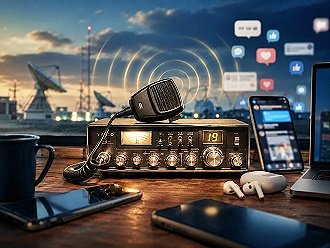 What remained was a core base that valued CB for function, not fashion. Long-haul
truckers stayed. Off-road and four-wheel-drive communities stayed. Rural users with
thin cellular coverage, construction sites, and farms stayed. For them, CB solved
a real problem no other license-free technology had: reliable, short-range voice
communication with no infrastructure and no subscription. By one estimate, the global
CB market was worth roughly $192 million in 2023, with steady growth projected into
the early 2030s - the numbers of a mature, specialized technology, not a dying one.
What remained was a core base that valued CB for function, not fashion. Long-haul
truckers stayed. Off-road and four-wheel-drive communities stayed. Rural users with
thin cellular coverage, construction sites, and farms stayed. For them, CB solved
a real problem no other license-free technology had: reliable, short-range voice
communication with no infrastructure and no subscription. By one estimate, the global
CB market was worth roughly $192 million in 2023, with steady growth projected into
the early 2030s - the numbers of a mature, specialized technology, not a dying one.
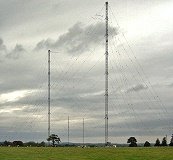 Radio 4 Long Wave Goes Silent
After Decades
Radio 4 Long Wave Goes Silent
After Decades 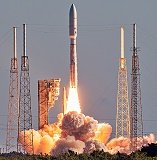 Amazon on Track for 2026
Leo Broadband Debut
Amazon on Track for 2026
Leo Broadband Debut 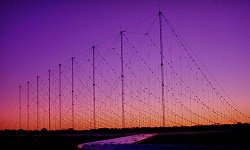 Canada Buys Australian Over-the-Horizon
Radar for Arctic Watch
Canada Buys Australian Over-the-Horizon
Radar for Arctic Watch  Atmospheric Research Center
Wins Reprieve in Court
Atmospheric Research Center
Wins Reprieve in Court 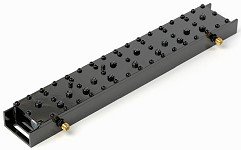




|
||||||||||||||||||||||||||||||||||||