|
|||||||||||||
 |
|||||||||||||
Anatech Electronics August 2026 Newsletter |
|||||||||||||

Press Release Archives: Content is copyright of company represented. Page format, custom text and images are RF Cafe copyright - do not distribute. Note: Posting of press releases costs $100 each for non-advertisers.
Sam Benzacar, of Anatech Electronics, an RF and microwave filter company, has published his August 2026 newsletter that, along with timely news items, features his short op-ed titled "Filtering for Quantum: A Problem No One's Talking About." Sam aptly points out that as quantum computers scale in size, specialized laboratory-built components become both expensive and a schedule liability for development efforts. When a handful of qubits was considered breakthrough-amazing, building all the parts in-house made sense since processes and materials were being invented in the process of doing so. However, at the point when thousands of filters, amplifiers, and other types of components routinely manufactured by commercial companies (like Anatech Electronics) are required, competition between quantum computer designers, if nothing else, will require new strategies - one of which will certainly be outsourcing of parts. Anatech is evidently up to the challenge. A Word from Sam Benzacar - Filtering for Quantum: A Problem No One's Talking About
Quantum computing has attracted enormous investment, breathless press coverage, and the attention of every major technology company and defense agency. What it has not attracted, at least not in proportion to its importance, is adequate engagement with the RF and microwave filter industry, and that gap is going to matter sooner than most people expect. Controlling a superconducting qubit, the architecture currently favored by IBM, Google, and most funded startups, requires delivering precisely shaped microwave signals to a device operating near 15 mK, roughly 200 times colder than deep space. Those signals arrive via coaxial lines passing through successive thermal stages, and everything riding on those lines that is not the intended control pulse is a liability. Thermal noise, spurious signals, harmonics, and out-of-band interference reaching the qubit plane shorten coherence times and increase error rates. Filtering is the primary mechanism for preventing that.
Commercial RF and microwave filter manufacturers have long operated at the intersection of tight electrical specifications, difficult thermal environments, and demanding mechanical constraints. The problem is that quantum computing system designers have largely not tapped it. Custom in-house solutions and a small number of specialized academic-origin vendors have carried most of the load, while the commercial filter industry - with its manufacturing depth, materials expertise, and application engineering resources - has remained at the periphery of quantum hardware development. That arrangement scales poorly. As qubit counts increase (current roadmaps project systems with thousands of physical qubits within this decade) the number of filtered control lines grows with them. A 1,000-qubit processor may require hundreds of individually specified filter paths. Meeting that demand through artisanal solutions is not a viable long-term strategy, and quantum system architects would do well to recognize that the commercial filter industry can help them meet it. The conversation between these two communities is beginning. It needs to move faster.
Vatican Backs Fight to Keep Radio in the Dashboard
Canada to Silence Long-Running Time Signal
FCC Opens Bidding on Long-Dormant AWS-3 Spectrum
NTIA Centralizes U.S. Spectrum Policy
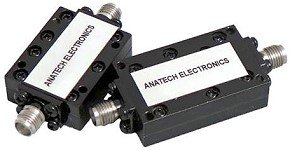
Anatech Electronics Introduces a New Line of Suspended Stripline and Waveguide Type RF Filters
Check out Our Filter Products
Cavity Band Pass Filters LC Band Pass Filters Cavity Bandstop/Notch Filter About Anatech Electronics Anatech Electronics, Inc. (AEI) specializes in the design and manufacture of standard and custom RF and microwave filters and other passive components and subsystems employed in commercial, industrial, and aerospace and applications. Products are available from an operating frequency range of 10 kHz to 30 GHz and include cavity, ceramic, crystal, LC, and surface acoustic wave (SAW), as well as power combiners/dividers, duplexers and diplexers, directional couplers, terminations, attenuators, circulators, EMI filters, and lightning arrestors. The company's custom products and capabilities are available at www.anatechelectronics.com. Contact: Anatech Electronics, Inc. |
|||||||||||||
 |
|||||||||||||
|
|||||||||||||

 By Sam Benzacar
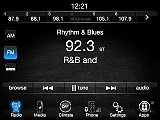 Those fighting to keep terrestrial radio in vehicle dashboards have found an
unexpected ally: the Vatican. The Holy See is supporting efforts to require FM and
DAB/DAB+ receivers in all new cars sold in the European Union, arguing that terrestrial
radio remains an essential public service and a safeguard for democracy and freedom
of information. The proposal, backed by the European Broadcasting Union, would be
incorporated into the EU's pending Digital Networks Act, a broad telecommunications
overhaul expected to be adopted in 2027. Nearly 60% of European radio listening
takes place in vehicles. Vatican officials noted terrestrial radio's resilience
during the war in Ukraine unlike streaming services broadcast radio can continue
delivering news and emergency information when cellular networks, internet connections,
or other communications infrastructure are disrupted.
Those fighting to keep terrestrial radio in vehicle dashboards have found an
unexpected ally: the Vatican. The Holy See is supporting efforts to require FM and
DAB/DAB+ receivers in all new cars sold in the European Union, arguing that terrestrial
radio remains an essential public service and a safeguard for democracy and freedom
of information. The proposal, backed by the European Broadcasting Union, would be
incorporated into the EU's pending Digital Networks Act, a broad telecommunications
overhaul expected to be adopted in 2027. Nearly 60% of European radio listening
takes place in vehicles. Vatican officials noted terrestrial radio's resilience
during the war in Ukraine unlike streaming services broadcast radio can continue
delivering news and emergency information when cellular networks, internet connections,
or other communications infrastructure are disrupted. 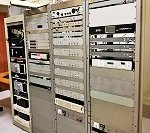 The National Research Council of Canada revealed its decision to silence shortwave
station CHU. CHU uses three shortwave frequencies, via upper single sideband, to
provide time signal service. CHU uses three shortwave frequencies, via upper single
sideband, to provide time signal service. The trio of 3330, 7850 and 14670 kHz originates
from one of three atomic clocks located at the transmitter site operated by the
NRC, about nine miles southwest of Ottawa, Ontario. With shortwave signals traveling
well beyond nationwide borders, the station received listener reports from around
the world. Millions of users, meanwhile, rely on the NRC's Time Signal-based services,
along with government departments, for Coordinated Universal Time (UTC) network
time synchronization.
The National Research Council of Canada revealed its decision to silence shortwave
station CHU. CHU uses three shortwave frequencies, via upper single sideband, to
provide time signal service. CHU uses three shortwave frequencies, via upper single
sideband, to provide time signal service. The trio of 3330, 7850 and 14670 kHz originates
from one of three atomic clocks located at the transmitter site operated by the
NRC, about nine miles southwest of Ottawa, Ontario. With shortwave signals traveling
well beyond nationwide borders, the station received listener reports from around
the world. Millions of users, meanwhile, rely on the NRC's Time Signal-based services,
along with government departments, for Coordinated Universal Time (UTC) network
time synchronization.  The Federal Communications Commission has kicked off the agency's first spectrum
auction in four years, an AWS-3 auction offering 200 5G-grade spectrum licenses
that have lain fallow for more than a decade. Bidding in the AWS-3 auction, formally
designated as Auction 113, began the morning of June 2. The auction involves spectrum
licenses in the 1,695-1,710 MHz, 1,755-1,780 MHz, and 2,155-2,180 MHz bands and
will offer more than 1.4 billion MHz-POPs ("Megahertz Population") available for
auction, a metric calculated by multiplying the bandwidth by the population covered
by the licenses. The license areas included in this auction are home to over 100
million consumers across 48 states, two U.S. territories and the Gulf of Mexico.
They include major markets like New York, Chicago, Boston, Tampa, Fla., and Charlotte,
N.C.
The Federal Communications Commission has kicked off the agency's first spectrum
auction in four years, an AWS-3 auction offering 200 5G-grade spectrum licenses
that have lain fallow for more than a decade. Bidding in the AWS-3 auction, formally
designated as Auction 113, began the morning of June 2. The auction involves spectrum
licenses in the 1,695-1,710 MHz, 1,755-1,780 MHz, and 2,155-2,180 MHz bands and
will offer more than 1.4 billion MHz-POPs ("Megahertz Population") available for
auction, a metric calculated by multiplying the bandwidth by the population covered
by the licenses. The license areas included in this auction are home to over 100
million consumers across 48 states, two U.S. territories and the Gulf of Mexico.
They include major markets like New York, Chicago, Boston, Tampa, Fla., and Charlotte,
N.C. 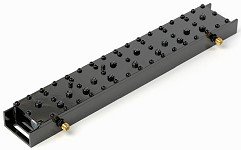



|
||||||||||||||||||||||||||||||||||||