|
|||||||||||||
 |
|||||||||||||
Anatech Electronics June 2026 Newsletter |
|||||||||||||

Press Release Archives: Content is copyright of company represented. Page format, custom text and images are RF Cafe copyright - do not distribute. Note: Posting of press releases costs $100 each for non-advertisers.
Sam Benzacar, of Anatech Electronics, an RF and microwave filter company, has published his June 2026 Newsletter that, along with timely news items, features his short op-ed titled "Millimeter-wave 5G: Physics Didn't Get the Memo." In it, Sam discusses how the wireless industry's present-day talk regarding millimeter-wave 5G operating above 24 GHz sounds a lot like the big plans it had for ubiquitous gigabit connectivity with micro base stations located on every street corner that would assure continuous coverage. It never materialized. The physics issues with above-24-Ghz path loss, shadowing, handset (i.e., phone) construction, etc., will greatly affect the service's usefulness. New items include SpaceX telling the FCC to scrap its Rural Broadband Fund, the U.S. Space Force tapping contractors for its Space Awareness Program, and Broadcom enters Wi-Fi 8 market. A Word from Sam Benzacar - Millimeter-wave 5G: Physics Didn't Get the Memo
Around 2018, the wireless industry declared that millimeter-wave 5G operating above 24 GHz would transform mobile connectivity. Carriers promised multi-gigabit throughput to consumers on city streets, analysts projected massive deployments, and equipment vendors shipped hardware. The RF engineering community was considerably less impressed as it sounded a lot more like marketing than actual progress, and apparently, for good reason. Path loss at 28 GHz is substantially higher than at sub-6 GHz frequencies. Signal penetration through glass, concrete, foliage, and even heavy rain is poor to negligible, and a human body blocking the line of sight between a handset and a base station is enough to cause a significant link degradation.
The sub-6 GHz 5G that most consumers use is a real and useful technology. It delivers genuine improvements over LTE in capacity and latency where the spectrum is available. But it is not what was promised. The RF engineering data that would have tempered the claims was available and understood, but it simply was not given equal weight alongside the marketing. There's a lesson here for the RF and microwave community. System-level performance at millimeter-wave frequencies is acutely sensitive to every element in the signal chain: antenna gain, power amplifier efficiency, filter insertion loss, and connector losses all carry consequences that sub-6 GHz systems can absorb. When the next generation of spectrum - upper mid-band, FR3, or whatever designation follows - arrives with its own set of promises, the engineers specifying the hardware will again be the ones who know where the limits are. That knowledge carries a professional obligation to say so clearly, regardless of what the press releases say.
SpaceX has urged the FCC to eliminate the High-Cost program, a $4.5 billion Universal Service Fund mechanism that subsidizes voice and broadband deployment in rural and remote markets, arguing that Starlink has effectively closed the connectivity gap through competitive pricing and high-speed service. The FCC is currently reviewing modernization options for the program, which funds both infrastructure deployment and rate suppression in underserved areas. The argument comes as the federal BEAD program allocates $21 billion to broadband expansion in underserved communities, including roughly $700 million to SpaceX itself.
The U.S. Space Force has selected 14 companies to compete for task orders under Andromeda, a $1.8 billion, 10-year contracting vehicle managed by Space Systems Command targeting space domain awareness in geosynchronous orbit. The program covers spacecraft and supporting systems designed to track, identify, and interpret the behavior of objects at roughly 22,000 miles altitude, where critical military communications and missile-warning assets operate. The vendor pool pairs established primes with venture-backed entrants - Anduril Industries, Astranis, BAE Systems, Space Mission Systems, General Atomics Electromagnetic Systems, Intuitive Machines, L3Harris Technologies, Lockheed Martin, Millennium Space Systems, Northrop Grumman, Quantum Space, Redwire, Sierra Space, True Anomaly and Turion Space - reflecting a deliberate push by the Space Force to widen its supplier base for national security space missions.
Broadcom has entered the Wi-Fi 8 market with three system-on-chips targeting high-end wireless routers and mesh devices. The designs consolidate application processing, network processing, 2.4 GHz and 5 GHz radios, and Ethernet onto a single die - an integration approach that reduces both power consumption and thermal output compared to prior generations. Wi-Fi 8 builds on Wi-Fi 7's maximum channel width, which increased from 160 to 320 MHz, doubling per-stream bandwidth for client devices. While the standard allows peak throughput of 46 Gbps, real-world consumer performance will likely remain well below 5 Gbps.
The Global Mobile Suppliers Association's latest LTE, 5G, and 3GPP IoT Chipsets report documents sharp gains in both 5G NR mobile platforms and discrete 5G cellular modems since the previous edition in December 2025. Commercially available 5G mobile platforms have increased 18% over that period, while discrete 5G cellular modems posted even stronger growth at 28%. Eight suppliers now offer products in both categories. GSA has cataloged 175 commercially available 5G mobile platforms alongside 32 discrete 5G modems, with the data pointing to a clear shift toward discrete modem architectures in new platform designs. Feature-level tracking reveals 59 chipsets with VoNR support, 140 covering sub-6 GHz bands, and 89 with millimeter-wave capability. Anatech Electronics Introduces a New Line of Suspended Stripline and Waveguide Type RF Filters
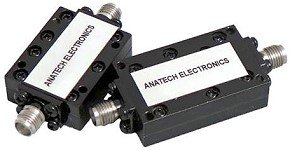
Check out Our Filter Products
Cavity Band Pass Filters LC Band Pass Filters Cavity Bandstop/Notch Filter About Anatech Electronics Anatech Electronics, Inc. (AEI) specializes in the design and manufacture of standard and custom RF and microwave filters and other passive components and subsystems employed in commercial, industrial, and aerospace and applications. Products are available from an operating frequency range of 10 kHz to 30 GHz and include cavity, ceramic, crystal, LC, and surface acoustic wave (SAW), as well as power combiners/dividers, duplexers and diplexers, directional couplers, terminations, attenuators, circulators, EMI filters, and lightning arrestors. The company's custom products and capabilities are available at www.anatechelectronics.com. Contact: Anatech Electronics, Inc. |
|||||||||||||
 |
|||||||||||||
|
|||||||||||||

 By Sam Benzacar
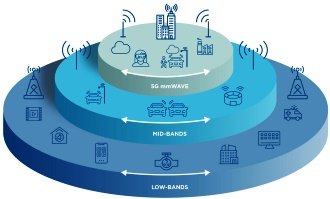 What the carriers and their vendors projected
onto the public - and onto investors - was a vision of dense small-cell deployments
so thorough that the coverage gaps would fill in. There would be lamppost-mounted
base stations every 100 meters, enabling blanket coverage in dense urban environments.
That deployment never materialized at scale because the economics of deploying and
maintaining that infrastructure density, combined with the municipality permitting
challenges in most cities, made the original vision rather unrealistic. The result
is that mmWave 5G exists as a meaningful service in a handful of dense venues -
stadiums, convention centers, select urban corridors - and essentially nowhere else.
What the carriers and their vendors projected
onto the public - and onto investors - was a vision of dense small-cell deployments
so thorough that the coverage gaps would fill in. There would be lamppost-mounted
base stations every 100 meters, enabling blanket coverage in dense urban environments.
That deployment never materialized at scale because the economics of deploying and
maintaining that infrastructure density, combined with the municipality permitting
challenges in most cities, made the original vision rather unrealistic. The result
is that mmWave 5G exists as a meaningful service in a handful of dense venues -
stadiums, convention centers, select urban corridors - and essentially nowhere else.
 SpaceX Tells FCC to Scrap
Rural Broadband Fund
SpaceX Tells FCC to Scrap
Rural Broadband Fund  Space Force Taps Vendors
for Space Awareness Program
Space Force Taps Vendors
for Space Awareness Program 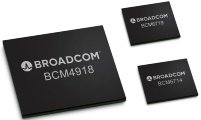 Broadcom Enters Wi-Fi 8
Market
Broadcom Enters Wi-Fi 8
Market  GSA Reports Sharp Gains
in 5G Chipsets
GSA Reports Sharp Gains
in 5G Chipsets 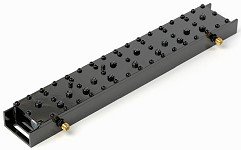



|
||||||||||||||||||||||||||||||||||||