|
|
|||||||||
| Software: RF Cascade Workbook | RF Symbols for Office | RF Symbols & Stencils for Visio | Espresso Workbook | ||||||||||
|
|||||||||||||||||||||||||||||||
  |
   |
||||||||||||||||||||||||||||||
|
Please Support RF Cafe by purchasing my ridiculously low-priced products, all of which I created. RF & Electronics Symbols for Visio RF & Electronics Symbols for Office RF & Electronics Stencils for Visio T-Shirts, Mugs, Cups, Ball Caps, Mouse Pads These Are Available for Free |
|||||||||||||||||||||||||||||||


Anatech Electronics September 2022 Newsletter


Press Release Archives:
2026 | 2025 |
2024 |
2023
|
2022 |
2021
Content is copyright of company represented. Page format, custom text and images are RF Cafe copyright - do not distribute. Note: Posting of press releases costs $100 each for non-advertisers.

Sam Benzacar of Anatech Electronics, an RF and microwave filter company, has published his September 2022 newsletter that features his short op-ed titled "It's Official: DSRC is Dead," where he discusses how the 1999 era (Y2K era remember?) "Dedicated Short-Range Communications (DSRC)," which was allocated 75 MHz of spectrum at 5.9 GHz for "intelligent transportation systems," is no more. "Cellular to Everything (C-V2X)" is its replacement. Also reported is the introduction of C-Band-proof radar altimeters, a THz Development grant to NYU's Tandon School of Engineering, and HawkEye 360 developing RF-sensing capabilities for U.S. Army. As always, Sam demonstrates a keen awareness of the industry for which his company, Anatech Electronics, services.
A Word from Sam Benzacar
It's Official: DSRC is Dead
 By Sam Benzacar
We can now safely say that Dedicated Short-Range Communications (DSRC), for which the federal government in 1999 designated 75 MHz of spectrum around 5.9 GHz for "intelligent transportation systems," is dead. And the winner is? You guessed it, the wireless carriers with its "Cellular to Everything (C-V2X)." This could come as no surprise, as DSRC was conceived more than two decades ago, when Nokia introduced the first mobile phone with an internal antenna, Wi-Fi was at IEEE 802.11b, Intel introduced the "blazingly fast" 400-MHz Celeron processor, and Microsoft released Windows 95 SE.
Technology has obviously moved on since 1999, but in the government's defense, if it had not allocated this band when it did it would long ago have been gobbled up by wireless carriers and Wi-Fi to meet their demands to exceptionally high speeds. That is, with so little spectrum available at mid-band frequencies for use by 5G, 75 MHz at 5.9 GHz is a prime spot to for reallocation. And DSRC unused, it was inevitable that the wireless industry would move in for the kill, and it did.
The DSRC allocation is from 5850 to 5925 MHz and sits squarely between the U-NII-3 band at 5725 to 5850 MHz used by Wi-Fi and the U-NII-5 band between 5925 to 6425 MHz. The FCC in 2013 proposed Wi-Fi sharing in the 5.9 GHz band and designated it as the U-NII-4 band. Automakers, assuming that DSRC would be the de facto solution for meeting the needs of vehicle autonomy when the time came to deploy it, spent a reported $800 million on DSRC, conducted many trials based on its basic architecture, and were adamant that their work should not go to waste.
And until this day, some in the auto industry stand behind DSRC but even before 5G arrived it became evident that cellular had the potential to make DSRC obsolete. While DSRC requires dedicated roadside infrastructure, cellular already has it nearly everywhere, and it can be used for every purpose that will be required for full vehicle autonomy. Speed is no problem either because even 4G LTE has the necessary data rates that is far faster than what would be achievable with DSRC. Sensors from radar to lidar, cameras, and mapping have made dramatic advances, all of which would work with existing cellular networks and others in development.
In the hopes of placating everyone, the FCC took the "bold" step of mandating the phase-out of DSRC, and Congress chimed by offering incentives for the auto industry to stop fighting the inevitable and join the C-V2X party. The FCC voted to shift 30 MHz of the 75 MHz reserved for DSRC to C-V2X on an exclusive basis and allocated 45 MHz for Wi-Fi use. While 30 MHz isn't much spectrum, the modulation techniques used by the wireless industry are very efficient, so the full band wasn't necessary.
So, has this debacle finally been concluded? For practical purposes, DSRC is dead because the momentum behind C-V2X is unstoppable and there is no longer any time left for dithering. Except for a few outliers, automakers have already shifted gears toward C-V2x and suppliers such as Qualcomm and others are making chipsets and other hardware available.
 5G-Immune Radar Altimeters Appear
Avionics manufacturer FreeFlight Systems' Terrain series of radar altimeters has received FAA certification to meet performance standards for airborne low-range radar altimeters free from interference by 5G cellular telephone networks. They are a response to the recent frenzy over potential interference with existing radar when C-band base stations are located near airports. The issue pitted wireless carriers against the airline industry and even wound up in Congress. The problem is essentially that many radar altimeters and service of insufficient bandpass filtering to reject signals nearby, although the controversy focused on whether this was the case considering there is considerable guard band in place to prevent interference.
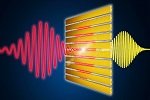 NYU Wireless Gets $3 Million for Terahertz Development
The NYU Wireless research center at the NYU Tandon School of Engineering has received $3 million from the National Science Foundation to lay the groundwork for terahertz mobile wireless communication and to launch a new terahertz measurement facility. The award will help NYU and its collaborators, the University of Colorado at Boulder, University of Nebraska–Lincoln, and Florida International University, pioneer basic measurements of devices, circuits, materials, and radio propagation channels at the highest reaches of the radio spectrum. Terahertz radio spectrum presents possibilities and challenges for mobile communications from see-in-the-dark sensors and revolutionary imaging and communications technologies to Tricorder-like medical devices.
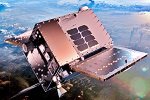 HawkEye 360 to Develop RF-sensing Capabilities
for U.S. Army
HawkEye 360 to Develop RF-sensing Capabilities
for U.S. Army
HawkEye 360 has received a Cooperative Research and Development Agreement (CRADA) with the U.S. Army Space and Missile Defense Command (SMDC) to develop Satellite-based RF-sensing capabilities to provide tactical support for warfighters. The program will support the Army's initiative to develop more effective systems that strengthen how it mobilizes, protects, and sustains expeditionary forces leveraging tactically relevant commercial RF information.
Anatech Electronics Introduces a New Line of Suspended Stripline and Waveguide Type RF Filters
|
LINKS: Waveguide Bandstop & Waveguide Bandpass |
LINKS: Suspended Stripline Highpass & Suspended Stripline Lowpass |
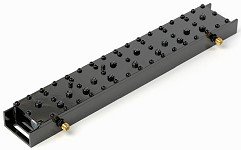
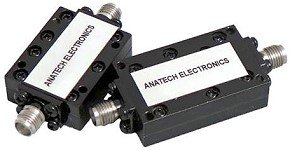
Check out Our Filter Products


Cavity Band Pass Filters LC Band Pass Filters Cavity Bandstop/Notch Filter
About Anatech Electronics
Anatech Electronics, Inc. (AEI) specializes in the design and manufacture of standard and custom RF and microwave filters and other passive components and subsystems employed in commercial, industrial, and aerospace and applications. Products are available from an operating frequency range of 10 kHz to 30 GHz and include cavity, ceramic, crystal, LC, and surface acoustic wave (SAW), as well as power combiners/dividers, duplexers and diplexers, directional couplers, terminations, attenuators, circulators, EMI filters, and lightning arrestors. The company's custom products and capabilities are available at www.anatechelectronics.com.
Contact:
Anatech Electronics, Inc.
70 Outwater Lane
Garfield, NJ 07026
(973)
772-4242
Posted September 26, 2022

Copyright: 1996 - 2026 |
About RF Cafe RF Cafe began life in 1996 as "RF Tools" in an AOL screen name web space totaling 2 MB. Its primary purpose was to provide me with ready access to commonly needed formulas and reference material while performing my work as an RF system and circuit design engineer. The World Wide Web (Internet) was largely an unknown entity at the time and bandwidth was a scarce commodity. Dial-up modems blazed along at 14.4 kbps while tying up your telephone line, and a lady's voice announced "You've Got Mail" when a new message arrived... |
Copyright 1996 - 2026 All trademarks, copyrights, patents, and other rights of ownership to images
and text used on the RF Cafe website are hereby acknowledge My Hobby Website: My Daughter's Website: |
