|
|
|||||||||
| Software: RF Cascade Workbook | RF Symbols for Office | RF Symbols & Stencils for Visio | Espresso Workbook | ||||||||||
|
|||||||||||||||||||||||||||||||
   |
   |
||||||||||||||||||||||||||||||
|
Please Support RF Cafe by purchasing my ridiculously low-priced products, all of which I created. RF & Electronics Symbols for Visio RF & Electronics Symbols for Office RF & Electronics Stencils for Visio T-Shirts, Mugs, Cups, Ball Caps, Mouse Pads These Are Available for Free |
|||||||||||||||||||||||||||||||


Anatech Electronics July 2021 Newsletter


Press Release Archives:
2026 | 2025 |
2024 |
2023
|
2022 |
2021
Content is copyright of company represented. Page format, custom text and images are RF Cafe copyright - do not distribute. Note: Posting of press releases costs $100 each for non-advertisers.

Sam Benzacar of Anatech Electronics, an RF and microwave filter company, has published his July 2021 newsletter that features his short op-ed titled "Wi-SUN: The Most Pervasive Wireless Technology You May Not Heard Of," where he notes "Like ZigBee, WirelessHART, ISA100, SNAP, and 6LoWPAN, Wi-SUN (doesn't even have a Wikipedia entry yet) is based on the IEEE 802.15.4 standard and employs a mesh-type rather than star topology, making it inherently self-healing. There is no need for base stations because each node talks to the others, eliminating a single point of failure." Not only haven't I heard of Wi-SN, but I haven't heard of WirelessHART (HART = Highway Addressable Remote Transducer) or ISA100. Sam also presents some relevant industry news items as well.
A Word from Sam Benzacar
Wi-SUN: The Most Pervasive Wireless Technology You May Not Heard Of
 By Sam Benzacar
If you haven't heard of Wi-SUN, it's a good time to learn about it because this wireless solution may just be the most widely deployed IoT communications technology in the world. Now, you might be thinking, how can this be, when there are so many other connectivity standards out there making similar statements? A likely answer is that because Wi-SUN's primary target markets are field area networks in applications such as oil and gas and utilities rather than "Industry 4.0" and home automation, it doesn't get mainstream media attention. Let's take a look.
The initiative to create Wi-SUN began in 2010 with the goal of providing a communication solution for interoperable smart utility field area networks that can span hundreds or even thousands of miles with minimal infrastructure and potentially millions of fixed endpoints. This places Wi-SUN in direct competition with the cellular industry's Narrowband IoT (NB-IoT) and Low-Power Wide Area Network (LPWAN) solutions. A sponsoring group called the Wi-SUN Alliance has developed a verifiable test and certification program to ensure products from different manufacturers and work together. The alliance has more than 300 member organizations in 46 countries.
Like ZigBee, WirelessHART, ISA100, SNAP, and 6LoWPAN, Wi-SUN is based on the IEEE 802.15.4 standard and employs a mesh-type rather than star topology, making it inherently self-healing. There is no need for base stations because each node talks to the others, eliminating a single point of failure. There are eight main subsets of IEEE 802.15.4, and Wi-SUN uses IEEE 802.15.4g for the physical layer and IEEE 802.15.4e for the MAC layer. It operates in the unlicensed ISM bands at 915 MHz and 2.4 GHz and has a range of 4 km, although through the use of repeaters its range can be expanded dramatically.
As is the case with its competitors, Wi-SUN is designed to allow endpoint devices to operate with very low power consumption, which in its case is less than 8 mA. It also has extremely low latency that is essential for mission-critical applications in which every millisecond counts. When compared to LoRa and NB-IoT, Wi-SUN has round-trip latency of about 0.02 s versus 1 or 2 s for LoRa and up 8 s for NB-IoT, and its maximum data rate is 300 Kb/s versus 50 Kb/s for LoRa and 60 Kb/s NB-IoT.
When Wi-SUN was conceived, IoT was simply a concept, but today it's ubiquitous, which means that Wi-SUN is now expanding its reach into other domains such as smart cities in any other geographically dispersed environments in which reliable, simple, long-range communications technologies are required. This is no doubt why the projected growth of this technology is so strong. In fact, based on data from several market research companies, its current global market value is more than $1.5 billion and is growing at a rate of an impressive 25% per year.
Anatech Electronics has been providing standard and custom RF and microwave filters and other filter-based components to solve interference problems for utilities, oil and gas companies, and organization with similar requirements for more than 30 years, and we can solve yours as well. So, reach out to us with your most challenging problems at (973) 442-7272 or visit our website at anatechelectronics.com. Below are same links to products that helps Technically RF filters are in most cases specifically designed as a narrow band frequency selective device in the design of communication systems or to remove interference coming from a co-site transmitter, satellites, wireless communication site.
We can always find a solution! Standard Band Pass Filters library
- Standard Band Pass Filters library
- Standard Low Pass Filters Library
- Standard High Pass Filters Library
Ericsson: 5G mobile subs will reach 580 million by year's end.
 The 20th addition of the
Ericsson Mobility Report predicts that 5G will surpass its predecessors in terms
of adoption with about 3.5 billion subscriptions and 60% population coverage forecast
by the end of 2026. So far, more than 160 communications service providers have
launched 5G services and more than 300 5G smartphone models have been announced
or launched. 5G subscriptions are estimated to reach 1 billion two years earlier
than 4G did. During the first quarter of this year, 4G subscriptions increased by
approximately 100 million, exceeding 4.6 billion, equaling 58% of all mobile subscriptions.
It is projected to peak this year at 4.8 billion before declining to 3.9 billion
by the end of 2026.
The 20th addition of the
Ericsson Mobility Report predicts that 5G will surpass its predecessors in terms
of adoption with about 3.5 billion subscriptions and 60% population coverage forecast
by the end of 2026. So far, more than 160 communications service providers have
launched 5G services and more than 300 5G smartphone models have been announced
or launched. 5G subscriptions are estimated to reach 1 billion two years earlier
than 4G did. During the first quarter of this year, 4G subscriptions increased by
approximately 100 million, exceeding 4.6 billion, equaling 58% of all mobile subscriptions.
It is projected to peak this year at 4.8 billion before declining to 3.9 billion
by the end of 2026.
FCC mandates better emergency alert technology
 The FCC has adopted rules
to improve the way the public receives emergency alerts on their mobile phones,
televisions, and radios. The nation's Emergency Alert System and Wireless Emergency
Alerts are of increasing importance because of the increase in emergencies and disasters.
After a false emergency alert in Hawaii in 2018 that mistakenly warned of an incoming
ballistic missile, the National Defense Authorization Act for FY 2021 directed the
FCC and the Federal Emergency Management Agency (FEMA) to adopt rules to strengthen
emergency alerting. The FCC's Report and Order aims to ensure that this never happens
again.
The FCC has adopted rules
to improve the way the public receives emergency alerts on their mobile phones,
televisions, and radios. The nation's Emergency Alert System and Wireless Emergency
Alerts are of increasing importance because of the increase in emergencies and disasters.
After a false emergency alert in Hawaii in 2018 that mistakenly warned of an incoming
ballistic missile, the National Defense Authorization Act for FY 2021 directed the
FCC and the Federal Emergency Management Agency (FEMA) to adopt rules to strengthen
emergency alerting. The FCC's Report and Order aims to ensure that this never happens
again.
New vulnerability for Wi-Fi
 According to a report in
Engadget, security researcher Belgian security researcher Mathy Vanhoef, well known
for detecting faults in Wi-Fi security, has discovered another one falling into
the category of frag attacks that result from faults in the Wi-Fi standard that
date back to 1997. Vanhoef explained that these flaws can be used to inject plain-text
frames into a protected Wi-Fi network that look like handshake messages. This allows
the hacker to intercept traffic by tricking the victim into using a malicious DNS
server. Vanhoef found that two out of four home routers he tested were affected
by this vulnerability, along with several IoT devices and some smartphones. Vanhoef
shared his discoveries with the Wi-Fi Alliance, which has been working with manufacturers
to update their devices.
According to a report in
Engadget, security researcher Belgian security researcher Mathy Vanhoef, well known
for detecting faults in Wi-Fi security, has discovered another one falling into
the category of frag attacks that result from faults in the Wi-Fi standard that
date back to 1997. Vanhoef explained that these flaws can be used to inject plain-text
frames into a protected Wi-Fi network that look like handshake messages. This allows
the hacker to intercept traffic by tricking the victim into using a malicious DNS
server. Vanhoef found that two out of four home routers he tested were affected
by this vulnerability, along with several IoT devices and some smartphones. Vanhoef
shared his discoveries with the Wi-Fi Alliance, which has been working with manufacturers
to update their devices.
DARPA wants high-power amplifiers to cook enemy electronics
 DARPA is selecting participants
for its Waveform-Agile RF Directed Energy (WARDEN) project whose goal is to develop
high-power RF and microwave power amplifiers that can generate enough power to damage
or destroy enemy electronics. The agency also wants to develop computational models
to describe the coupling of electromagnetic radiation into complex enclosures via
unintentional paths like seams, apertures, and cable entry points, and to develop
agile waveforms that can also damage enemy electronics. It has three technical areas:
a high-power microwave traveling-wave amplifier, rapid assessment and numerical
generation of an electromagnetic response, and agile waveform development.
DARPA is selecting participants
for its Waveform-Agile RF Directed Energy (WARDEN) project whose goal is to develop
high-power RF and microwave power amplifiers that can generate enough power to damage
or destroy enemy electronics. The agency also wants to develop computational models
to describe the coupling of electromagnetic radiation into complex enclosures via
unintentional paths like seams, apertures, and cable entry points, and to develop
agile waveforms that can also damage enemy electronics. It has three technical areas:
a high-power microwave traveling-wave amplifier, rapid assessment and numerical
generation of an electromagnetic response, and agile waveform development.
Getting Ready for 5G:
Anatech Electronics introduce New Ka band 30.5 GHz Waveguide Band Pass Filter. Featuring a center frequency of 30.5 GHz, a bandwidth of 1000 MHz, an Insertion Loss 1 dB Max, and a Power Handling is 20 watts.

Anatech Electronics Introduces a New Line of Suspended Stripline and Waveguide Type RF Filters
|
LINKS: Waveguide Bandstop & Waveguide Bandpass |
LINKS: Suspended Stripline Highpass & Suspended Stripline Lowpass |


Check out Our Filter Products
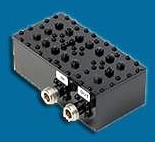
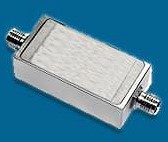
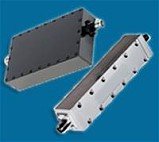
Cavity Band Pass Filters LC Band Pass Filters Cavity Bandstop/Notch Filter
About Anatech Electronics
Anatech Electronics, Inc. (AEI) specializes in the design and manufacture of standard and custom RF and microwave filters and other passive components and subsystems employed in commercial, industrial, and aerospace and applications. Products are available from an operating frequency range of 10 kHz to 30 GHz and include cavity, ceramic, crystal, LC, and surface acoustic wave (SAW), as well as power combiners/dividers, duplexers and diplexers, directional couplers, terminations, attenuators, circulators, EMI filters, and lightning arrestors. The company's custom products and capabilities are available at www.anatechelectronics.com.
Contact:
Anatech Electronics, Inc.
70 Outwater Lane
Garfield, NJ 07026
(973) 772-4242
Posted July 20, 2021

Copyright: 1996 - 2026 |
About RF Cafe RF Cafe began life in 1996 as "RF Tools" in an AOL screen name web space totaling 2 MB. Its primary purpose was to provide me with ready access to commonly needed formulas and reference material while performing my work as an RF system and circuit design engineer. The World Wide Web (Internet) was largely an unknown entity at the time and bandwidth was a scarce commodity. Dial-up modems blazed along at 14.4 kbps while tying up your telephone line, and a lady's voice announced "You've Got Mail" when a new message arrived... |
Copyright 1996 - 2026 All trademarks, copyrights, patents, and other rights of ownership to images
and text used on the RF Cafe website are hereby acknowledge My Hobby Website: My Daughter's Website: |
