|
||||||||||||||||||||||||||||||||||||||||||||||||||||||||||||||||||||||||||||||||||||||||||
 |
||||||||||||||||||||||||||||||||||||||||||||||||||||||||||||||||||||||||||||||||||||||||||
Cascaded Noise Figure & Noise Temperature |
||||||||||||||||||||||||||||||||||||||||||||||||||||||||||||||||||||||||||||||||||||||||||
|
Noise figure (NF) is the increase in noise power of a device from the input to the output that is greater than the signal gain. In effect, it is the amount of decrease of the signal-to-noise ratio. Like gain, noise figure can be expressed either as a ratio or in decibels (dB). Note: NF is not a power level, so it never has units of dBm. As the following equation shows, cascaded noise figure is affected most profoundly by the noise figure of components closest to the input of the system as long as some positive gain exists in the cascade. If only loss exists in the cascade, then the cascaded noise figure equals the magnitude of the total loss.
Cascading Noise Figure Values in a Chain of Components
Conversions: nf = 10NF/10 ↔ NF (dB) = 10 * log10 (nf) where nf is a unitless ratio and NF has units of dB
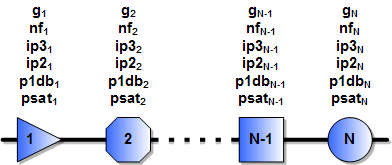
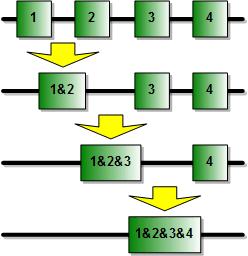
This equation gives the method for calculating cascaded NF (nf) values based on the nf and gain of each stage. When using the formula in a software program or in a spreadsheet, it is more convenient and efficient to calculate each successive cascaded stage with the one preceding it using the following format, per the drawing (above-right).
Click here to see Agilent's App Note 1303 on using a spectrum analyzer to measure noise figure.
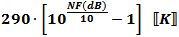
Conversion Between Noise Figure and Noise Temperature Noise Temperature (K) =
Noise Figure (dB) =
These equations assume a room temperature reference (290 K). If applicable, use whatever your reference temperature is in place of the 290K shown. Cascaded Noise Temperature Calculation
The following table lists a few conversions. See Espresso Engineering Workbook (free) for a calculator.
Related Pages on RF Cafe - Noise Figure Meters & Noise Generators Check this out - someone referenced this page on Wikipedia! |
||||||||||||||||||||||||||||||||||||||||||||||||||||||||||||||||||||||||||||||||||||||||||
 |
||||||||||||||||||||||||||||||||||||||||||||||||||||||||||||||||||||||||||||||||||||||||||
|
||||||||||||||||||||||||||||||||||||||||||||||||||||||||||||||||||||||||||||||||||||||||||







|
||||||||||||||||||||||||||||||||||||