|
|||||||||||||
 |
|||||||||||||
Father of Radar Gets His Reward from Patent Office
|
|||||||||||||
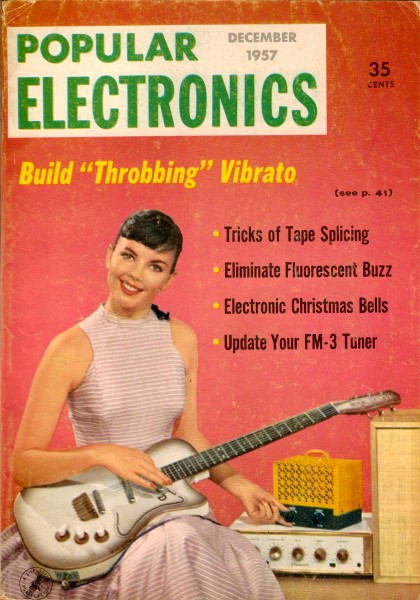
Well, this might get some dander up amongst the believers that Sir Robert Watson-Watt is "the Father of Radar." In the December 1957 edition of Popular Electronics magazine, Colonel William R. Blair was given that honored designation based on his work on a pulse-echo method of direction finding in the 1920s. The Wikipedia entry for Col. Blair refers to him more specifically as the "Father of American Radar." William R. Blair was awarded U.S. patent #2,803,819, titled "Object locating system," on August 20, 1957 - a full 13 years after the patent application was submitted. Watson-Watt was issued UK patent #GB426328A, titled "Improvements in wireless direction and position finding," in April of 1935 on a radio device for detecting and locating an aircraft. His research was born out of an investigation into a "death ray" which had reportedly been invented by the Germans. Father of Radar Gets His Reward from Patent Office
Col. William R. Blair (Ret.)
SCR-268 Radar System The U. S. Government finally recognized the daddy of radar by granting a patent to Col. William R. Blair (Ret.), left, who conceived the pulse-echo method of direction finding prior to 1930. It was developed during the 1930's at, the Signal Corps Laboratories in Fort Monmouth, N. J. In 1937 a prototype, SCR-268, radar system (below) was demonstrated for the Secretary of War and Members of Congress. Plans for this set were turned over to manufacturing companies so that they could build radar equipment for the U. S. Army. Due to the high degree of secrecy surrounding the development of radar, a patent application was not filed by the Army Signal Corps until 1945, and since then the Patent Office has had the matter under consideration. This radar patent is considered to be as important to the military as the first U. S. patent issued on the telephone was to commercial communication. Scope "Shadow-Screen"
Open Sesame
Posted February 11, 2020 |
|||||||||||||
 |
|||||||||||||
|
|||||||||||||

 The oscilloscope Shadow-Screen manufactured
by Van-Dee Products, Laguna Beach, Calif., is said to end the need for subdued light
or an oscilloscope hood. It consists of hundreds of small, hexagonal openings that
serve as individual shadow boxes, shutting off glare. The shape of the openings
permits observation from any point within 45° of face-on position. Note contrast
in photo above.
The oscilloscope Shadow-Screen manufactured
by Van-Dee Products, Laguna Beach, Calif., is said to end the need for subdued light
or an oscilloscope hood. It consists of hundreds of small, hexagonal openings that
serve as individual shadow boxes, shutting off glare. The shape of the openings
permits observation from any point within 45° of face-on position. Note contrast
in photo above.  Genie Lift-A-Dor (not the luscious lady below,
but what she's holding) is a new R/C system for opening garage doors from your car.
If you should ever want to put the car away with her around, you'll find that a
simple touch of the button she's holding will unlock the door, open it and turn
on the garage lights. Another push will close and lock the door, and turn out the
lights. Made by Alliance Manufacturing Co., Inc., Alliance, Ohio, the device works
on a limited-range low frequency which prevents false activation by stray signals.
Genie Lift-A-Dor (not the luscious lady below,
but what she's holding) is a new R/C system for opening garage doors from your car.
If you should ever want to put the car away with her around, you'll find that a
simple touch of the button she's holding will unlock the door, open it and turn
on the garage lights. Another push will close and lock the door, and turn out the
lights. Made by Alliance Manufacturing Co., Inc., Alliance, Ohio, the device works
on a limited-range low frequency which prevents false activation by stray signals.

|
||||||||||||||||||||||||||||||||||||