|
|||||||||||||
 |
|||||||||||||
Anatech Electronics January 2026 Newsletter |
|||||||||||||

Press Release Archives: Content is copyright of company represented. Page format, custom text and images are RF Cafe copyright - do not distribute. Note: Posting of press releases costs $100 each for non-advertisers.
Sam Benzacar, of Anatech Electronics, an RF and microwave filter company, has published his January 2026 Newsletter that, along with timely news items, features his short op-ed titled "The Internet of Things Has Finally Grown Up." Sam points out how the expectations of wireless connectivity to all aspects of our everyday lives have transitioned from a science fiction daydream to a reality that now constitutes a critical aspect of modern-day existence. The Dick Tracy wristwatch is no longer a comic prop; it is reality. In fact, so commonplace are such technological wonders that young kids even wear them to school - not just super cops. Factory automation no longer relies on massive bundles of wires, but on high-speed, ultra-reliable wireless connectivity. Critical medical devices that not so long ago considered anything other than a hard-wire connection essential, now communicate to doctors, patients, central networks, and each other via radio waves. My daughter and son-in-law have their entire farm property interconnected with security cameras, entry alarms, cars, smart appliances, computers, light switches, HVAC system, and each other (via cellphone and smart watches), with most control functions being exercisable via spoken request to Alexa. That's not my way of doing things, but then I'm an old guy who has manually flipped wall switches and looked out the window for surveillance for nearly seven decades. The world, she has changed. A Word from Sam Benzacar - The Internet of Things Has Finally Grown Up
We have largely moved past the "can we connect it?" phase of the Internet of Things. That early era of experimenting with smart gadgets to see if they could talk to a network is behind us, and frankly, the stakes have gotten a lot higher. Today, we aren't just connecting devices for the novelty of it; we are embedding them into the critical infrastructure that runs our world -- from power grids to factory floors and transportation systems. The goal has shifted from simply getting a signal to ensuring that the signal is reliable enough to trust with our safety and money. It is no longer about whether a sensor can connect, but whether it can survive in the field for a decade without causing a disaster if it fails.
The networking side has had to grow up, too. It's not just about Wi-Fi anymore; we are seeing a complex mix of short-range Bluetooth or sub-GHz radios for local talk, paired with heavy-duty LTE-M or 5G for wide-area backhaul. It's a messy, complicated ecosystem where we must balance power consumption against performance. We are constantly tuning how often a radio wakes up to transmit because, in many of these deployments, changing a battery is either too expensive or physically impossible. But the hardest part isn't the hardware or the networking, it's the keeping IoT systems consistently upgraded for 10 or 15 years or even longer, including security batches and firmware upgrades. It's a tall order because the market will continue to grow from its current $1trillian today to double that in the next decade, according to most analysts. NextNav Activates First Commercial 5G PNT Network
FAA Finally Upgrading Airport Radars
AT&T Takes Moves to Eliminate Copper Landlines
AST SpaceMobile's Launches Huge Direct-to-Device
Anatech Electronics Introduces a New Line of Suspended Stripline and Waveguide Type RF Filters
Check out Our Filter Products
Cavity Band Pass Filters LC Band Pass Filters Cavity Bandstop/Notch Filter About Anatech Electronics Anatech Electronics, Inc. (AEI) specializes in the design and manufacture of standard and custom RF and microwave filters and other passive components and subsystems employed in commercial, industrial, and aerospace and applications. Products are available from an operating frequency range of 10 kHz to 30 GHz and include cavity, ceramic, crystal, LC, and surface acoustic wave (SAW), as well as power combiners/dividers, duplexers and diplexers, directional couplers, terminations, attenuators, circulators, EMI filters, and lightning arrestors. The company's custom products and capabilities are available at www.anatechelectronics.com. Contact: Anatech Electronics, Inc. |
|||||||||||||
 |
|||||||||||||
|
|||||||||||||

 By Sam Benzacar
 This shift fundamentally changes how we must
design these systems. We are no longer dealing with isolated experiments; we are
managing massive fleets of incredibly diverse hardware. Some of these devices are
tiny, simple microcontrollers doing one specific job, while others are powerful
embedded computers running full operating systems. And they all must coexist. We
have realized that we can't just blindly rely on the cloud for everything because
it is often too expensive or too slow for real-time decisions. Instead, we are pushing
the "brains" of the operation down to the edge. By processing data and running control
logic right where the device sits, we ensure that a factory line keeps moving or
a safety valve closes even if the internet connection goes down.
This shift fundamentally changes how we must
design these systems. We are no longer dealing with isolated experiments; we are
managing massive fleets of incredibly diverse hardware. Some of these devices are
tiny, simple microcontrollers doing one specific job, while others are powerful
embedded computers running full operating systems. And they all must coexist. We
have realized that we can't just blindly rely on the cloud for everything because
it is often too expensive or too slow for real-time decisions. Instead, we are pushing
the "brains" of the operation down to the edge. By processing data and running control
logic right where the device sits, we ensure that a factory line keeps moving or
a safety valve closes even if the internet connection goes down.  NextNav has activated the first operational 5G PNT network in Santa Clara County,
California, a milestone that combines resilient broadband with a distinct focus
on solving the industry's critical "Z-axis" challenge. While traditional GPS struggles
with indoor altitude -- leaving emergency responders unable to distinguish between
the ground floor and a high-rise apartment -- NextNav's architecture delivers vertical
precision within three meters, meeting strict FCC mandates. The system achieves
this by using a network of ground stations to cross-reference local atmospheric
pressure with smartphone sensors; this comparison mathematically cancels out weather
anomalies, allowing the network to overcome the "flat blue dot" problem and pinpoint
a user's exact floor level.
NextNav has activated the first operational 5G PNT network in Santa Clara County,
California, a milestone that combines resilient broadband with a distinct focus
on solving the industry's critical "Z-axis" challenge. While traditional GPS struggles
with indoor altitude -- leaving emergency responders unable to distinguish between
the ground floor and a high-rise apartment -- NextNav's architecture delivers vertical
precision within three meters, meeting strict FCC mandates. The system achieves
this by using a network of ground stations to cross-reference local atmospheric
pressure with smartphone sensors; this comparison mathematically cancels out weather
anomalies, allowing the network to overcome the "flat blue dot" problem and pinpoint
a user's exact floor level. 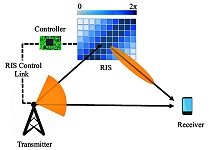 The Federal Aviation Administration
is overhauling the technical foundation of the National Airspace System by replacing
14 disparate legacy radar configurations with a unified, modern surveillance architecture.
To execute this upgrade, the agency has contracted RTX Corporation's Collins Aerospace
and the Indra Group to manufacture next-generation, commercially available radar
sets for up to 612 sites. RTX brings significant engineering heritage to the project,
leveraging its experience with the AN/SPY-6 naval radar family. Under the technical
direction of prime integrator Peraton, the initiative aims to consolidate the current
fragmented infrastructure into a streamlined system by June 2028. This standardization
is designed to drastically reduce the logistical footprint and simplify complex
maintenance requirements, with the first installations commencing this quarter.
The Federal Aviation Administration
is overhauling the technical foundation of the National Airspace System by replacing
14 disparate legacy radar configurations with a unified, modern surveillance architecture.
To execute this upgrade, the agency has contracted RTX Corporation's Collins Aerospace
and the Indra Group to manufacture next-generation, commercially available radar
sets for up to 612 sites. RTX brings significant engineering heritage to the project,
leveraging its experience with the AN/SPY-6 naval radar family. Under the technical
direction of prime integrator Peraton, the initiative aims to consolidate the current
fragmented infrastructure into a streamlined system by June 2028. This standardization
is designed to drastically reduce the logistical footprint and simplify complex
maintenance requirements, with the first installations commencing this quarter.
 AT&T has launched
an aggressive five-year initiative to retire most of its traditional copper wire
infrastructure, a strategic move designed to end the financial strain of maintaining
parallel networks. The telecommunications giant argues that the aging copper lines
degrade over time and require constant, costly maintenance that frequently exceeds
the revenue customers pay for the service. With the Federal Communications Commission
(FCC) now permitting carriers to sunset these legacy systems, AT&T is shifting
its capital investment entirely toward modern fiber optics and wireless technologies.
As a result, customers currently relying on copper connections will be forced to
transition to alternative services, either moving to fiber where available or adopting
fixed wireless cellular solutions in areas where cable upgrades are not planned.
AT&T has launched
an aggressive five-year initiative to retire most of its traditional copper wire
infrastructure, a strategic move designed to end the financial strain of maintaining
parallel networks. The telecommunications giant argues that the aging copper lines
degrade over time and require constant, costly maintenance that frequently exceeds
the revenue customers pay for the service. With the Federal Communications Commission
(FCC) now permitting carriers to sunset these legacy systems, AT&T is shifting
its capital investment entirely toward modern fiber optics and wireless technologies.
As a result, customers currently relying on copper connections will be forced to
transition to alternative services, either moving to fiber where available or adopting
fixed wireless cellular solutions in areas where cable upgrades are not planned.
 Satellite Texas-based
AST SpaceMobile has launched BlueBird 6, the first of its massive next-generation
LEO satellites designed to provide broadband directly to unmodified smartphones.
Featuring a 223-square-meter phased-array aperture -- three times larger than previous
models -- the spacecraft utilizes the proprietary AST5000 ASIC to support 10 GHz
of processing bandwidth and peak speeds of 120 Mb/s per cell. Building on the successful
5G testing of its BlueWalker 3 prototype, the company intends to launch up to 60
additional satellites this year to establish U.S. coverage, with a long-term goal
of deploying a constellation of nearly 250 spacecraft.
Satellite Texas-based
AST SpaceMobile has launched BlueBird 6, the first of its massive next-generation
LEO satellites designed to provide broadband directly to unmodified smartphones.
Featuring a 223-square-meter phased-array aperture -- three times larger than previous
models -- the spacecraft utilizes the proprietary AST5000 ASIC to support 10 GHz
of processing bandwidth and peak speeds of 120 Mb/s per cell. Building on the successful
5G testing of its BlueWalker 3 prototype, the company intends to launch up to 60
additional satellites this year to establish U.S. coverage, with a long-term goal
of deploying a constellation of nearly 250 spacecraft.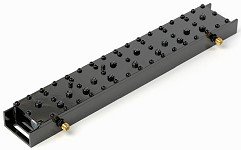




|
||||||||||||||||||||||||||||||||||||