
Press Release Archives:
2026 | 2025 |
2024 |
2023 |
2022
2021 |
2020 |
2019 |2018 | 2017 | 2016 |
2015
Content is copyright of company represented. Page format, custom text and
images are RF Cafe copyright - do not distribute. Note: Posting of press releases costs $100 each for non-advertisers.

Sam Benzacar, of Anatech Electronics, an RF and microwave filter company, has
published his
April 2025 newsletter that, along with timely news items, features
his short op-ed titled "Separating 5G Hype from Reality," in which he says in
his 40+ years in microwave tech, he's seen real innovation vs. hype - and 5G leans
toward the latter. Despite its vastly more complex 3GPP standards, six years in,
it's still unfinished, with carriers overselling it early. Most "5G" is just 4G
with minor upgrades, as true standalone 5G remains delayed by cost, complexity,
and regulatory hurdles. Now, with 6G already in development for the 2030s, the cycle
risks repeating. Unless next-gen networks deliver undeniable advantages, they'll
end up like 5G: overpromised, underdelivered, and leaving consumers disillusioned.
Real progress takes time - marketing doesn't. --- a great line!!!
A Word from Sam Benzacar - Separating 5G Hype from Reality
 By Sam Benzacar By Sam Benzacar
After more than four decades in the microwave industry, I've developed a sense
for distinguishing between transformative innovations and marketing smokescreens.
The evolution of cellular technology since 4G is the most striking example of this
distinction. The 3GPP 5G standards were an order of magnitude more complex than
those for 4G which introduced unprecedented technical challenges. So daunting are
these challenges that 5G will require at least a decade to reach its full potential,
which places it on a collision course with 6G development, which promises to be
at least as ambitious in its scope and complexity.
Six years into the global 5G rollout, the technology remains a work in progress,
which shouldn't be surprising, as the same was true for 4G when it rolled out. However,
this time around, carriers aggressively promoted 5G well before the infrastructure
existed to support it, leaving consumers with marginally faster connections, unfulfilled
promises, and the sensation of having been misled.
In the initial stages of 5G, carriers opted for "non-standalone" implementations,
grafting new 5G base stations onto legacy 4G networks. The result was that most
current 5G service amounts to little more than a modest enhancement of 4G, lacking
the revolutionary potential of a true 5G architecture.
"True" 5G (the standalone version) was delayed because it requires significant
infrastructure investment, is complex, and requires extensive testing to ensure
it meets performance goals and is interoperable with existing systems.
Regulatory hurdles and spectrum allocation issues haven't helped because they
vary by country, and market demand has been gradual, leading operators to focus
on non-standalone solutions that utilize existing 4G infrastructure.
Despite 5G's underwhelming deployment, the industry has already begun shifting
its focus toward 6G, which, based on historical trends, is expected to emerge in
the mid-2030s. The anticipated revolution will remain elusive until next-generation
networks can provide clear and compelling advantages that justify their implementation.
 Boeing 787 Radio Can Disrupt Air Traffic Communications Boeing 787 Radio Can Disrupt Air Traffic Communications
In a Federal Aviation Administration filing last month, federal regulators requested
comments on a proposed rule that would mandate Boeing to update a critical communications
malfunction in their 787 Dreamliner plane that could lead to accidents. According
to reports from the FAA, VHF channels are transferred between the active and standby
settings without input from the flight crew. The uncommanded frequency changes could
result in missed communications between the flight crew and air traffic control.
Qatar Airways, which claims that even after the software patch recommended by the
FAA was installed on its Boeing fleet, communication problems have persisted.
 NOAA's GOES-19 Satellite Now Operational NOAA's GOES-19 Satellite Now Operational
NOAA's GOES-19 satellite, the latest and final satellite in NOAA's GOES-R series,
has officially begun operation and will serve as NOAA's primary geostationary satellite
for much of the Western Hemisphere. It will track hurricanes and tropical storms
in the Atlantic ocean and monitor severe weather, atmospheric rivers, wildfires,
volcanic eruptions and other environmental events affecting the contiguous U.S.
GOES-19 now joins GOES-18 in service that together will continuously watch over
more than half the globe, from the west coast of Africa to New Zealand and from
near the Arctic Circle to the Antarctic Circle. Their data supports weather forecasters,
emergency managers, first responders, the aviation and shipping industries, among
others.
 Google's Loon Tech Finds New Life as Taara Google's Loon Tech Finds New Life as Taara
Google's ambitious endeavor to bring internet access to remote corners of the
globe using high-altitude balloons, known as "Loon," has taken an unexpected turn.
While the Loon project itself faced commercial hurdles and was grounded in 2021,
it wasn't a complete failure for Alphabet's "Moonshot factory," which is dedicated
to tackling some of the world's most daunting challenges. X, originally known as
Google X, salvaged a key piece of Loon's technology: its innovative optical network
that used lasers to transmit data through the air. This technology, refined and
developed into a product called Taara Lightbridge offers the potential to deliver
high-speed connectivity at speeds reaching 20 Gb/s over distances of up to 20 km.
Taara Lightbridge is envisioned as a practical alternative to laying fiber optic
cables in remote or geographically challenging areas or as a more efficient way
to connect locations separated by bodies of water.
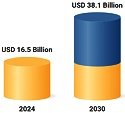 Bandpass Filters Market to Reach $38.1 Billion
by 2030 Bandpass Filters Market to Reach $38.1 Billion
by 2030
According to the "Bandpass Filters - Global Strategic Business Report" report
from Research and Markets, the global market for bandpass filters was valued at
16.5 billion in 2024 and is projected to reach $38 billion by 2030, growing at an
annual rate of 14.9% through 2030. The report notes that advancements in wireless
communication technologies, increasing adoption of IoT devices, a robust defense
industry, and the expansion of digital infrastructure in emerging markets are driving
growth.
Anatech Electronics Introduces a New Line of Suspended Stripline and
Waveguide Type RF Filters
Check out Our Filter Products
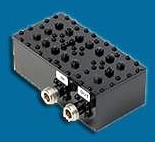
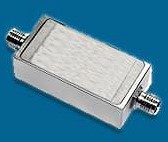

Cavity Band Pass Filters
LC Band Pass Filters Cavity Bandstop/Notch Filter
About Anatech Electronics
Anatech Electronics, Inc. (AEI) specializes in the design and manufacture of
standard and custom RF and microwave filters and other passive components and subsystems
employed in commercial, industrial, and aerospace and applications. Products are
available from an operating frequency range of 10 kHz to 30 GHz and include cavity,
ceramic, crystal, LC, and surface acoustic wave (SAW), as well as power combiners/dividers,
duplexers and diplexers, directional couplers, terminations, attenuators, circulators,
EMI filters, and lightning arrestors. The company's custom products and capabilities
are available at www.anatechelectronics.com.
Contact:
Anatech Electronics, Inc.
70 Outwater Lane
Garfield, NJ 07026
(973)
772-4242
sales@anatechelectronics.com
|