|
|||||||||||||
 |
|||||||||||||
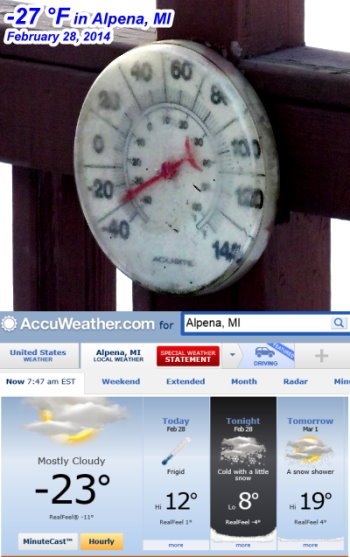
-27 °F in Alpena, Michigan, February 28, 2014 |
|||||||||||||
|
-27 °F (-31 °C) was the low temperature in Alpena, Michigan this morning, February 28, 2014. That was the official measurement at the airport, which is typically a few degrees warmer than here on Long Lake, about 15 miles north of there. I knew from the star-filled sky last night that it was going to be frigid. Without a cloud cover to insulate the Earth, radiative cooling can be quite pronounced, especially in low humidity conditions as found in the desert and frozen-solid, ice-covered ground. Our daytime highs and nighttime lows have consistently been 15 to 20 degrees below the long-term averages since we arrived nearly three months ago - a brutal introduction to northern Michigan. The summer had better better be nice and cool.
Stefan-Boltzmann Law: P = Aεσ T4
Here is a short tutorial of nighttime radiative cooling, with examples.
Posted February 28, 2014 |
|||||||||||||
 |
|||||||||||||
|
|||||||||||||

|
||||||||||||||||||||||||||||||||||||