|
|
|||||||||
| Software: RF Cascade Workbook | RF Symbols for Office | RF Symbols & Stencils for Visio | Espresso Workbook | ||||||||||
|
|||||||||||||||||||||||||||||||
   |
   |
||||||||||||||||||||||||||||||
|
Please Support RF Cafe by purchasing my ridiculously low-priced products, all of which I created. RF & Electronics Symbols for Visio RF & Electronics Symbols for Office RF & Electronics Stencils for Visio T-Shirts, Mugs, Cups, Ball Caps, Mouse Pads These Are Available for Free |
|||||||||||||||||||||||||||||||


Anatech Electronics November 2025 Newsletter


Press Release Archives:
2026 | 2025 |
2024 |
2023
|
2022 |
2021
Content is copyright of company represented. Page format, custom text and images are RF Cafe copyright - do not distribute. Note: Posting of press releases costs $100 each for non-advertisers.

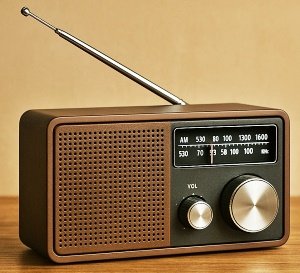
Sam Benzacar, of Anatech Electronics, an RF and microwave filter company, has published his November 2025 Newsletter that, along with timely news items, features his short op-ed titled "AM Radio Isn't Dead Yet." In it, he asserts that contrary to widespread narratives of AM radio's imminent demise, data reveals the medium is not collapsing but adapting. The 8-13% decline in stations since 1990 reflects market adjustments, not systemic failure. AM maintains strong listenership in rural and mountainous regions where geography limits FM reception, with radio overall outperforming television among adults 18-49. Station closures follow local market dynamics rather than national trends, with both AM and FM experiencing similar attrition rates in oversaturated markets. AM radio continues to serve essential functions where its superior coverage area remains technologically irreplaceable.
A Word from Sam Benzacar - AM Radio Isn't Dead Yet
 By Sam Benzacar
The notion that AM radio is nearing extinction has become a well-worn storyline, amplified by widely reported station closures, personal anecdotes, and ongoing uncertainty about the medium's future in new automobiles. These impressions create a sense that AM is collapsing nationwide. Yet when the data is examined in detail, a very different picture emerges.
A review of long-term licensing trends shows that the decline in AM station numbers is modest when viewed in historical context. From its peak around 1990, the total number of AM stations in the U.S. has fallen by only a few hundred - somewhere between 400 and 630, depending on the source. That translates to a decline of only 8 to 13% over 35 years. Annual fluctuations in license counts for both AM and FM have remained under 1% since the early 1990s. FM license losses briefly exceeded those of AM around 2020, without triggering dire predictions about FM's future.
Nielsen's newly published AM reach statistics by designated market area (DMA) reveal that certain regions still rely heavily on AM broadcasting, particularly were geography limits FM reception. Rural and mountainous markets often depend on AM's superior coverage area, and some of these DMAs maintain stable or even robust AM audiences. Conversely, markets with high-profile station closures, such as Bangor, Maine, are among those that struggle with both AM and FM.
 Radio's
position within the broader media landscape remains stronger than many assume. Among
adults aged 18 to 49, radio reaches roughly 12% more listeners than television,
a surprising fact in an era dominated by streaming and mobile media. Advertising
revenue continues to outpace the podcast sector in total ad receipts, demonstrating
the medium's sustained commercial relevance. The combined strength of radio suggests
that any negative assumptions about AM would require disproportionately dominant
FM performance to justify claims of imminent decline.
Radio's
position within the broader media landscape remains stronger than many assume. Among
adults aged 18 to 49, radio reaches roughly 12% more listeners than television,
a surprising fact in an era dominated by streaming and mobile media. Advertising
revenue continues to outpace the podcast sector in total ad receipts, demonstrating
the medium's sustained commercial relevance. The combined strength of radio suggests
that any negative assumptions about AM would require disproportionately dominant
FM performance to justify claims of imminent decline.
Patterns of station attrition reinforce the idea that local market dynamics—rather than a nationwide crisis—drive the closures. Larger markets, which often host more stations than they can economically support, show higher rates of both AM and FM shutdowns. Smaller markets continue to rely heavily on AM, especially where FM signals are inconsistent or terrain-limited.
The lack of DMA-level advertising revenue data for AM remains a notable gap; however, the evidence supports the conclusion that AM radio is not dying but rather is adjusting to shifting local market conditions. In regions that depend on long-range, reliable broadcasting, it remains secure.
T-Mobile Using Starlink for Emergency Service
 If you lose cell service,
reaching emergency help is now easier thanks to new satellite messaging options
from Apple, Google, and T-Mobile. T-Mobile has made its T-Satellite emergency texting
free for everyone, regardless of carrier, and it works on most smartphones made
in the last four years without special satellite hardware. The service connects
directly to Starlink satellites, enabling Text-to-911 on both iPhone and Android
devices, even when cellular or Wi-Fi coverage is unavailable. Initially launched
for basic messaging and emergency assistance, T-Satellite now also supports limited
in-app data for voice and video calls through services like WhatsApp.
If you lose cell service,
reaching emergency help is now easier thanks to new satellite messaging options
from Apple, Google, and T-Mobile. T-Mobile has made its T-Satellite emergency texting
free for everyone, regardless of carrier, and it works on most smartphones made
in the last four years without special satellite hardware. The service connects
directly to Starlink satellites, enabling Text-to-911 on both iPhone and Android
devices, even when cellular or Wi-Fi coverage is unavailable. Initially launched
for basic messaging and emergency assistance, T-Satellite now also supports limited
in-app data for voice and video calls through services like WhatsApp.
Nvidia, Nokia Form 6G Partnership
 Nvidia CEO Jensen
Huang has unveiled a partnership with Nokia aimed at integrating advanced AI technologies
into mobile network infrastructure and preparing operators for 6G. As part of the
agreement, Nvidia will invest $1 billion in Nokia, and the collaboration provides
Nokia with access to Nvidia's AI-RAN portfolio, which leverages AI to enhance spectral
efficiency and enable AI-driven functions directly at the network edge. The technology
also supports cloud-based AI processing for wireless communications, expanding how
operators can deploy AI across their networks.
Nvidia CEO Jensen
Huang has unveiled a partnership with Nokia aimed at integrating advanced AI technologies
into mobile network infrastructure and preparing operators for 6G. As part of the
agreement, Nvidia will invest $1 billion in Nokia, and the collaboration provides
Nokia with access to Nvidia's AI-RAN portfolio, which leverages AI to enhance spectral
efficiency and enable AI-driven functions directly at the network edge. The technology
also supports cloud-based AI processing for wireless communications, expanding how
operators can deploy AI across their networks.
Skyworks and Qorvo to Merge in $22B Deal
 Skyworks Solutions and
Qorvo have agreed to merge in a cash-and-stock transaction valued at about $22 billion,
creating a major U.S. player in RF, analog, and mixed-signal technologies. The combined
company will expand its reach across defense, aerospace, automotive, and mobile
markets while targeting more than $500 million in annual cost synergies through
improved factory utilization and streamlined domestic manufacturing. The merger
is expected to close in early 2027.
Skyworks Solutions and
Qorvo have agreed to merge in a cash-and-stock transaction valued at about $22 billion,
creating a major U.S. player in RF, analog, and mixed-signal technologies. The combined
company will expand its reach across defense, aerospace, automotive, and mobile
markets while targeting more than $500 million in annual cost synergies through
improved factory utilization and streamlined domestic manufacturing. The merger
is expected to close in early 2027.
MIT Scientists Double the Precision of Atomic Clocks
MIT researchers say they have found a method to significantly improve the accuracy of optical atomic clocks by suppressing the quantum noise that limits their precision. Atomic clocks measure time by locking lasers to the rapid vibrations of atoms—cesium atoms, for example, oscillate more than 10 billion times per second. But quantum fluctuations create microscopic static that prevents Precise measurements. Using a new technique called global phase spectroscopy, the MIT team was able to filter out much of that noise, yielding cleaner signals and effectively doubling the clocks' precision.
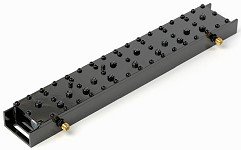
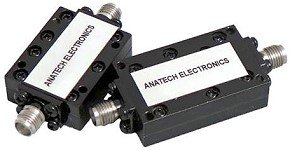
Anatech Electronics Introduces a New Line of Suspended Stripline and Waveguide Type RF Filters
|
LINKS: Waveguide Bandstop & Waveguide Bandpass |
LINKS: Suspended Stripline Highpass & Suspended Stripline Lowpass |
Check out Our Filter Products


Cavity Band Pass Filters LC Band Pass Filters Cavity Bandstop/Notch Filter
About Anatech Electronics
Anatech Electronics, Inc. (AEI) specializes in the design and manufacture of standard and custom RF and microwave filters and other passive components and subsystems employed in commercial, industrial, and aerospace and applications. Products are available from an operating frequency range of 10 kHz to 30 GHz and include cavity, ceramic, crystal, LC, and surface acoustic wave (SAW), as well as power combiners/dividers, duplexers and diplexers, directional couplers, terminations, attenuators, circulators, EMI filters, and lightning arrestors. The company's custom products and capabilities are available at www.anatechelectronics.com.
Contact:
Anatech Electronics, Inc.
70 Outwater Lane
Garfield, NJ 07026
(973)
772-4242

Copyright: 1996 - 2026 |
About RF Cafe RF Cafe began life in 1996 as "RF Tools" in an AOL screen name web space totaling 2 MB. Its primary purpose was to provide me with ready access to commonly needed formulas and reference material while performing my work as an RF system and circuit design engineer. The World Wide Web (Internet) was largely an unknown entity at the time and bandwidth was a scarce commodity. Dial-up modems blazed along at 14.4 kbps while tying up your telephone line, and a lady's voice announced "You've Got Mail" when a new message arrived... |
Copyright 1996 - 2026 All trademarks, copyrights, patents, and other rights of ownership to images
and text used on the RF Cafe website are hereby acknowledge My Hobby Website: My Daughter's Website: |
