|
|||||||||||||
 |
|||||||||||||
The Radio Month
|
|||||||||||||
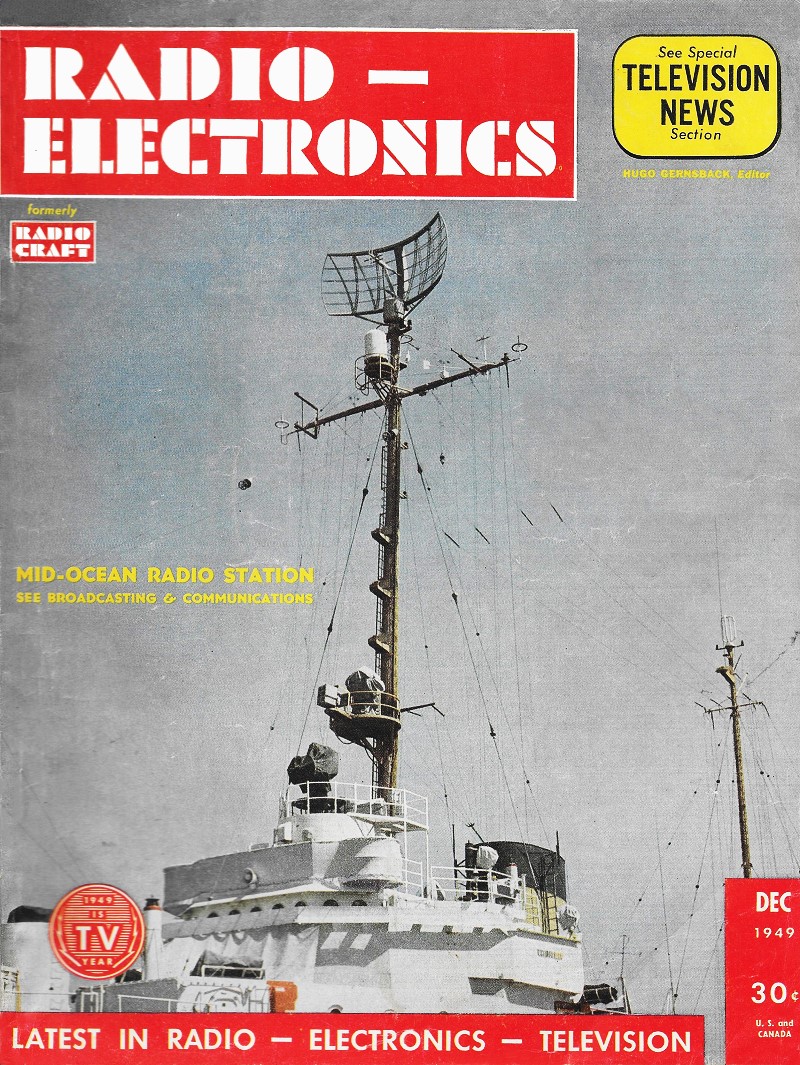
"The Radio Month" was a regular feature in Radio-Electronics magazine in the late 1940s and early 1950s. It contained news items from around the industry and across the world. The entire two pages are included in the included scan, but a couple items in particular stand out that are worth mentioning. The first is announcing the soon to be available rectangular cathode ray tubes (CRT) for television. Until then, the actual CRTs had round faces even though the displayed image was rectangular. A 4:3 aspect ratio was the standard, which required the tube diameter to be roughly 25% larger than the horizontal size of the picture. In fact, that is how TV display sizes came to be rated by their "diagonal" dimension rather than the picture width, and the standard stuck even after rectangular tubes were available. For instance, the 4:3 aspect ratio conveniently produces a diagonal length of 5 (the 3:4:5 triangle), where the hypotenuse is c = sqrt(a2 + b2) = sqrt (42 + 32) = sqrt (16 + 9) = sqrt (25) = 5. So, a 19" television would have a horizontal width of 19 * sin (tan-14/3) = 15.2" and a vertical height of 19 * cos (tan-14/3) = 11.4" . The other item was an announcement for the coming of Phonevision, which never really did materialize as stand-alone appliances until smartphones came online. Radio Month
Phonevision will be tested under actual operating conditions early in 1950, Zenith Radio Corp., developer of the system, announced last month. Under the plan, subscribers pay for reception of the latest Hollywood motion pictures. The pictures will be transmitted in Chicago over Zenith's Channel 2 station, but will move quickly and violently from side to side on the screen; the program material will be recognizable but unwatchable. A subscriber who wishes to watch the program calls his telephone operator, who connects his phone line with signals provided by the station to neutralize the picture "jiggle." Charges will be made on the regular telephone bill, amounting to 75¢ or $1 per picture. Three hundred subscriber installations are being made for the several-month test. Zenith says that no one can hope to synthesize the necessary correction signals without building about $17,000 worth of equipment in his basement, so that bootlegging is impossible.
Posted October 15, 2020 |
|||||||||||||
 |
|||||||||||||
|
|||||||||||||


|
||||||||||||||||||||||||||||||||||||