|
|||||||||||||
 |
|||||||||||||
Billions of Electronic Facts
|
|||||||||||||
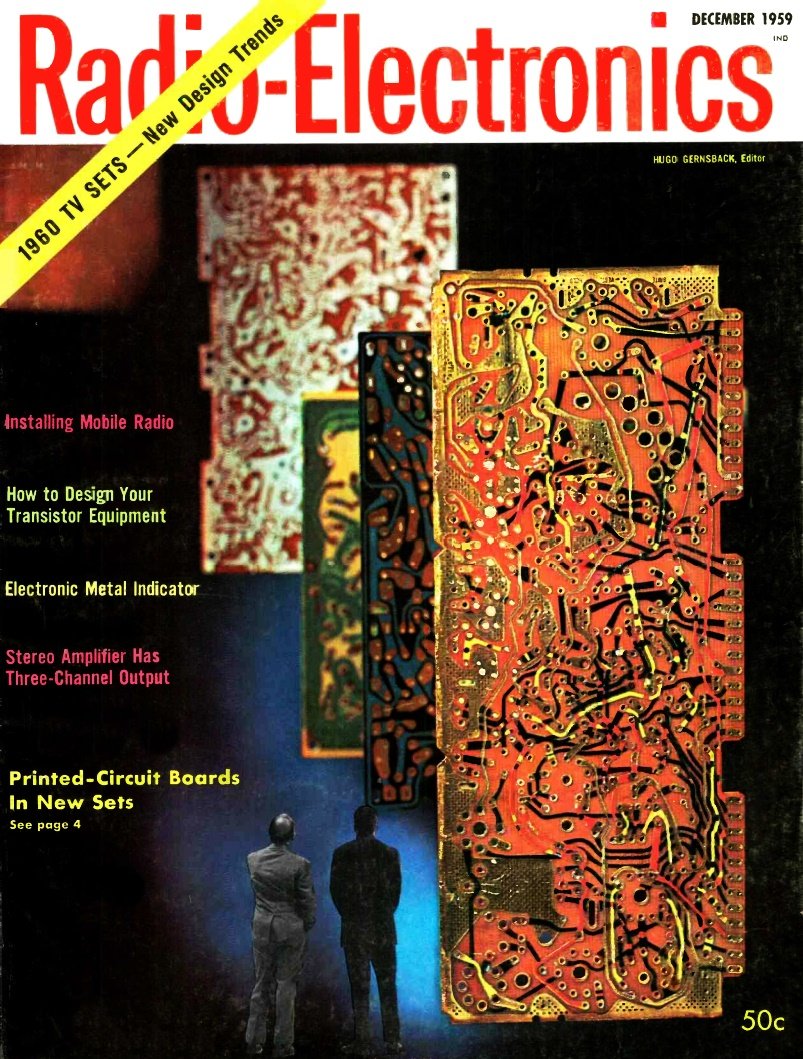
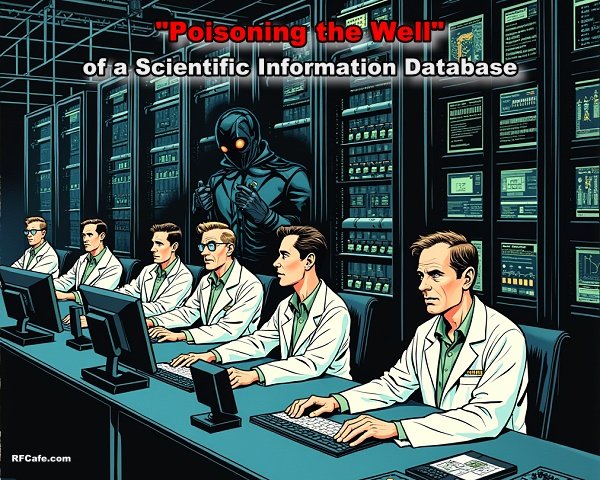
In his 1959 Radio-Electronics magazine editorial, Hugo Gernsback envisioned a "National Facts Center" - a government-run repository where all global scientific knowledge would be coded, cross-indexed, and accessible via computers. He argued that researchers were drowning in uncoordinated information, leading to wasted effort and redundant discoveries, like the "electronic cigarette" concept which had been documented decades earlier. His solution anticipated key aspects of the Internet: a centralized, searchable database that could deliver relevant facts within seconds, drawn from worldwide sources. Gernsback's vision also foreshadowed artificial intelligence by proposing that "information scientists" would curate and dispense knowledge - a primitive form of AI's role in parsing vast data sets to provide targeted insights. His concept highlights the enduring challenge of information overload and the need for intelligent systems to navigate it. What he does not allow for is the propensity for corrupt information - both intentional and not - to be inserted into the system, thereby "poisoning the well," so to speak, as is the case today. Billions of Electronic Facts ... Astounding Growth of Electronics Calls for New Strategy ...
An important government official, commenting on the chaos of electronic research, recently rebuked American research scientists for failing to make use of available Russian data. This occurred in early October, during the Chicago meeting of the National Electronics Conference, and was described in a news report: "John C. Green, director, Office of Technical Services, Department of Commerce, said his office began translating Soviet scientific reports more than a year ago and, because of the impact of Russia's sputniks, had expected these translations to total 25% to 50% of its sales of science papers. Actually, he said, they amounted to only $50,000 out of the total of $500,000, or 10%. "Mr. Green offered several reasons - researchers don't want new sources of information because they are already floundering in reports; some still discount the worth of Russian data, and others simply don't know the Russian translations are available. "What scientific research needs, Mr. Green declared, is a new professional - an "information scientist" - to peruse the mountain of information and dispense relevant data to working researchers." "Floundering in reports" is stating the condition far too mildly - "drowning in reports" would, in our opinion, be more to the point. How could it be otherwise in an industry that mushrooms at such a fantastic rate of growth that it doubles its new inventions and devices every few years? What will the electronics field be in 10 years, 25 years, 50 years hence? Today we have millions of electronic facts available to our researchers. Soon there will be billions of facts - what then? Several times in recent years, research teams have developed "new" devices, only to find that identical ones had been in use elsewhere for a different purpose. They had been fully described in technical papers, too. Let us cite a specific example, which we may call The Great Electronic Cigarette Hoax. Recently, full-page ads in newspapers throughout the country announced the "new" "electronic," "ventilated," "aerated" or "air-conditioned" cigarettes - a breakthrough in smoking. Just how new and revolutionizing is this? In the early 1890's, when the present writer was a young boy in Europe, one of the most hilarious jokes went as follows: You asked a friend to lend you his cigarette-paper book - usually Riz-La Croix brand. You then proceeded to roll your own cigarette. But instead of returning his book of cigarette papers, you substituted your own. This one you had "prepared" by placing it on a metal plate, wired to the hot side of a spark coil. The other side went to a sharp probe, which you carefully guided for 5 minutes over the cigarette book while the spark coil was "on." Result: every one of the fine cigarette papers was punctured with thousands of invisible holes. Now, when your victim tried to smoke his cigarette with such a "super-aerated" paper, there was no smoke forthcoming no matter how furiously he drew and puffed, simply because the paper acted as an excellent sieve. All your friend got was air and frustration! The idea was described in French and German books in the 90's, as well as in Practical Electrics, one of the writer's magazines (May, 1922, page 279). Now the hoary old idea has been re-invented - as happens so often - by the cigarette manufacturers, who play the same, albeit attenuated, joke on their customers, simply using newer holes in the cigarette paper. Carefully regulating the frequency of the holes along the shaft of the cigarette causes the smoker to get less smoke and more air - also less nicotine and tar. This really gives you a cigarette with an electronic carburetor. Of course, you no longer get your money's worth in tobacco, but then - sh-sh - the cancer risk is less, too. This makes everybody happy - manufacturer and consumer as well. Hurrah for electronics! Let us give cigarette manufacturers the benefit of the doubt and admit that they probably never heard of the ancient spark-coil cigarette-paper joke; which is precisely the point of this article. Useless, uncoordinated research is dogging every industry today. Duplication of research, effort and money is the order of the day. Will it stop before all of our progress is engulfed? There seems to us only one sensible remedy - a National Facts Center of the Federal Government. Only the Government is big enough to build and run such a center. It would be far larger than even the Pentagon. Nor would the information which it supplied be free - not any more free than the US Patent Office services. Whatever information was demanded by any industry or individual would cost a statutory fee, determined by various schedules. The Center would be equipped with possibly the largest array of electronic computers in existence. Every important scientific, electronic and industrial fact would be coded and carded, cross-indexed for various industries. All these billions of facts would be fed to the computers in such a manner that, upon inquiry, the proper information could be given, often within seconds. These facts and information would not come solely from American sources. That would defeat the whole purpose. Facts would be culled from every country of the world, because only in this manner could the Center be all-comprehensive. The Center would have to be closely allied with the Patent Office for intimate reciprocal information of every kind -indeed each would be dependent upon the other. But industry, researchers, inventors and others would not have to waste their time any longer in useless research, when the key to their problem would be forthcoming within minutes from the Center. To be sure, the key itself would solve no problems - it would state, however, where your vital information could be had. It would be an immense shortcut to all research. How long does electronic computer information - on magnetic tape and memory magnetic cores - last? Remember the Center would entrust to the computers thousands of billions of vital facts. The experts in the field assure us that magnetic Mylar tape - the tape itself and the magnetic iron oxide - will last, at the present state of the art, as least 100 years. It may, with improvements to come, last much longer. Magnetic cores and the magnetism impressed on them, we are informed, will probably last hundreds of years. All this need not worry anyone, because the thousands of scientists and technicians of the future National Facts Center would continuously replace old magnetic tapes and memory cores with new ones as a routine procedure.
|
|||||||||||||
 |
|||||||||||||
|
|||||||||||||


|
||||||||||||||||||||||||||||||||||||