|
|||||||||||||
 |
|||||||||||||
The Secret Tube That Changed the War
|
|||||||||||||
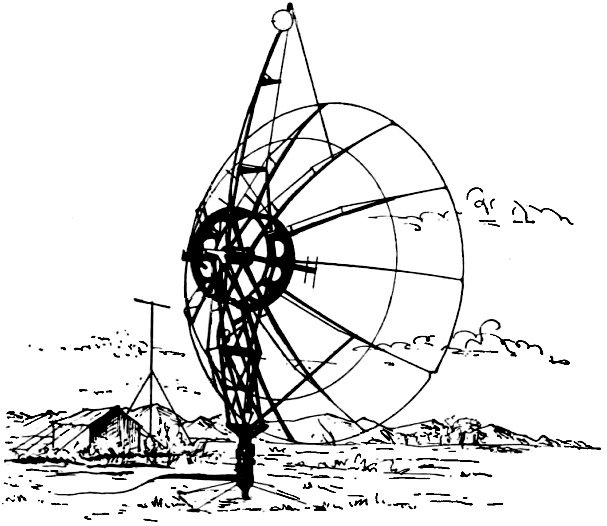
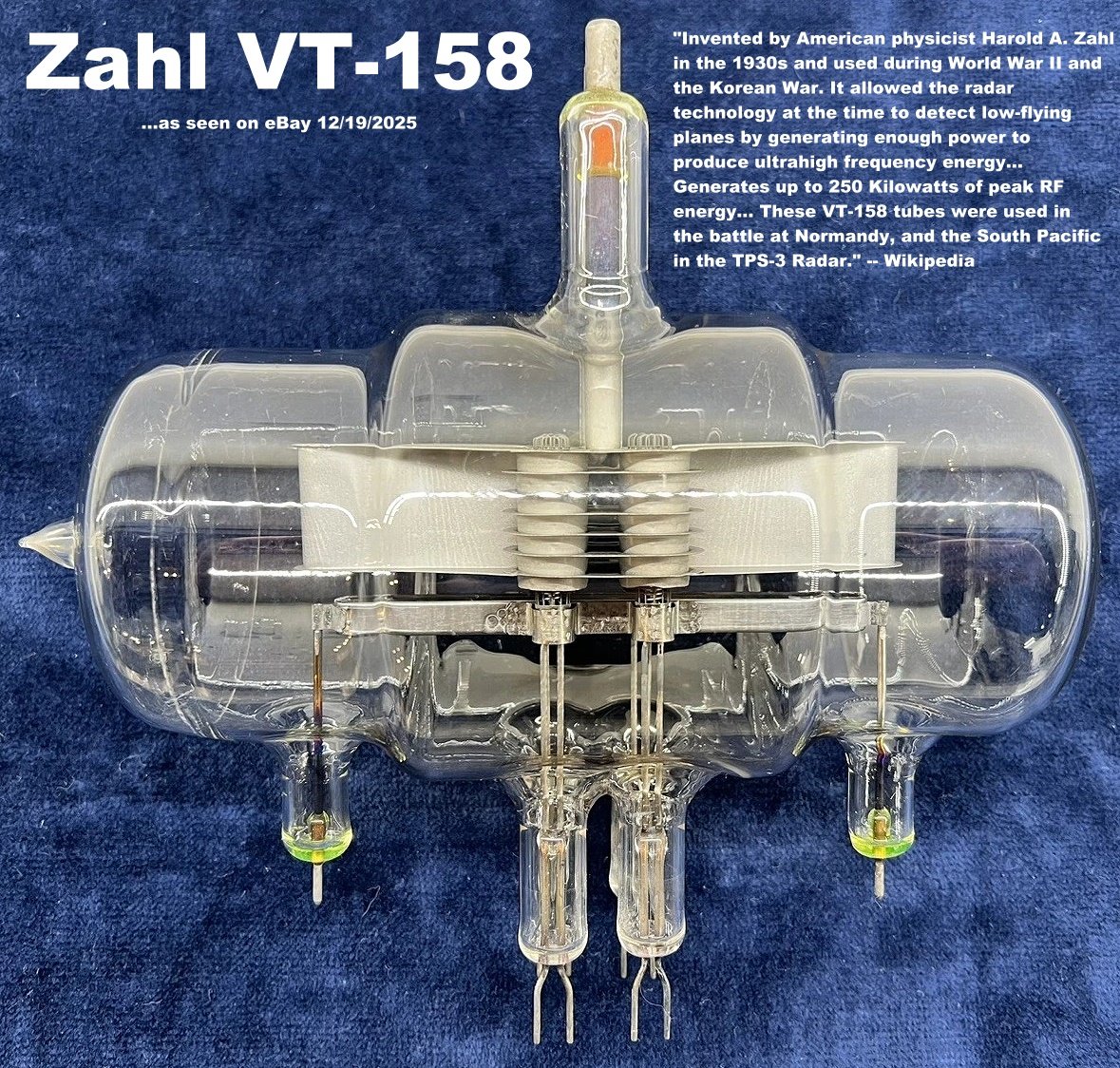
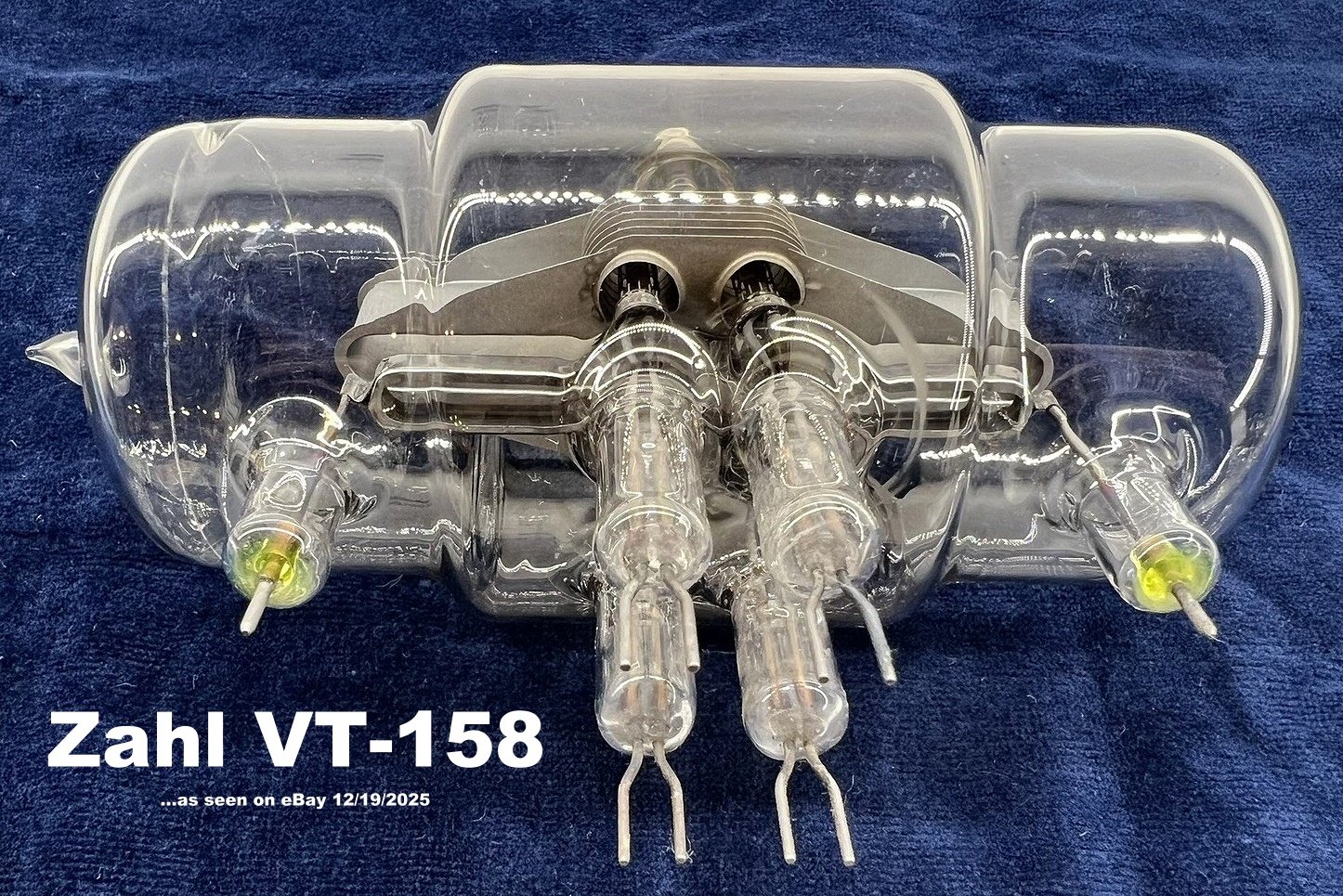
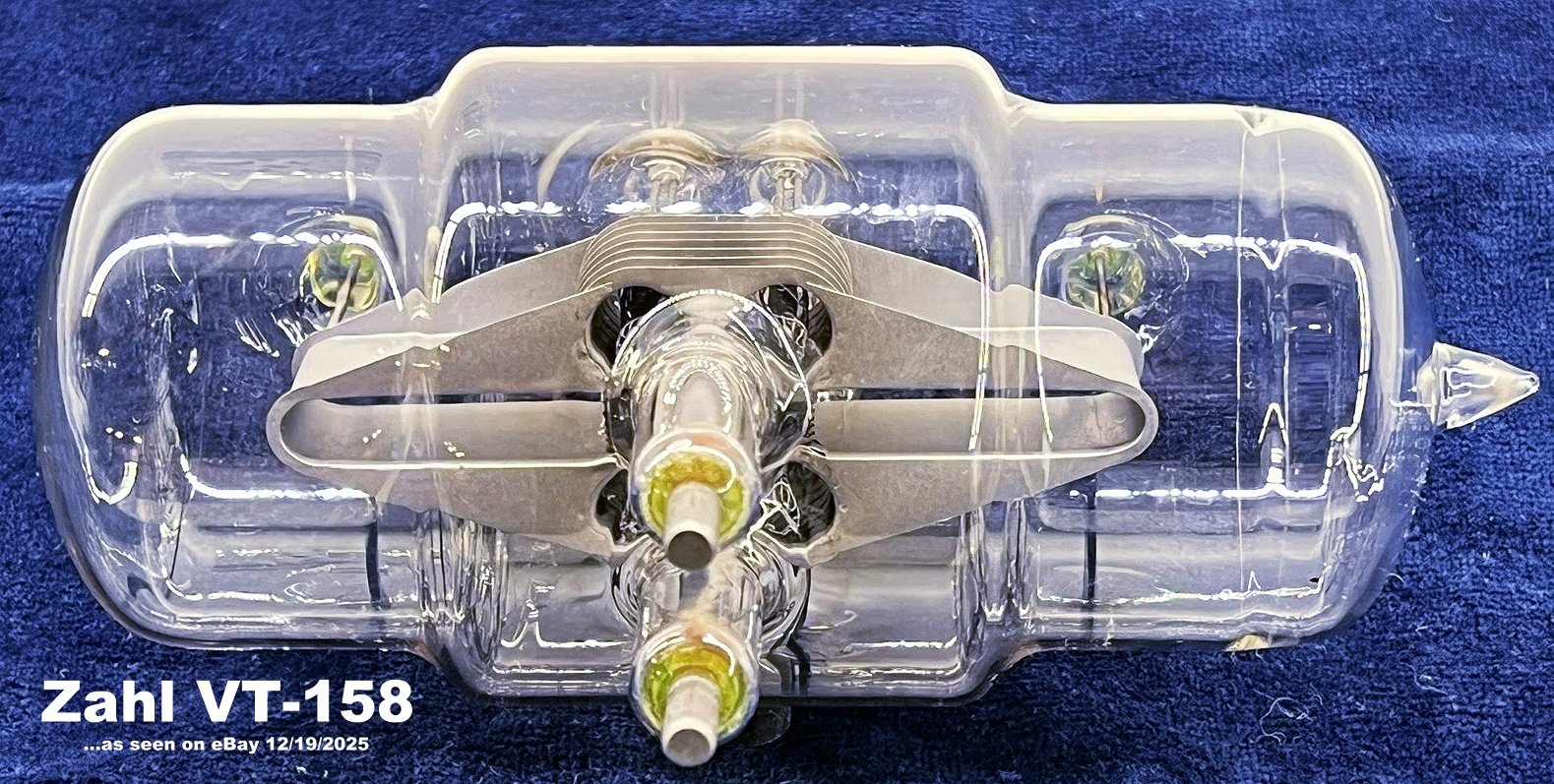
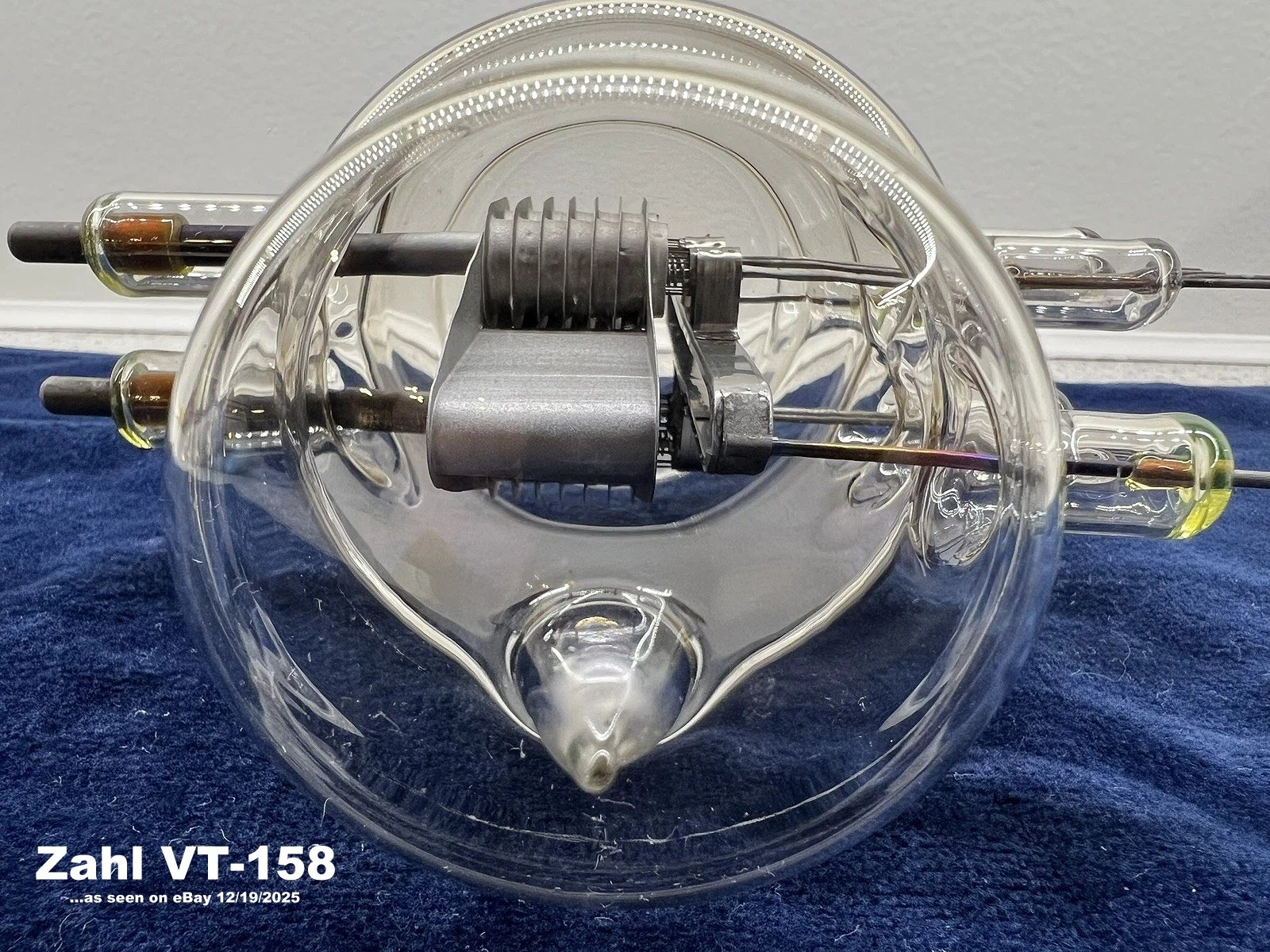
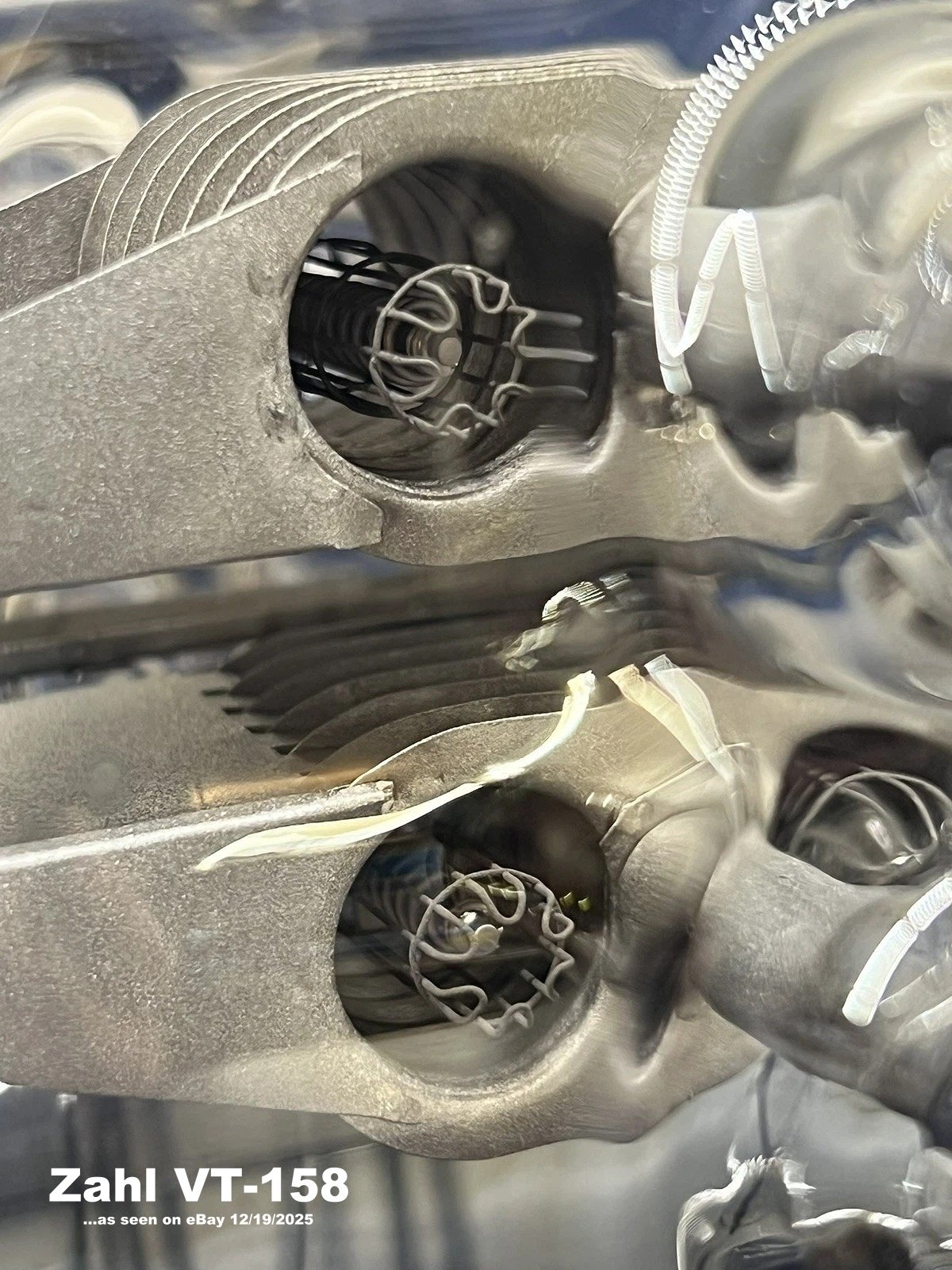
This 1964 Popular Electronics magazine article tells the story of the Zahl tube (VT-158), a pivotal yet obscure World War II invention. Faced with the vulnerability of the Panama Canal to low-flying aircraft, the U.S. military needed a radar system operating at the then-extraordinary frequency of 600 MHz. Army Major Harold Zahl invented a revolutionary vacuum tube that could generate the required high power, essentially integrating four triodes and their tuned circuitry within a single glass envelope. This secret tube became the heart of the AN/TPS-3 radar, nicknamed "Tipsy Three." Its success was so great that the design was repackaged into the portable AN/TPQ-3, which solved the critical problem of locating enemy mortar positions. The article concludes by noting the tube's post-war obscurity, found in surplus shops for mere cents, while its technological legacy lived on in modern high-power radar tubes. Incredibly, a VT-158 tube in pristine condition is for sale at this time on eBay - for a mere $3k, OBO. Unlike other surviving examples, I do not see any markings on this tube. The Secret Tube That Changed the War
Today it's junk - a bargain-priced surplus special - but it is also history, the WW II tube no one knew about. By William I. Orr, W6SAI The young radio amateur saw the dull glint of glass in the bottom of the dusty box and immediately plunged his hand into the receptacle, searching for the unknown object that caught his attention. Grasping something, he slowly drew forth a curious, large misshapen radio tube. Holding the dusty abject up to the bare light bulb dangling from a faded sign that read "Your Choice - 29¢," he examined his find carefully. Puzzled, he turned to the proprietor. "Hey, Sam! What do you know about this tube? Can I use it on two meters?" "Surplus Sam," owner of the radio junk shop, took the tube and examined it as if it were a fine jewel. He sighed. "Who knows? Buy it! I don't know what it is, but you can't go wrong for twenty-nine cents!" Where shall we start the story of the curious tube? On a June morning twenty years ago in Normandy? Or before that, at the Panama Canal, or years later on the slope of a numbered hill in Korea? It's a strange tale of a unique tube, an Army major and American ingenuity - a true story whose obsolete residue was finally found by the inquisitive amateur in a surplus shop.
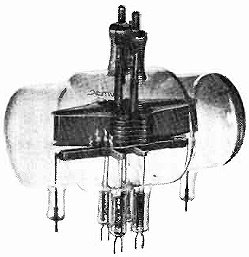
The powerful high-frequency Zahl tube was used in critical radar applications - to detect low-flying aircraft, and to trace the sources of deadly mortar barrages. Courtesy Eitel-McCullough Inc.
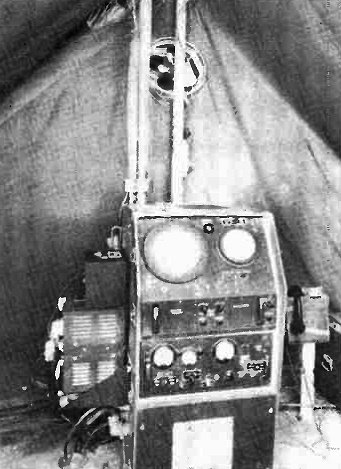
The AN/TPS-3, known as "Tipsy Three" is shown below installed in a tent. It was the first radar set to operate at high power in 600 -megacycle range. Panama, 1940: America is not yet at war, but it is obvious to some that we soon will be. The Panama canal is a tempting and vulnerable target from the air. Radar, the radio eye, had been invented a few years before, but the only available equipment worked on the relatively low frequency of 110 megacycles, and then not very well. The safety of the canal could not be trusted to this primitive, unsensitive gear which showed an almost complete blindness in detecting low-flying airplanes. A decision is made to construct a small number of radically new and powerful radar sets capable of locating and detecting small planes, and to put these sets aboard picket ships located in the approaches to the canal. Laboratory experiments show that a good frequency for the new sets would be 600 megacycles, but no available tubes can produce the required power at what was then regarded as an unusually high frequency. By a stroke of fortune of the kind that often changes history, a radar tube is invented by young Major Harold Zahl of the Army Signal Corps that can produce the power required. A prototype of the vital search radar employing the major's radically new tube is to be secretly built and tested as fast as humanly possible.
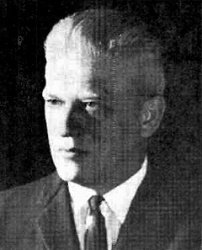
The Zahl tube and its inventor, Dr. Harold A. Zahl, now director of the Army's Research and Development Laboratories, Ft. Monmouth, N.J. The radically new tube - four triodes in parallel with tuned plate and grid lires to make it an oscillator marked a point of departure for modern tube designs containing resonant circuitry within the tube. Fortunately for the Allied cause during World War II, the Germans never obtained a Zahl tube intact, or guessed its secret It was, without doubt, one of the factors that won the war and saved countless lives. On the M.S. Nordic off the New Jersey coast: The vessel is equipped with the new radar, and testing is going forward. Suddenly, a German submarine, intent on spying, surfaces close by. It does not go unnoticed, and as the sub's periscope turns, it sees a destroyer closing in together with a blimp overhead, both carrying depth charges. The sub crash-dives as the depth charges drop. The new radar and those aboard the Nordicshaken up by the explosions - are safe. The tests continue. The search radar can detect a single bomber over one hundred miles away with the radar antenna mounted only fifteen feet above the surface of the water! The secret, revolutionary canal radar equipment was so successful that the Air Force asked the Signal Corps to repackage the equipment into a light-assault type radar which could be airlifted to a battle zone and then hand-carried to the front. A prototype of the repackaged radar was built in February, 1943. To prove it was air-transportable, the unit was loaded aboard a bomber at the Newark (N.J.) airport and flown to Florida. It was up and in operation four hours after it arrived at Orlando.
Zahl VT-158 Vacuum Tube
"My dad had this in his workshop. He was an electrical engineer during the Korean War, working in a technical on radar development. From what I was able to figure out about this tube, it's a VT-158, also known as the Zahl tube. Per a Wikipedia article about the VT-158, it was 'invented by American physicist Harold A. Zahl in the 1930s and used during World War II and the Korean War. It allowed the radar technology at the time to detect low-flying planes by generating enough power to produce ultrahigh frequency energy.' The tube contains all the tuned circuit elements within the glass envelope and generates up to 250 Kilowatts of peak RF energy. These VT-158 tubes were used in the battle at Normandy, and the South Pacific in the TPS-3 Radar. " "There were less than a thousand of these tubes made, and once the magnetron was invented the technology quickly switched over to those instead. I have seen a few of these tubes on display at various electronics museums, including in San Diego and the Infoage electronics museum in Wall, NJ. The tube I am selling has no manufacturer name printed anywhere on it and a few tube collectors that contacted me about the tube suggested it may have been an early preproduction model. One collector also pointed out the presence of uranium glass used at the locations where the electrical contacts are was a feature discontinued on later versions of this tube, further suggesting my version is an early example."
This cleared the way for a crash program to construct a small number of the secret radars (by now called the AN/TPS-3) for immediate shipment to critical war theatres. Twelve sets were built at Camp Evans Signal Laboratory in New Jersey with the aid of GI operating crews who later flew into combat with the equipment. The AN/TPS-3 could be assembled and put on the air by a crew of four men in thirty minutes. The first twenty-five production units followed by many more - were built by Zenith Radio Corporation, and went to England and then to the beaches of Normandy. A part of the Normandy radar-support operation ended in tragedy-and it was feared that the set and its tube had fallen into enemy hands-when four radar-carrying gliders crashed during the ill-fated Arnhem expedition. Fortunately for the Allies, the destruction of the sets was so complete that there was little left for the Germans to study. The success of the "Tipsy Three," as it was known to its operators, was due to the secret tube invented by Major Zahl. Essentially four triode tubes connected in parallel, the tube envelope also contained tuned plate and grid lines which made it an oscillator. As much as 250,000 watts peak power could be extracted from the tube during a radar pulse. Because of the plate dissipation and cathode emission required to produce the 250-kilowatt pulse, the anode elements of the secret Zahl tube ran red hot. Once the tube had been proven, Major Zahl brought a hand-made version of his invention to Eitel-McCullough, Inc., a pioneer manufacturer of high-frequency transmitting tubes located near San Francisco. He asked the engineers of the company if the tube could be mass produced on a crash basis. The entire resources and ingenuity of the company were thrown into a program of producing Zahl tubes in quantity, and in secrecy. The production tube-also produced in appreciable quantities by Machlett Laboratories-was designated the VT-158. The exact number of VT-158's produced during the war is no longer known, but it is said that at one time the entire output of the Tantalum Defense Corporation was being used to make the heat-resisting elements of the secret tube. Many problems were encountered in mass-producing the revolutionary VT-158, but the tube was soon given the unconditional Joint Army -Navy (JAN) approval and placed on the "Preferred List." Doctor Zahl, now the Director of Research at the Army's Electronics Research and Development Laboratories, Ft. Monmouth, N.J., wrote recently, "Within my recollection, this tube passed through its entire life cycle of usage without ever having been the subject of an unsatisfactory report from the field. Eitel-McCullough did a superb job in the production-design of this tube. Even now, I wonder how they did it." The tubes, still unknown to the pub- lic and the enemy, saw action in the Pacific Theatre as well as Europe. In Doctor Zahl's article, "One Hundred Years of Research," published in the October, 1960, IRE Transactions on Military Electronics, he said, "But with all the assistance total mobilization brought (to the development of new electronic systems) there were many problem areas where the most learned hesitated to travel, lest the war be over before the problem could be solved - if it could be solved at all. Riding high in this category was the location of enemy mortars, the deadly devices which caused the majority of our ground casualties. "The problem was one of finding metal objects the size of a small tomato can, loaded with explosives and fired at our troops in bursts of hundreds, with nothing more complicated than a large shotgun shell at the bottom of a piece of iron pipe. Finding these clouds of deadly torpedo raindrops coming unannounced from miles away was the first part of the problem; the next was to establish definitive trajectories, trace the various shell paths back to their points of origin and by coincidence methods, to saturate these coordinates with overwhelming counterfire so that peace and quiet would prevail in these particular areas and many thousands like them!" With Major General R. B. Colton challenging his scientists and engineers, and with Captain John Marchetti leading the design group as he had previously done with the AN/TPS-3, Signal Corps Research took on the mortar locating problem when much talented advice said there was no solution. Within six months the problem was solved. Under the personal urging of General Stilwell to hurry the equipment into emergency overseas freight, Captain Marchetti's task force of twenty Signal Research scientists worked for an unbroken stretch of ninety-six hours-to the verge of collapse on the first prototype radar unit. The deadly problem of enemy mortars had a solution - the Zahl tube used in the AN/TPQ-3 mortar radar set. During the Korean conflict, the Army again called on the aging Zahl tube and the semi -obsolete AN/TPQ-3 mortar radar-both resurrected from World War II. The Zahl tube is no longer manufactured, but the concept has not been forgotten. While the once-secret, revolutionary VT-158 may now be found in dusty surplus bins, work is still being done on powerful new ultra-high frequency radio tubes that contain the resonant circuitry within the tube. One, the new X-841D giant klystron tube, designed for multi-megawatt, frequency-agile radar, is a modern descendant of the secret Zahl tube. Using six integral cavities resonant in the 400-megacycle region, this eleven-foot, 1000-pound giant is the latest development in the long, continuing search for more power at higher frequencies that started in Panama so many years ago. |
|||||||||||||
 |
|||||||||||||
|
|||||||||||||



|
||||||||||||||||||||||||||||||||||||