|
|||||||||||||
 |
|||||||||||||
Bourns Potentiometers Advertisement
|
|||||||||||||
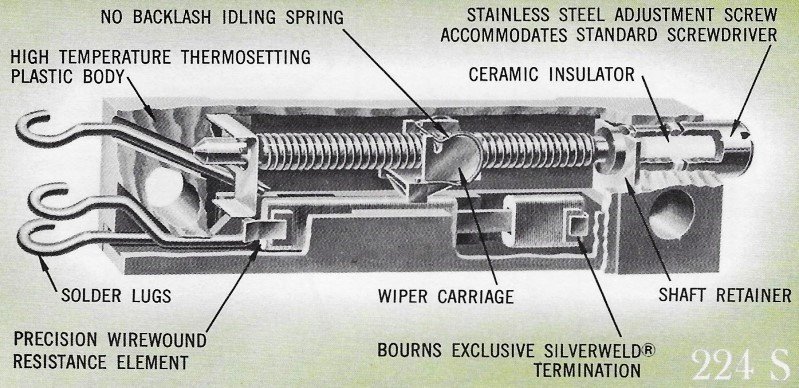
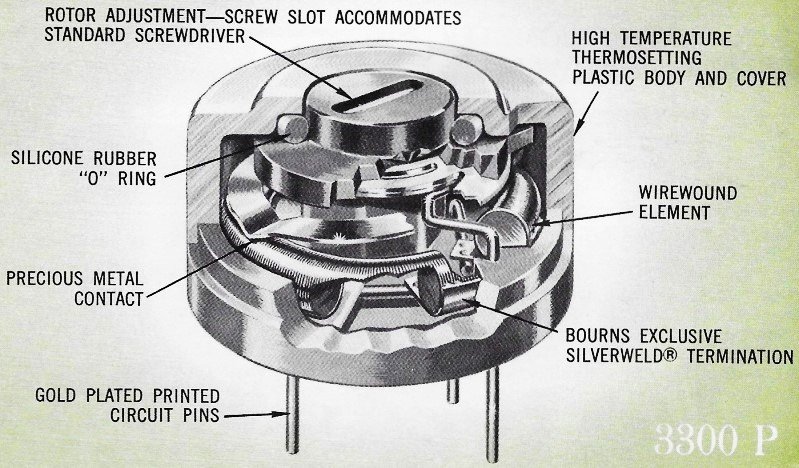
It is easy to not notice the ingenuity that has gone into making even seemingly simple components designed and perfected by supplier companies' employees. That fact that we tend to take them for granted and assume that they "just work" when incorporated into our own higher level designs is a powerful passive endorsement. Potentiometers (pots) are a prime example - particularly high-end models like these three Bourns Trimpot® examples. I installed hundreds of the leadscrew-actuated and worm gear-actuated pots on military grade circuit boards during my time in the 1980s at Westinghouse Electric's Oceanic Division in Annapolis, Maryland. An inspection of the cut-away drawings reveals the thought that went into making the devices robust, reliable, and even fool-proof (lots of fools handle these things). Particularly clever is the "no backlash idling spring" mechanism that not only minimizes the amount of adjustment screw rotation that occurs without a change in resistance when reversing direction, but also prevents damage when the wiper carriage is run to the end extremes and the user keeps turning the screw. Bourns Potentiometers
Trimpot® Leadscrew Actuated Potentiometers were introduced by Bourns, Inc., in 1952 to meet the need of the aerospace industry for a rugged, high performance miniature adjustment potentiometer. These units pioneered such potentiometer qualities as small size, accuracy, multi-turn adjustment and stable settings, as well as rugged, sealed construction for reliable performance in severe environments.
Posted August 16, 2023 |
|||||||||||||
 |
|||||||||||||
|
|||||||||||||



|
||||||||||||||||||||||||||||||||||||