 All RF
Cafe Quizzes make great fodder for employment interviews for technicians or engineers
- particularly those who are fresh out of school or are relatively new to the work
world. Come to think of it, they would make equally excellent study material for
the same persons who are going to be interviewed for a job. Good luck! All RF
Cafe Quizzes make great fodder for employment interviews for technicians or engineers
- particularly those who are fresh out of school or are relatively new to the work
world. Come to think of it, they would make equally excellent study material for
the same persons who are going to be interviewed for a job. Good luck!
A complete list of RF Cafe Quizzes.
This RF Electronics Basics quiz targets those
of you who are newcomers to the world of radio frequency (RF) electronics, but seasoned
vets are welcome to give it a go as well. Please report any suspected errors to
me via e-mail.
Return to Quiz #69.
1. What comprises radio frequency signals?
 b)
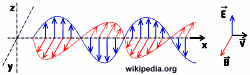
Electromagnetic waves. b)
Electromagnetic waves.
An electromagnetic wave consists of time-varying electric and magnetic waves
in phase with and at right angles with respect to each other.
2. How does an antenna achieve gain when it has no active signal
amplification?
 b) Gain is achieved by directing (concentrating)
a majority of the signal in a preferred direction rather than equally in all direction. b) Gain is achieved by directing (concentrating)
a majority of the signal in a preferred direction rather than equally in all direction.
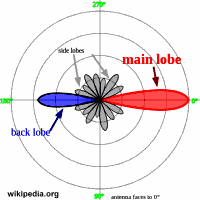
As the radiation pattern plot to the right shows, the power contained
in the main lob, compared to all other directions, is greater. That represents a
directional gain as compared to if the power was spread out equally in all directions.
3. Why do RF people often speak of power in units of dBm and
dBW rather than milliwatts and watts, respectively?
d) Using dBm or dBW (decibels relative to a milliwatt or watt, respectively)
allows multiplication and division of gains and losses to be performed as addition
and subtraction, respectively.
Using dBm or dBW
(decibels relative to a milliwatt or watt, respectively) allows multiplication and
division of gains and losses to be performed as addition and subtraction, respectively.
The multiplication of A and B, A * B, is the equivalent of the addition
of the logarithm
(log) of A and the log of B, log (A) + log (B).
A * B = log (A) + log (B).
The division of A by B, A / B, is the equivalent of the subtraction
of the log of B from the log of A, log (A) - log (B).
A / B = log (A) - log (B).
Therefore, dBm and dBW, both being logarithms of power ratios (relative to a
milliwatt or watt, respectively), allows gains and losses expressed in decibels
(dB) to be added and subtracted directly to power levels expressed in decibels (dBm,
dBW).
Example: An amplification factor of 13 (13x) of a 250 mW signal yields 13 * 250 mW
= 3,250 mW. Equivalently, log (13) + log (250) = 1.11394
+ 2.3979 = 3.51188. Antilog (3.51188) = 103.51188 = 3,250.
Keep in mind that although units of dBm and dBW are numerical ratios as is the
dB, dBm and dBW represent actual power levels in milliwatts and watts. There is
a tendency for people to confuse and conflate dB with dBm and dBW.
4. Why do coaxial (coax) cables specify a minimum bend radius?
 a) Too tight of a bend alters the
internal physical dimension to where the impedance change profoundly affects the
internal signal. a) Too tight of a bend alters the
internal physical dimension to where the impedance change profoundly affects the
internal signal.
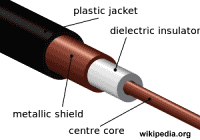
The coaxial
cable's characteristic impedance is a function of the radii of the outer metal
shield and the central conductor, and of the dielectric material that fills the
space between them. Ideally, the inner and outer conductors are perfectly round
and perfectly concentric (i.e., coaxial). Changing the geometry changes the impedance.
A too-sharp bend alters the geometry by smashing dielectric and shifting the center
conductor off-center and thereby changes the impedance. Any change in impedance
sets up reflected waves inside the cable, which causes variations in the signal
amplitude along the length of the cable.
5. Why do discrete components - resistors, capacitors, and inductors
- eventually not work as frequencies increase beyond some point?
c) Parasitic resistance and reactance progressively dominates the component
impedance as the frequency increases.
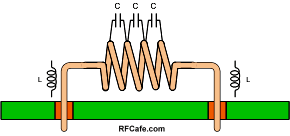 Capacitance exists between parallel conductor
surfaces such as between adjacent windings on an inductor or transformer as well
as between metal in other nearby components (including a circuit board ground plane
and signal traces), etc. Inductance is present in all lengths of metal such as external
leads, internal bond wires (in IC's), surface mount pads, etc. Those "parasitic"
reactances can be ignored at low frequencies, but as the frequency increases, their
effects grow more significant. At a component's self-resonant frequency (SRF), the
magnitudes of capacitive and inductive reactance are equal, and above the SRF the
components exhibits the opposite form of reactance; i.e., capacitors act like inductors
and vice versa. Capacitance exists between parallel conductor
surfaces such as between adjacent windings on an inductor or transformer as well
as between metal in other nearby components (including a circuit board ground plane
and signal traces), etc. Inductance is present in all lengths of metal such as external
leads, internal bond wires (in IC's), surface mount pads, etc. Those "parasitic"
reactances can be ignored at low frequencies, but as the frequency increases, their
effects grow more significant. At a component's self-resonant frequency (SRF), the
magnitudes of capacitive and inductive reactance are equal, and above the SRF the
components exhibits the opposite form of reactance; i.e., capacitors act like inductors
and vice versa.
6. What can cause a poorly shielded AM or FM radio to change
its audio level as you vary your distance from it?
a) Your body creates half of a capacitor (the radio and/or antenna is the
other half) that can alter the resonant frequency of the radio's local oscillator(s).
 As a result, the intermediate frequencies (IF)
shift toward the edges of the IF filters rather than in the center, thereby attenuating
the signal more intensely. As a result, the intermediate frequencies (IF)
shift toward the edges of the IF filters rather than in the center, thereby attenuating
the signal more intensely.
7. What does the "S" in S-Parameters stand for?
d) Scattering.
The term "scattering" in
physics refers to deviation in the intended path of travel due to interruptions.
In the case of electrical signals, impedance discontinuities cause reflections.
An s-parameter matrix is used to mathematically describe the relative changes in
signal strength and phase. Each port (potential entrance or exit of the signal)
has a unique set s-parameters that describes it relationship with every other port.
For example, in a 3-port device like a circulator, S31 describes the signal exiting
Port 1 when it is injected into Port 3. S33 describes the signal exiting
Port 3 when it is injected into Port 3; i.e., the portion of the injected
signal that is reflected back out the port.
8. What is the phase shift at the shorted end of a coaxial cable?
c) 180°
A good illustration is a rope attached fast to a pole
so it cannot move. Give the far end of the rope a whip and watch the wave travel
down the rope toward the pole. When it reaches the pole, the wave is reflected back
toward you in the opposite phase (180° shift). This is so because in order for the
amplitude of the wave to equal zero (0) at the pole (since that end cannot move),
some force must exactly cancel out the amplitude and phase of the wave. The only
thing that can do that is a force equal in amplitude and at the opposite phase,
hence the 180° phase shift (as with a short circuit). The same phenomenon occurs
with an electrical wave.
Conversely, if the rope is attached to the pole such that
the end can freely move up and down the pole, the wave on the rope will cause the
end of the rope to move to the position on the pole where the wave would be if the
pole was not there. The wave reflects backward beginning at the same amplitude and
phase as is arrives. Hence there is 0° of phase shift (as with an open circuit).
9. At what rate does the power of an RF signal attenuate in
free space?
c) 6 dB for every doubling of distance.
An electric field's voltage falls off at a rate of 1/r,
where "r" is the distance from the source. At twice the distance, 2r, the field
intensity is 1/2r. In terms of decibels, the relative voltage level is 10 * log (1/2)
= 10 * (-0.301) = -3.01 dB. Since power is proportional to the square
of the voltage, the relative power power level is 10 * log (1/22)
= 10 * log (1/4) = 10 * (-0.602) = -6.02 dB. Note:
The negative sign indicates a reduction in gain, hence, attenuation.
10. What is the name of the frequency band occupied by license-free
devices such as WiFi routers and Bluetooth headphones?
a) ISM
(Industrial, Scientific, and Medical)
Many frequency bands are designated by the FCC and other
countries' regulatory bodies for unlicensed use. They were originally created for
use in the industrial, scientific, and medical communities, but have evolved to
include many other domestic and commercial uses.
Quizzes from vintage electronics magazines (and many custom RF Cafe-generated
quizzes) such as Popular Electronics, Electronics-World,
QST, Radio-Electronics, and Radio News were published
over the years - some really simple and others not so simple. Robert P. Balin
created most of the quizzes for Popular Electronics. This is a listing
of all I have posted thus far.
- Oscillator
Quiz, November 1962 Popular Electronics
- Vacuum Tube Quiz,
February 1961 Popular Electronics
- Kool-Keeping Kwiz, June
1970 Popular Electronics
- Find the Brightest
Bulb Quiz, April 1960 Popular Electronics
-
Where Do the Scientists Belong? - Feb 19, 1949 Saturday Evening Post
- Quiz
on AC Circuit Theory, December 1970 Popular Electronics
- Magnetic
Phenomena Quiz, February 1962 Popular Electronics
- Electronics
Geography Quiz, April 1970 Popular Electronics
- Electronic
Menu Quiz, August 1963 Popular Electronics
- Electronic
Noise Quiz, August 1962 Popular Electronics
- Electronic
Current Quiz, October 1963 Popular Electronics
- Electronic
Inventors Quiz, November 1963 Popular Electronics
- Resistor Function
Quiz, January 1962 Popular Electronics
- Electronic
Measurement Quiz, January 1963 Popular Electronics
- Electronic
Coupling Quiz, August 1973 Popular Electronics
- Electronics
Analogy Quiz, August 1960 Popular Electronics
- Audio Quiz, April
1955 Popular Electronics
- Electronic Unit
Quiz, May 1962 Popular Electronics
- Capacitor
Circuit Quiz, June 1968 Popular Electronics
- Meter-Reading
Quiz, June 1966 Popular Electronics
- Electronic
Geometry Quiz, Jan 1965 Popular Electronics
- Electronic
Factor Quiz, November 1966 Popular Electronics
- Electronics
Math Quiz, November 1965 Popular Electronics
- Series Circuit
Quiz, May 1966 Popular Electronics
- Electrochemistry
Quiz, Mar 1966 Popular Electronics
- Biz
Quiz: Test Your Sales Ability - April 1947 Radio News
- Electronic
Analogy Quiz, Nov 1961 Popular Electronics
- Diode Quiz, July
1961 Popular Electronics
- Electronic
Curves Quiz, Feb 1963 Popular Electronics
- Electronic
Numbers Quiz, Dec 1962 Popular Electronics
- Energy Conversion
Quiz, April 1963 Popular Electronics
- Coil Function
Quiz, June 1962 Popular Electronics
-
Co-Inventors Quiz - January 1965 Electronics World
-
"-Tron" Teasers Quiz - Oct 1963 Electronics World
- Polarity Quiz
- March 1968 Popular Electronics
-
Television
I.Q. Quiz - Oct 1948 Radio & Television News
- Amplifier Quiz
Part I - Feb 1964 Popular Electronics
- Semiconductor
Quiz - Feb 1967 Popular Electronics
- Unknown
Frequency Quiz - September 1965 Popular Electronics
- Electronics
Metals Quiz - Oct 1964 Popular Electronics
- Electronics
Measurement Quiz - August 1967 Popular Electronics
- Vector-Circuit
Matching Quiz, June 1970 Popular Electronics
- Inductance
Quiz, September 1961 Popular Electronics
- RC Circuit Quiz,
June 1963 Popular Electronics
|
-
LCR Circuits Quiz - November 1969 Electronics World
- Amplifier Quiz Part
2 - March 1964 Popular Electronics
- Amplifier Quiz
Part 1 - February 1964 Popular Electronics
- Three Letter
Quiz - January 1964 Popular Electronics
- Electromagnetic
Function - June 1964 Popular Electronics
- Electronic
Sticklers - February 1959 Popular Electronics
- Bio-Electronic
Quiz - July 1964 Popular Electronics
- Transformer Quiz
- April 1962 Popular Electronics
- Oscilloscope
Quiz - October 1961 Popular Electronics
- Roundword Puzzle
- January 1961 Popular Electronics
- Electronic
Sticklers - April 1959 Popular Electronics
-
What's Your EQ? - August 1966 Radio-Electronics
-
What's Your EQ? - February 1966 Radio-Electronics
-
What's Your EQ? - September 1962 Radio-Electronics
- Electronic Sticklers
- May 1959 Popular Electronics
-
What's Your EQ? - February 1963 Radio-Electronics
-
What's Your EQ? - April 1964 Radio-Electronics
-
What's Your EQ? - October 1966 Radio-Electronics
-
What's Your EQ? - June 1963 Radio-Electronics
-
What's Your EQ? - July 1966 Radio-Electronics
-
What's Your EQ? - December 1966 Radio-Electronics
-
What's Your EQ? - October 1964 Radio-Electronics
-
What's Your EQ? - July 1963 Radio-Electronics
-
What's Your EQ? - March 1966 Radio-Electronics
-
What's Your EQ? - November 1966 Radio-Electronics
-
What's Your EQ? - October 1966 Radio-Electronics
-
What's Your EQ? - May 1966 Radio-Electronics
-
What's Your EQ? - January 1966 Radio-Electronics
-
What's Your EQ - July 1966 Radio-Electronics
-
What's Your EQ? - December 1966 Radio-Electronics
-
What's Your EQ? - October 1964 Radio-Electronics
-
What's Your EQ? - June 1963 Radio-Electronics
-
R-E Puzzler - June 1967 Radio-Electronics
-
What's Your EQ? - January 1963 Radio-Electronics
-
Do You Know the Law? - Nov 1963 Radio-Electronics
-
What's Your EQ? - November 1962 Radio-Electronics
-
What's Your EQ? - September 1966 Radio-Electronics
- Radio
WittiQuiz - October 1938 Radio-Craft
-
What's Your EQ? - November 1964 Radio-Electronics
-
What's Your EQ? - February 1964 Radio-Electronics
-
What's Your EQ? - July 1967 Radio-Electronics
-
What's Your EQ? - December 1962 Radio-Electronics
-
What's Your EQ? - April 1966 Radio-Electronics
-
What's Your EQ? - October 1963 Radio-Electronics
-
What's Your EQ? - July 1964 Radio-Electronics
- Radio
WittiQuiz - November 1937 Radio-Craft
-
What's Your EQ? - May 1967 Radio-Electronics
-
What's Your EQ? - July 1962 Radio-Electronics
-
What's Your EQ? - January 1962 Radio-Electronics
-
What's Your EQ? - February 1962 Radio-Electronics
-
What's Your EQ? - March 1962 Radio-Electronics
-
What's Your EQ? - July 1961 Radio-Electronics
-
What's Your EQ? - August 1961 Radio-Electronics
-
Can You Name These Strange Electronic Effects? - August 1962 Radio-Electronics
-
What's Your EQ? - September 1961 Radio-Electronics
-
What's Your EQ? - September 1962 Radio-Electronics
-
What's Your EQ? - October 1961 Radio-Electronics
- Radio
WittiQuiz - December 1937 Radio-Craft
-
What's Your EQ? - November 1961 Radio-Electronics
-
What's Your EQ? - March 1964 Radio-Electronics
-
What's Your EQ? - April 1962 Radio-Electronics
-
What's Your EQ? - May 1962 Radio-Electronics
-
What's Your EQ? - June 1962 Radio-Electronics
-
What's Your EQ? - April 1967 Radio-Electronics
-
What's Your EQ? - March 1967 Radio-Electronics
-
What's Your EQ? - December 1964 Radio-Electronics
-
What's Your EQ? - January 1967 Radio-Electronics
-
Wanted: 50,000 Engineers - Jan 1953 Popular Mechanics
-
What's Your EQ? - August 1964 Radio-Electronics
- Voltage Quiz
- December 1961 Popular Electronics
-
What is It? - June 1941 Popular Science
- What Do You Know
About Resistors? - April 1974 Popular Electronics
-
What's Your EQ? - September 1963 Radio-Electronics
- Potentiometer Quiz - Sep
1962 Popular Electronics
-
Mathematical Bafflers - March 1965 Mechanix Illustrated
- Op Amp Quiz -
October 1968 Popular Electronics
- Electronic "A"
Quiz - April 1968 Popular Electronics
-
What's Your EQ? - May 1961 Radio-Electronics
-
Popular Science Question Bee - Feb 1939 Popular Science
-
What is It? - A Question Bee in Photographs - June 1941 Popular Science
-
What's Your EQ? - June 1961 Radio-Electronics
-
What's Your EQ? - June 1964 Radio-Electronics
-
What's Your EQ? - May 1964 Radio-Electronics
-
What's Your EQ? - August 1963 Radio-Electronics
-
What's Your EQ? - May 1963 Radio-Electronics
- Bridge
Function Quiz - Sep 1969 Radio-Electronics
-
What's Your EQ? - March 1963 Radio-Electronics
-
What's Your EQ? - February 1967 Radio-Electronics
-
Circuit Quiz - June 1966 Radio-Electronics
-
What's Your EQ? - June 1966 Radio-Electronics
- Electronics
Mathematics Quiz - June 1969 Popular Electronics
- Brightest
Light Quiz - April 1964 Popular Electronics
-
What's Your EQ? - April 1963 Radio-Electronics
- Electronics "B" Quiz
- July 1969 Popular Electronics
- Ohm's Law Quiz
- March 1969 Popular Electronics
-
Antenna Quiz - November 1962 Electronics World
- Color Code Quiz
- November 1967 Popular Electronics
- CapaciQuiz
- August 1961 Popular Electronics
- Transformer
Winding Quiz - Dec 1964 Popular Electronics
-
Audiophile Quiz - November 1957 Radio-electronics
- Capacitor
Function Quiz - Mar 1962 Popular Electronics
- Greek Alphabet
Quiz - December 1963 Popular Electronics
- Circuit
Designer's Name Quiz - July 1968 Popular Electronics
-
Sawtooth Sticklers Quiz - Nov 1960 Radio-Electronics
-
Elementary
Radio Quiz - December 1947 Radio-Craft
- Hi-Fi
Quiz - October 1955 Radio & Television News
- Electronics Physics
Quiz - March 1974 Popular Electronics
- A Baffling Quiz
- January 1968 Popular Electronics
- Electronics IQ
Quiz - May 1967 Popular Electronics
- Plug and Jack
Quiz - Dec 1967 Popular Electronics
- Electronic
Switching Quiz - Oct 1967 Popular Electronics
- Electronic
Angle Quiz - Sep 1967 Popular Electronics
- International
Electronics Quiz - July 1967 Popular Electronics
- FM Radio
Quiz - April 1950 Radio & Television News
- Bridge Circuit
Quiz -Dec 1966 Popular Electronics
- Diode Function
Quiz - August 1965 Popular Electronics
- Diagram Quiz,
August 1966 Popular Electronics
- Quist Quiz - November
1953 QST
- TV Trouble Quiz,
July 1966 Popular Electronics
- Electronics History Quiz,
Dec 1965 Popular Electronics
- Scope-Trace Quiz,
March 1965 Popular Electronics
-
Electronic
Circuit Analogy Quiz, April 1973
-
Test Your Knowledge of Semiconductors, August 1972 Popular Electronics
- Ganged Switching
Quiz, April 1972 Popular Electronics
- Lamp Brightness
Quiz, Jan 1969 Popular Electronics
- Lissajous
Pattern Quiz, Sep 1963 Popular Electronics
- Electronic
Quizoo, October 1962 Popular Electronics
- Electronic
Photo Album Quiz, March 1963 Popular Electronics
- Electronic
Alphabet Quiz, May 1963 Popular Electronics
- Quiz: Resistive?
Inductive? or Capacitive?, October 1960 Popular Electronics
|
|