Butterworth Filter Lowpass Prototype Element Values |
||||||||||||||||||||||||||||||||||||||||||||||||||||||||||||||||||||||||||||||||||||||||||||||||||||||||||||||||||||||||||||||||||||||||||||||||||||||||||||
|
Simulations of Normalized and Denormalized LP, HP, BP, and BS Filters
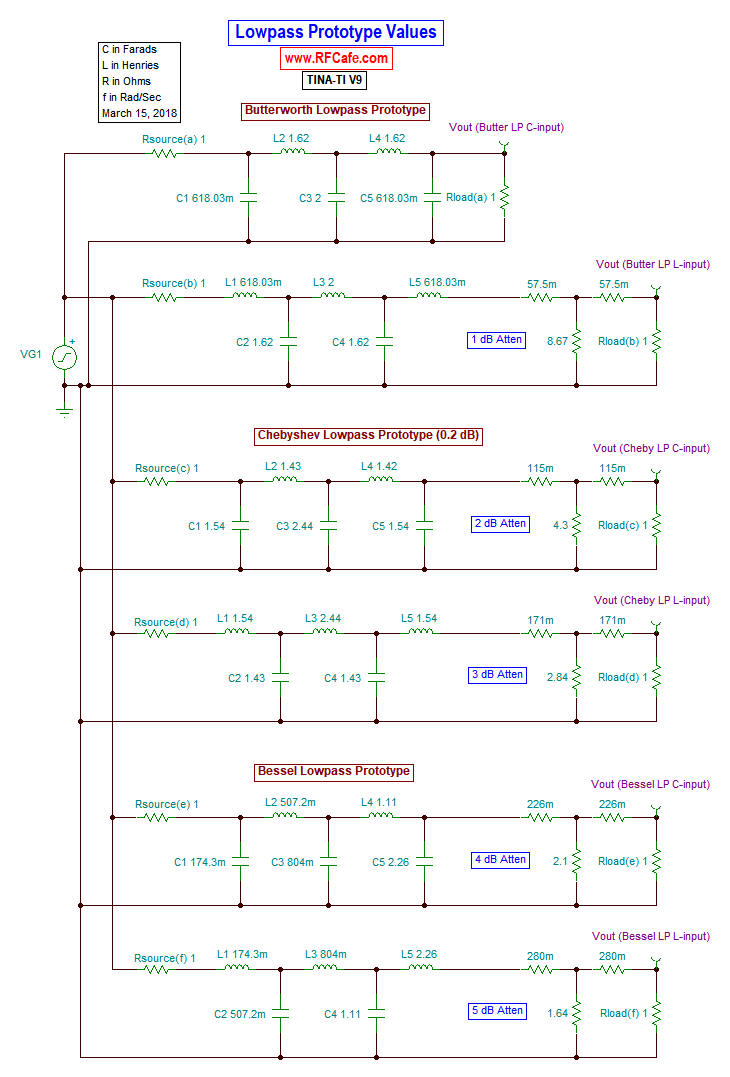
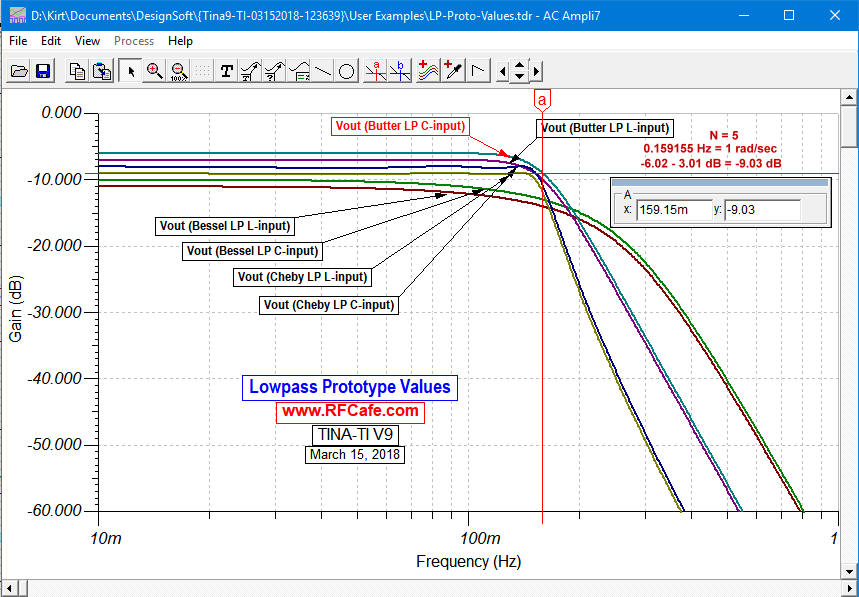
Lowpass Filters (above)
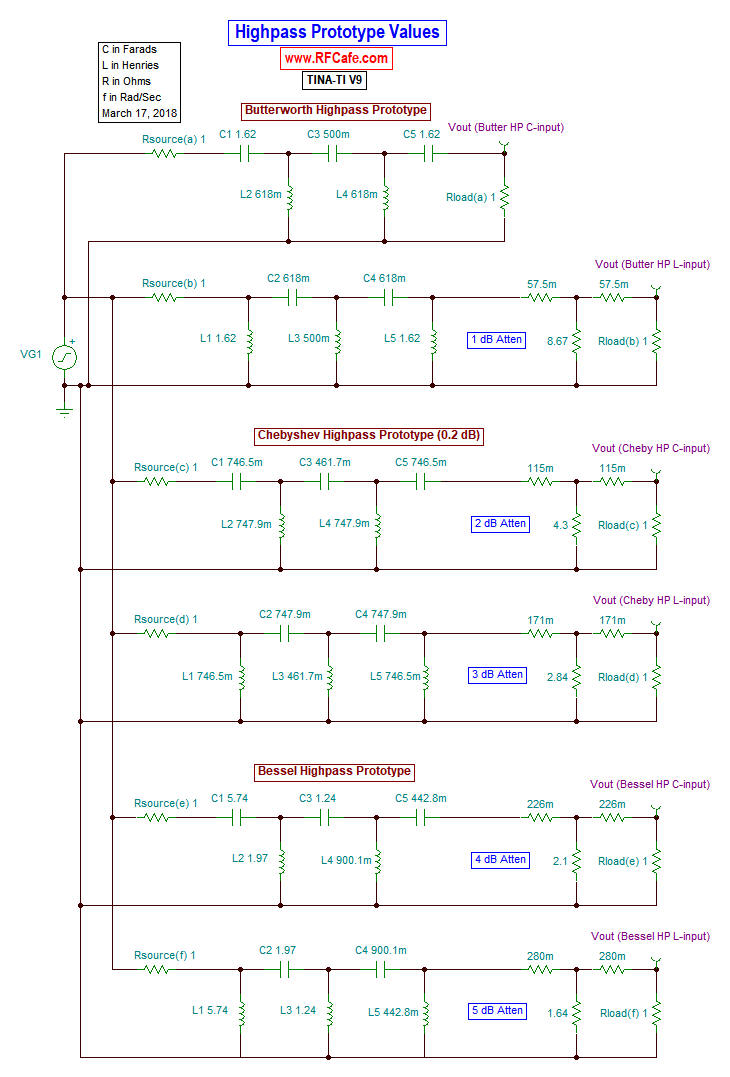
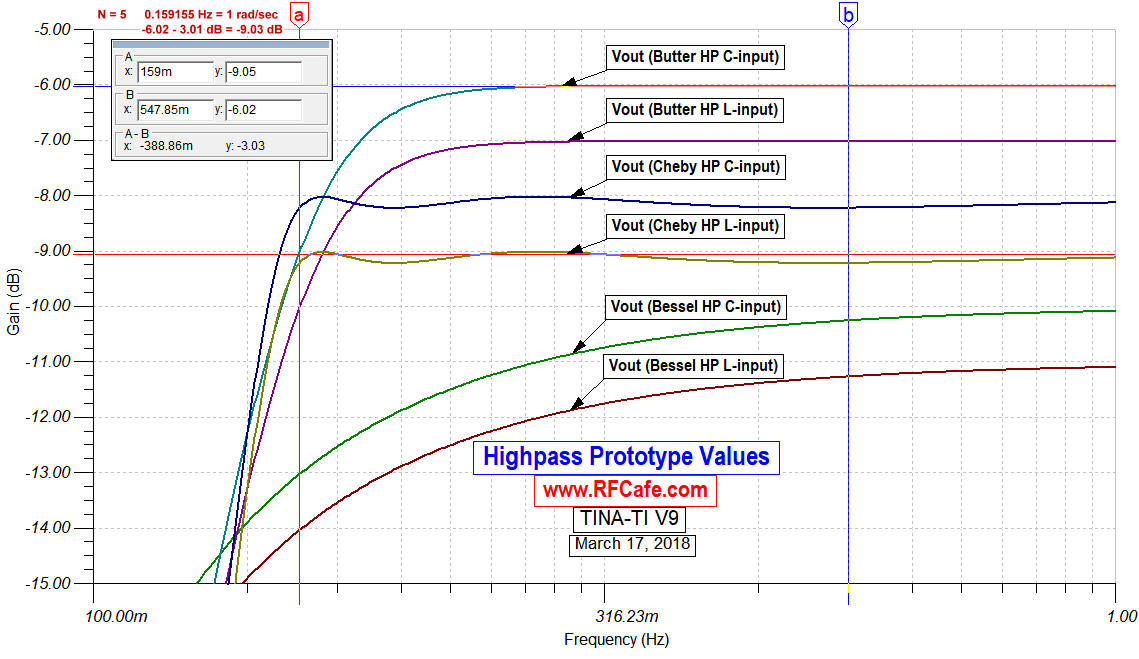
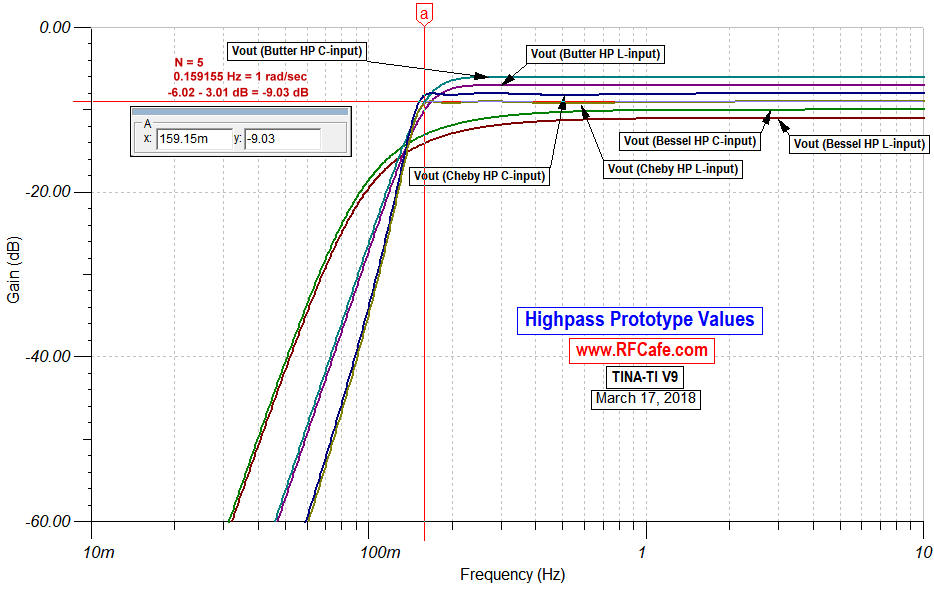
Highpass Filters (above)
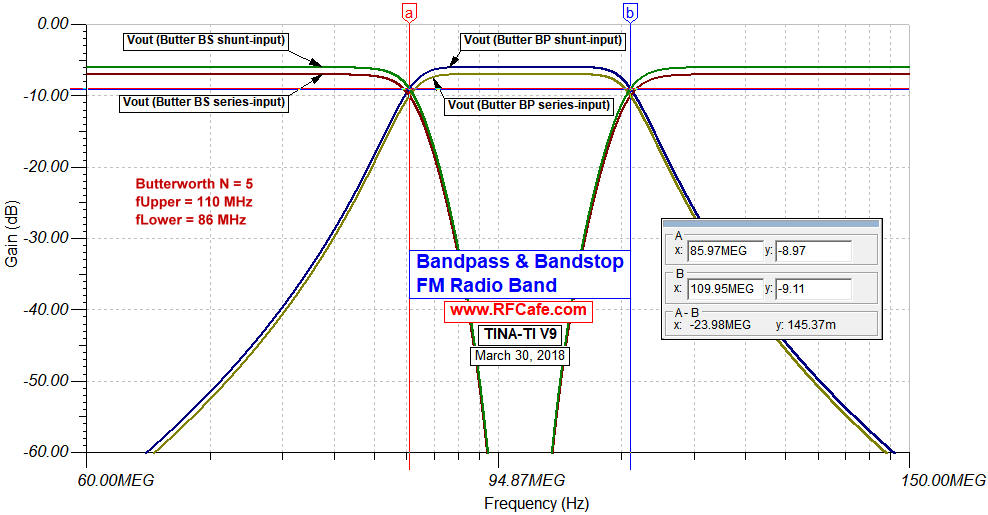
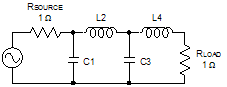
Bandpass and Bandstop Filters (above) Butterworth poles lie along a circle and are spaced at equal angular distances around a circle. It is designed to have a frequency response which is as flat as mathematically possible in the passband, and is often referred to as a 'maximally flat magnitude' filter. Prototype value real and imaginary pole locations (ω=1 at the 3 dB cutoff point) for Butterworth filters are presented in the table below. The Butterworth type filter was first described by the British engineer Stephen Butterworth in his paper "On the Theory of Filter Amplifiers", Wireless Engineer, vol. 7, 1930, pp. 536-541. The table below lists prototype element values for the normalized lowpass function, which assumes a cutoff frequency of 1 rad/sec and source and load impedances of 1 Ω. Either an input capacitor (top title line in table) or an input inductor (bottom title line in table) can be used. Convert Butterworth prototype values to other cutoff frequencies, impedances, and to highpass, bandpass or bandstop using denormalization equations. Complex poles are here.
Related Pages on RF Cafe - Butterworth Lowpass Filter Gain, Phase, and Group Delay Equations - Butterworth Highpass, Bandpass, & Bandstop Filter Gain, Phase, and Group Delay Equations - How to Use Filter Equations in a Spreadsheet - Filter Equivalent Noise Bandwidth - Filter Prototype Denormalization - Bessel Filter Prototype Element Values - Butterworth Lowpass Filter Poles - Butterworth Filter Prototype Element Values - Chebyshev Lowpass Filter Poles - Chebyshev Filter Prototype Element Values - Monolithic Ceramic Block Combline Bandpass Filters Design - Coupled Microstrip Filters: Simple Methodologies for Improved Characteristics |
||||||||||||||||||||||||||||||||||||||||||||||||||||||||||||||||||||||||||||||||||||||||||||||||||||||||||||||||||||||||||||||||||||||||||||||||||||||||||||