Cool Pic Archive Pages
| 1 |
2 | 3 |
4 | 5
| 6 | 7
| 8 | 9
| 10 | 11
| 12 | 13
| 14 | 15
| 16 | 17
| 18 | 19
| 20 | 21
| 22 | 23
| 24 | 25
| 26 | 27
| 28 | 29
| 30 |
These images have been chosen for their uniqueness. Subject matter ranges from
historic events, to really cool phenomena in science and engineering, to relevant
place, to ingenious contraptions, to interesting products (which now has its own
dedicated Featured Product
category).
 It
appears that the new equivalent of "chip art" (aka "silicon art") is "nano art." The notoriously playful science
nerd coterie has picked up the gauntlet with their imaginative creations. This particular image is a composite of
many nanoartists. Flowers and warts are popular topics, but an occasional lamp shade debuts. Come one guys (and
girls)... give us Dilbert, Einstein, or at '57 Chevy.
It
appears that the new equivalent of "chip art" (aka "silicon art") is "nano art." The notoriously playful science
nerd coterie has picked up the gauntlet with their imaginative creations. This particular image is a composite of
many nanoartists. Flowers and warts are popular topics, but an occasional lamp shade debuts. Come one guys (and
girls)... give us Dilbert, Einstein, or at '57 Chevy.
3/2/2009
 Maybe
the tinfoil hat wearing types that have been reporting sightings of bug-like mechanical surveillance drones hovering
over public events in D.C. are not as nutty as we think. Here is a DARPA-funded cyborg beetle sporting a wireless
command/control module that has six electrodes implanted into its optic lobes and flight muscles. Flight commands
are sent to the beetle via a transmitter controlled by a nearby laptop. Oscillating electrical pulses delivered
to the beetle's optic lobes trigger takeoff, while a single short pulse ceases flight. Signals sent to the left
or right flight muscles make it turn.
Maybe
the tinfoil hat wearing types that have been reporting sightings of bug-like mechanical surveillance drones hovering
over public events in D.C. are not as nutty as we think. Here is a DARPA-funded cyborg beetle sporting a wireless
command/control module that has six electrodes implanted into its optic lobes and flight muscles. Flight commands
are sent to the beetle via a transmitter controlled by a nearby laptop. Oscillating electrical pulses delivered
to the beetle's optic lobes trigger takeoff, while a single short pulse ceases flight. Signals sent to the left
or right flight muscles make it turn.
2-2-2009
 This
series of animated images shows the evolution of integrated circuits. It begins with Jack Kilby's invention at Texas
Instruments, then progresses through Fairchild's RTL IC, the first Pentium processor, and finally Intel's
Core i7 screamer.
This
series of animated images shows the evolution of integrated circuits. It begins with Jack Kilby's invention at Texas
Instruments, then progresses through Fairchild's RTL IC, the first Pentium processor, and finally Intel's
Core i7 screamer.
1-5-2009
 Yeah,
it is kind of gross... but kind of cool, too. Prosthetic eyeball user and filmmaker Rob Spence says, "If you
lose your eye and have a hole in your head, then why not stick a camera in there?" He calls himself "the eyeborg
guy." The camera will have a wireless link to a laptop computer or other receiver/storage device. BTW, he lost his
eye at age 13 when shooting at a cow pie.
Yeah,
it is kind of gross... but kind of cool, too. Prosthetic eyeball user and filmmaker Rob Spence says, "If you
lose your eye and have a hole in your head, then why not stick a camera in there?" He calls himself "the eyeborg
guy." The camera will have a wireless link to a laptop computer or other receiver/storage device. BTW, he lost his
eye at age 13 when shooting at a cow pie.
12-8-2008
 Introducing
the Mazda π. If this is a marketing attempt to imply the precision
to which the car is designed and built, I find it irrational. Yeah, the image is probably Photoshopped, but I wouldn't
put it past some clever soul to actually buy and install the numbers. I checked, and the 28 digits used are accurate
Introducing
the Mazda π. If this is a marketing attempt to imply the precision
to which the car is designed and built, I find it irrational. Yeah, the image is probably Photoshopped, but I wouldn't
put it past some clever soul to actually buy and install the numbers. I checked, and the 28 digits used are accurate
(3.141592653589793238462643383). Here are the first
1 million digits of
π.
3/9/2009
 Stanford
University just raised... er... lowered the bar in the competition to create the world's smallest letters. They
have created letters approximately 15 nm tall, using a device known as a scanning tunneling microscope (STM) to
push individual carbon monoxide molecules onto a copper surface. Lawyers will love this ability to added even smaller
print to contracts. Someone tell the brainiacs at IBM that the gauntlet has been thrown down again.
Stanford
University just raised... er... lowered the bar in the competition to create the world's smallest letters. They
have created letters approximately 15 nm tall, using a device known as a scanning tunneling microscope (STM) to
push individual carbon monoxide molecules onto a copper surface. Lawyers will love this ability to added even smaller
print to contracts. Someone tell the brainiacs at IBM that the gauntlet has been thrown down again.
2-9-2009
 Need
a portable hard drive for your computer? In 1952, it would have looked like this IBM 350 magnetic disk storage unit.
It was a marvel of the day with its mammoth 4MB of storage capacity. Disks rotated at 1,200 rpm (today's
run at 5,400 or 7,200 rpm). Seek time averaged about 600 ms (typical for today about 15 ms).
Need
a portable hard drive for your computer? In 1952, it would have looked like this IBM 350 magnetic disk storage unit.
It was a marvel of the day with its mammoth 4MB of storage capacity. Disks rotated at 1,200 rpm (today's
run at 5,400 or 7,200 rpm). Seek time averaged about 600 ms (typical for today about 15 ms).
1-12-2009
 Theron
Colucci calls himself "The Electric Light Artist." Theron started in electronics as a Navy technician. He had not
considered himself an artist until a few years ago, when he stumbled upon a solder stencil discarded in a trashcan
outside a manufacturing facility. Theron held it up to the sun, and, literally and figuratively, "a light went on."
Now, he creates high tech expressions of light using recycled stencils. See more examples on his website.
Theron
Colucci calls himself "The Electric Light Artist." Theron started in electronics as a Navy technician. He had not
considered himself an artist until a few years ago, when he stumbled upon a solder stencil discarded in a trashcan
outside a manufacturing facility. Theron held it up to the sun, and, literally and figuratively, "a light went on."
Now, he creates high tech expressions of light using recycled stencils. See more examples on his website.
12-15-2008
 Alas,
poor Melanie has been around me for too long. We got a new cat from the
Humane Society shelter on Saturday. I mentioned
that a science type name would be cool. After tossing around a name for her, Melanie came up with Pi (π).
Why Pi? Saturday was March 14, aka Pi Day (3.14).
Alas,
poor Melanie has been around me for too long. We got a new cat from the
Humane Society shelter on Saturday. I mentioned
that a science type name would be cool. After tossing around a name for her, Melanie came up with Pi (π).
Why Pi? Saturday was March 14, aka Pi Day (3.14).
3/16/2009
 Remember
the Bell jar vacuum chamber you used in chemistry lab for watching water boil at room temperature? That was child's
play. NASA, famous for doing things in a big way, has the world's largest vacuum chamber. It measures 100 feet in
diameter and is 122 feet tall. I did the math; it works out to about 825 thousand cubic feet. The chamber is used
to test satellites and vehicles in space-like conditions.
Remember
the Bell jar vacuum chamber you used in chemistry lab for watching water boil at room temperature? That was child's
play. NASA, famous for doing things in a big way, has the world's largest vacuum chamber. It measures 100 feet in
diameter and is 122 feet tall. I did the math; it works out to about 825 thousand cubic feet. The chamber is used
to test satellites and vehicles in space-like conditions.
2-16-2009
 Talk
about taking your work home with you! This Nerd Herd wannabe
attached printed circuit boards all over the outside of his car (he probably would have used an AMC Gremlin had
one been available). Don't be fooled by the green color, though. I'm guessing the boards are loaded with toxic lead
solder, and the weight surely negatively impacts the MPG of the car. Still, it's cool.
Talk
about taking your work home with you! This Nerd Herd wannabe
attached printed circuit boards all over the outside of his car (he probably would have used an AMC Gremlin had
one been available). Don't be fooled by the green color, though. I'm guessing the boards are loaded with toxic lead
solder, and the weight surely negatively impacts the MPG of the car. Still, it's cool.
1-19-2009
 This
milled wood, Smith Chart coaster was sent to me by website visitor Enrique R, of Norcross, GA. The coaster now resides
on my Smith Chart Artwork webpage. If you know of any other examples of Smith Chart art, please let me know.
This
milled wood, Smith Chart coaster was sent to me by website visitor Enrique R, of Norcross, GA. The coaster now resides
on my Smith Chart Artwork webpage. If you know of any other examples of Smith Chart art, please let me know.
12-22-2008
 Spanish
teenagers recently lashed an $82 (€60) digital camera to a helium balloon and lofted
it to an altitude of 30 km.
Spanish
teenagers recently lashed an $82 (€60) digital camera to a helium balloon and lofted
it to an altitude of 30 km.
 Homemade
electronics allowed it to be tracked via Google Earth. Following balloon deflation, the recovery system brought
the package to a safe landing 10 km away. This puts the old
Estes CamRoc photos to shame.
Homemade
electronics allowed it to be tracked via Google Earth. Following balloon deflation, the recovery system brought
the package to a safe landing 10 km away. This puts the old
Estes CamRoc photos to shame.
3/16/2009
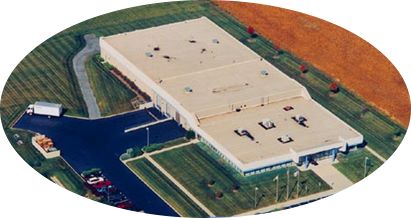
 While
verifying hyperlinks on the vendor pages, I ran across this photo
Altech's building and thought it looked
a lot like a ceramic DIP package on a PCB. It makes a good Cool Pic subject.
While
verifying hyperlinks on the vendor pages, I ran across this photo
Altech's building and thought it looked
a lot like a ceramic DIP package on a PCB. It makes a good Cool Pic subject.
 My
image is a composite, the Altech image is real.
My
image is a composite, the Altech image is real.
2-23-2009
 The object
to the left will never fit on the object to the right.
The object
to the left will never fit on the object to the right.
 Then
again, neither will mine, and it is nowhere as large as the object on the left. The object on the right is a pico-scale
toilet (loo, WC, toilette(s,t), 厕所, inodoro, トイレ, záchod, المرحاض, toalety, शौचालय, casa de banho, or whatever you
call it. This nanometer wide (peeco scale?) John is shown at 15,000x magnification.
Then
again, neither will mine, and it is nowhere as large as the object on the left. The object on the right is a pico-scale
toilet (loo, WC, toilette(s,t), 厕所, inodoro, トイレ, záchod, المرحاض, toalety, शौचालय, casa de banho, or whatever you
call it. This nanometer wide (peeco scale?) John is shown at 15,000x magnification.
1-26-2009
 Here
is the world's smallest welding job. "We report that individual metallic nanowires and nanoobjects can be assembled
and welded together into complex nanostructures and conductive circuits by a new nanoscale electrical welding technique
using nanovolumes of metal solder."
Here
is the world's smallest welding job. "We report that individual metallic nanowires and nanoobjects can be assembled
and welded together into complex nanostructures and conductive circuits by a new nanoscale electrical welding technique
using nanovolumes of metal solder."
12-29-2008