Archaic Scientific Words & Definitions
|
|
Click here for the complete list of RF Cafe Quizzes. Note: Some material based on books have quoted passages.
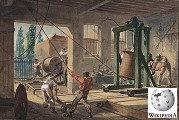
c) Cable insulation Gutta percha is a natural form of rubber that was the first successful insulation for undersea communications cables in the 19th century.
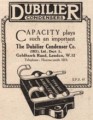
a) Capacitor Condensers were so-called due to their ability to collect and "condense charges into a given volume.
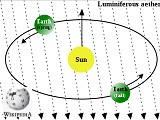
b) Medium that supports the transmission of light particles As early as the days of Newton, it was believed that a special medium existed that accommodated the movement of light particles (prior to their wave nature being discovered). That medium was dubbed luminiferous aether.
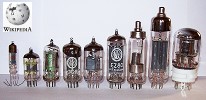
a) Vacuum tube diode Thermionic comes from the boiling off of electrons from the cathode, and valve, of course, derives from the devices' ability to switch current on or off.
d) Molecular oxygen To deflogisticate means to render burnable. Oxygen supports combustion, hence the name.
d) Light particle So-named by Isaac Newton.
c) Vacuum tube triode Lee De Forest called his newly discovered amplifying device an Audion (not sure why).
d) Fluid responsible for heat flow It used to be thought that caloric was a fluid that transferred head from bodies of higher temperatures to bodies of lower temperatures. Canon boring experiments debunked the belief.
b) Energy storage device (capacitor) Benjamin Franklin used a Leyden jar as part of his kite flying experiment to prove that lightning was a form of electricity (no he didn't "discover" electricity).
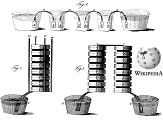
a) Battery All four answers are proper definitions of a pile, but the one that fits the spirit of this quiz is, of course, a battery. Alessandro Volta, inventor of the first practical wet-cell battery, so-named it because it looked like a pile - a 5th definition for the word "pile" that means a long rod-like beam used to support structures.
|